
A hospitalized infant with paroxysmal coughing spells and post-tussive vomiting is suspected of having Bordetella pertussis infection and is started on appropriate macrolide therapy. Under CDC isolation precautions guidelines, how should the patient be isolated?
Select an answer to reveal the explanation.
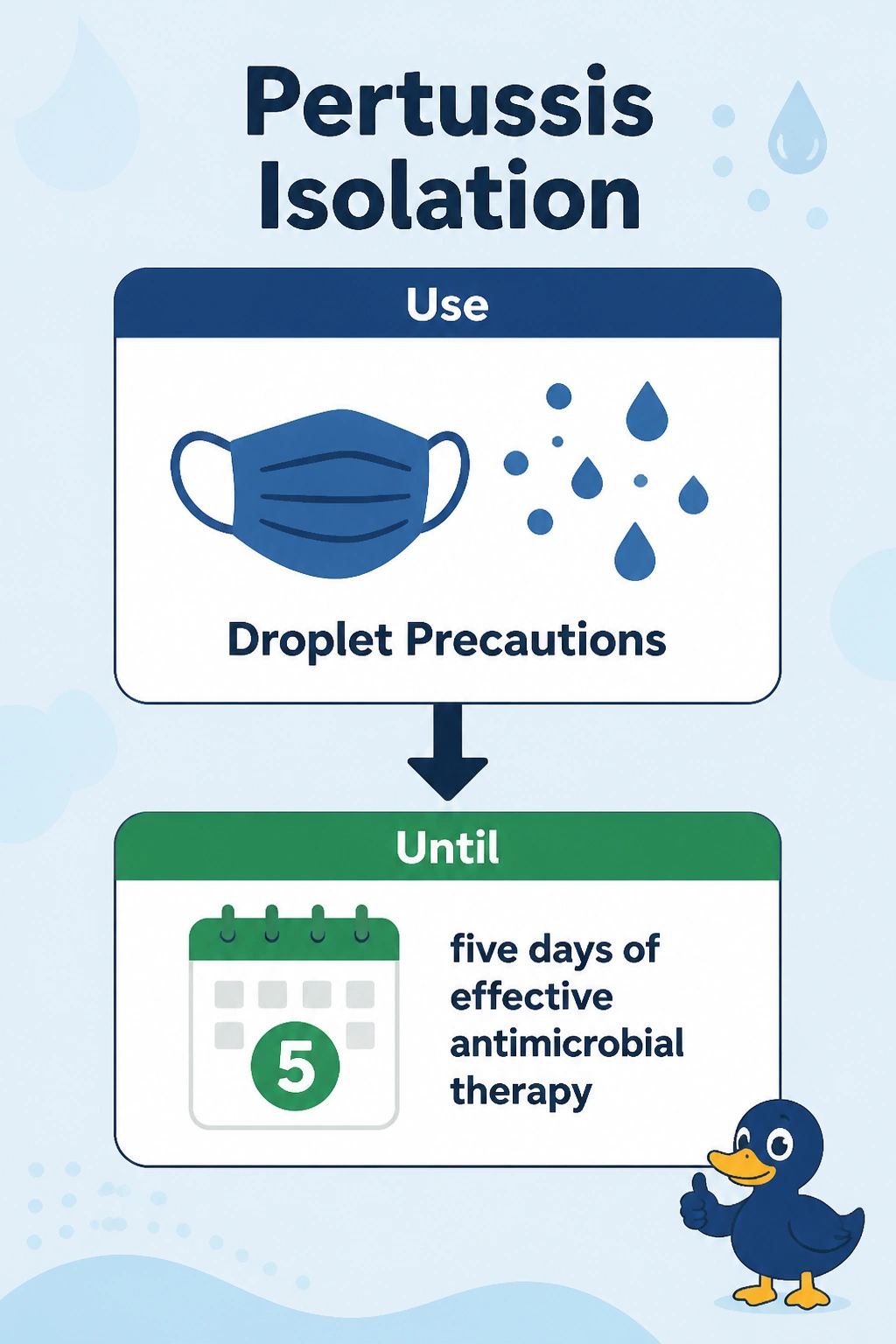
Short Explanation
Pertussis travels in heavy respiratory droplets from those forceful coughing fits, not floating across hallways on air currents. The trap is dropping precautions after a single antibiotic dose or over-isolating in a negative-pressure room. Maintaining Droplet Precautions for five full days of effective therapy protects your staff and neighboring patients.
Full Explanation
Droplet Precautions until five days of effective antimicrobial therapy is the CDC HICPAC recommendation for patients with suspected or confirmed Bordetella pertussis. Pertussis is transmitted via large respiratory droplets generated during coughing or sneezing, and effective antimicrobial therapy reduces bacterial shedding to non-infectious levels after five days of treatment. Airborne Precautions in a negative-pressure room until cough resolves completely is unnecessary because B. pertussis is not transmitted by long-range airborne droplet nuclei, and paroxysmal cough often persists for weeks after the patient is no longer contagious. Standard Precautions only once the first dose of macrolide antibiotic is given is unsafe because nasopharyngeal bacterial clearance requires several days of therapy, leaving staff at risk during early treatment. Contact Precautions with gown and gloves for the entire hospital admission is incorrect because pertussis spreads primarily via respiratory droplets rather than environmental fomite contact, and isolation is not required for the entire stay once five days of therapy are completed. As a caveat, untreated patients remain contagious for three weeks after cough onset and require Droplet Precautions throughout that period if antibiotics are not given. Operationally, verify that a surgical mask is worn within the patient's room and that exposed, unimmunized or high-risk contacts are evaluated for post-exposure prophylaxis.
Prefer to study offline? Printable PDF study book + test engine ($7.50, unofficial). These questions stay free here.