
An acute care hospital identifies a single confirmed case of healthcare-associated Legionnaires' disease in an inpatient who was hospitalized continuously for 18 days prior to symptom onset, with no other cases detected in the past year. How should the infection preventionist respond to this surveillance finding?
Select an answer to reveal the explanation.
Short Explanation
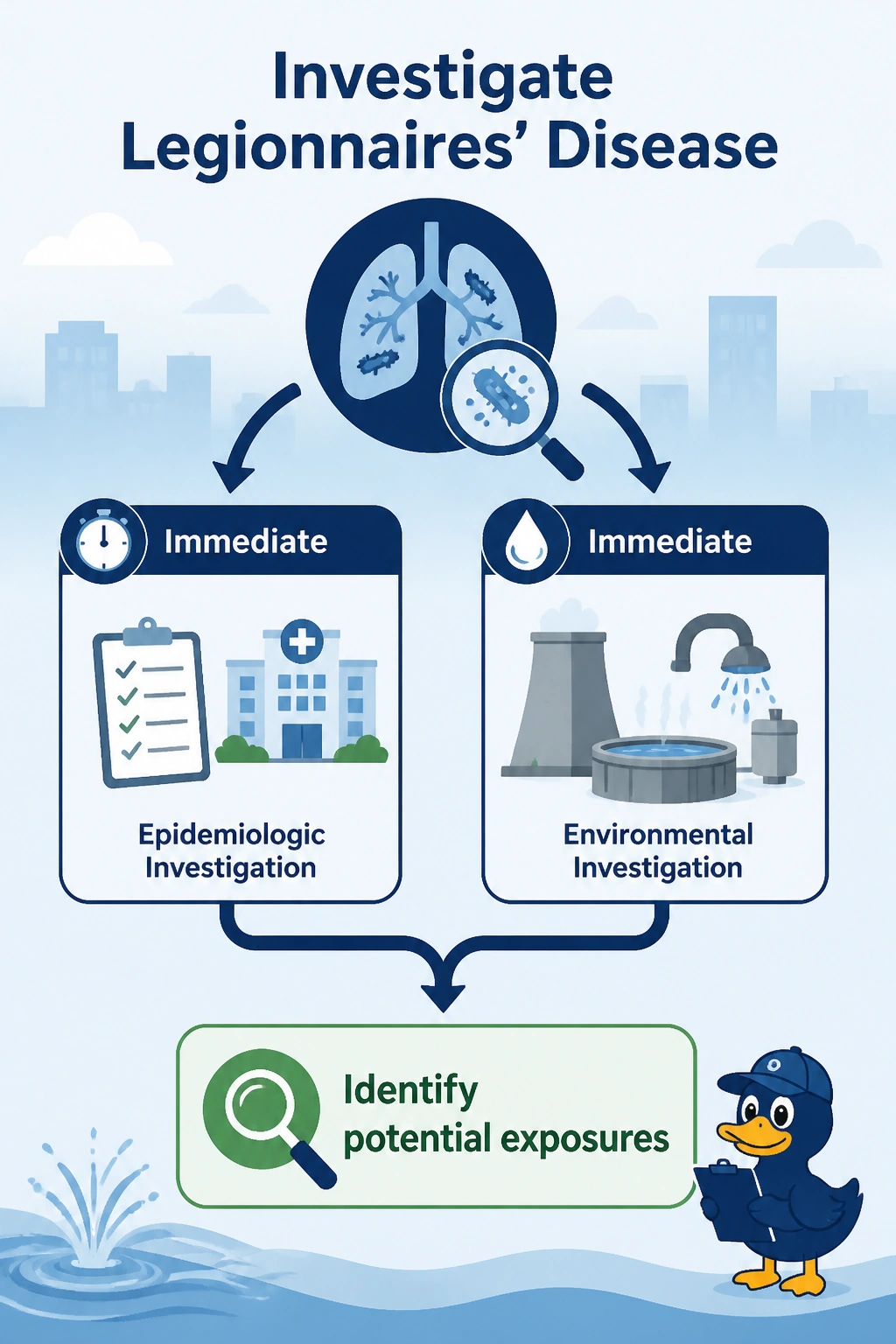
Think of healthcare-associated Legionnaires' disease like smoke in a hospital stairwell: you never wait for a second alarm before looking for the fire. Even a single presumptive healthcare-associated case signals a potential breakdown in the facility's water management program and demands an immediate epidemiologic and environmental investigation. The classic trap is applying routine statistical cluster thresholds to a high-consequence sentinel event.
Full Explanation
Under CDC guidelines, a single presumptive healthcare-associated case of Legionnaires' disease—such as laboratory-confirmed illness after 18 days of continuous hospitalization—requires you to Launch an immediate epidemiologic and environmental investigation to identify potential exposures. Because Legionella proliferates in premise plumbing, cooling towers, and decorative water features, one presumptive healthcare-associated case signals a potential facility source requiring investigation that can expose additional vulnerable patients. Choosing to Wait to initiate a formal investigation until at least one additional linked case confirms an active cluster delays source control and leaves other inpatients at risk of severe pneumonia. Similarly, deciding to Compare the single case against historical control limits and act only if statistical thresholds are exceeded misapplies routine endemic surveillance methods to a sentinel event. Opting to Limit follow-up to passive clinician reporting on the patient's current unit without reviewing water systems misses cases elsewhere in the facility and leaves the underlying reservoir unaddressed. A single possible case (partial stay in the 14 days before onset) does not by itself trigger a full investigation; CDC recommends one for at least 2 possible cases within 12 months (or 1 presumptive case, 10 or more continuous days in the facility in the 14 days before onset), though an environmental assessment should be considered. For an operational check, review microbiology records for other Legionella cases over the past 12 months and notify facility engineering to inspect water temperatures and disinfectant residuals.
Prefer to study offline? Printable PDF study book + test engine ($7.50, unofficial). These questions stay free here.