
After a hospital-wide staff luncheon, 24 employees develop acute nausea and vomiting between 2 hours and 8 hours after eating the same meal, with most onset times clustering around 4 hours. How should the infection preventionist estimate the typical incubation period to help narrow the list of suspect pathogens?
Select an answer to reveal the explanation.
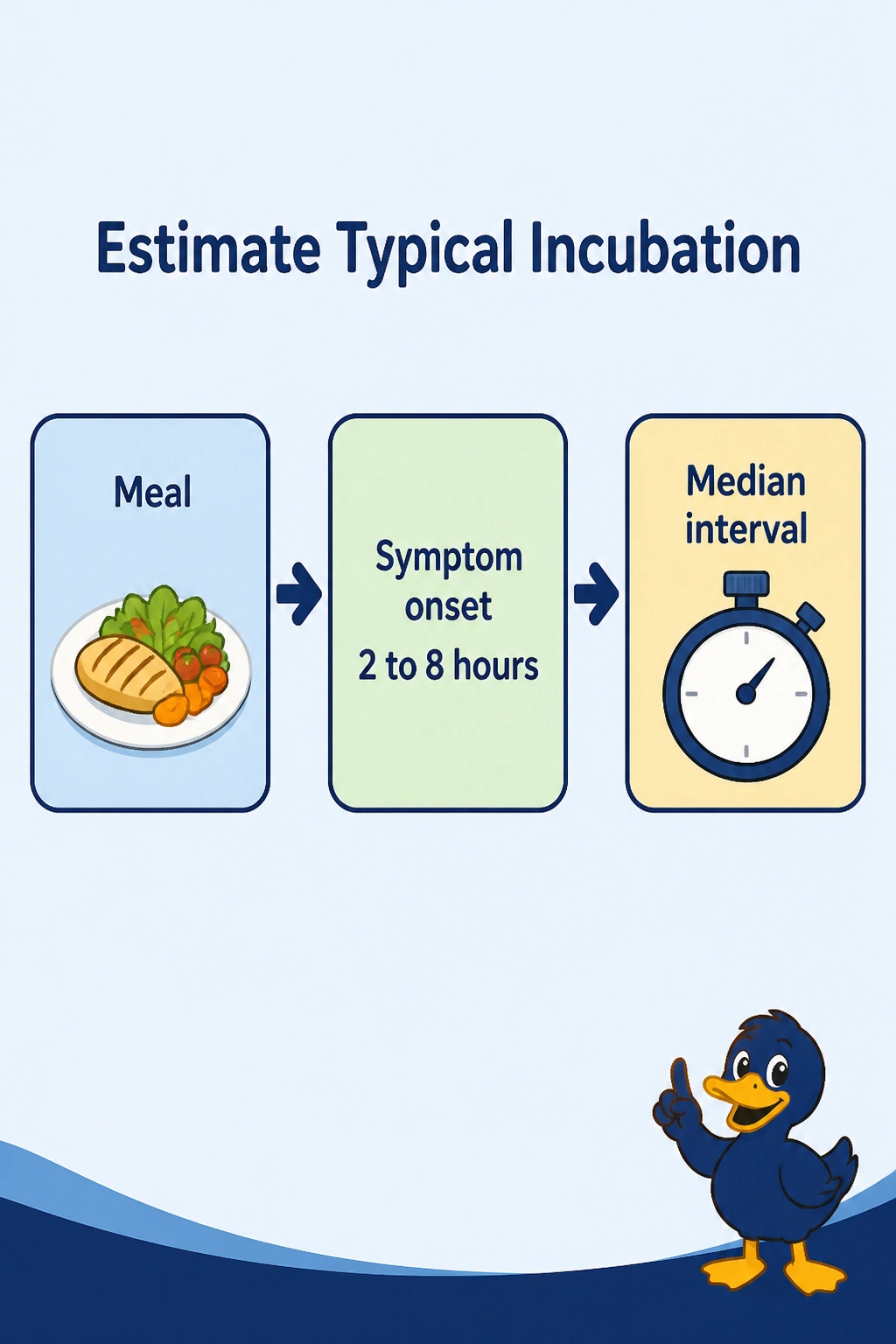
Short Explanation
Incubation period is the stopwatch from the moment a person eats the contaminated dish until the first symptom hits. You want the median of those intervals because a single outlier won't skew your clue toward the wrong pathogen. The trap is calculating the attack rate, the range between cases, or how long people stayed sick.
Full Explanation
Calculate the median interval from meal consumption to symptom onset to determine the typical incubation period in a point-source outbreak, because the median resists distortion from extreme early or late outliers and points toward pathogens with matching toxin or infectious timelines. Divide the total number of ill employees by the number of luncheon attendees calculates the overall attack rate, which measures disease frequency rather than time to onset. Subtract the earliest symptom onset time from the latest symptom onset time yields the spread or range of onset times, not the central incubation interval measured from the exposure event. Measure the duration from the first symptom until full clinical recovery describes the duration of illness rather than the pre-symptomatic incubation period. As a caveat, accurately estimating incubation period requires a well-defined exposure time; when exposure occurs over multiple days, incubation intervals are harder to pinpoint. During an outbreak line-list review, enter exact meal times alongside symptom onset timestamps so the median incubation period can be computed automatically and compared against known foodborne agent profiles.
Prefer to study offline? Printable PDF study book + test engine ($7.50, unofficial). These questions stay free here.