
An adult medical patient has a positive urine culture collected on hospital day 8 that meets NHSN microbiological criteria for a symptomatic urinary tract infection. To determine whether the patient's fever also counts toward the NHSN infection definition, which timeframe must the infection preventionist evaluate?
Select an answer to reveal the explanation.
Short Explanation
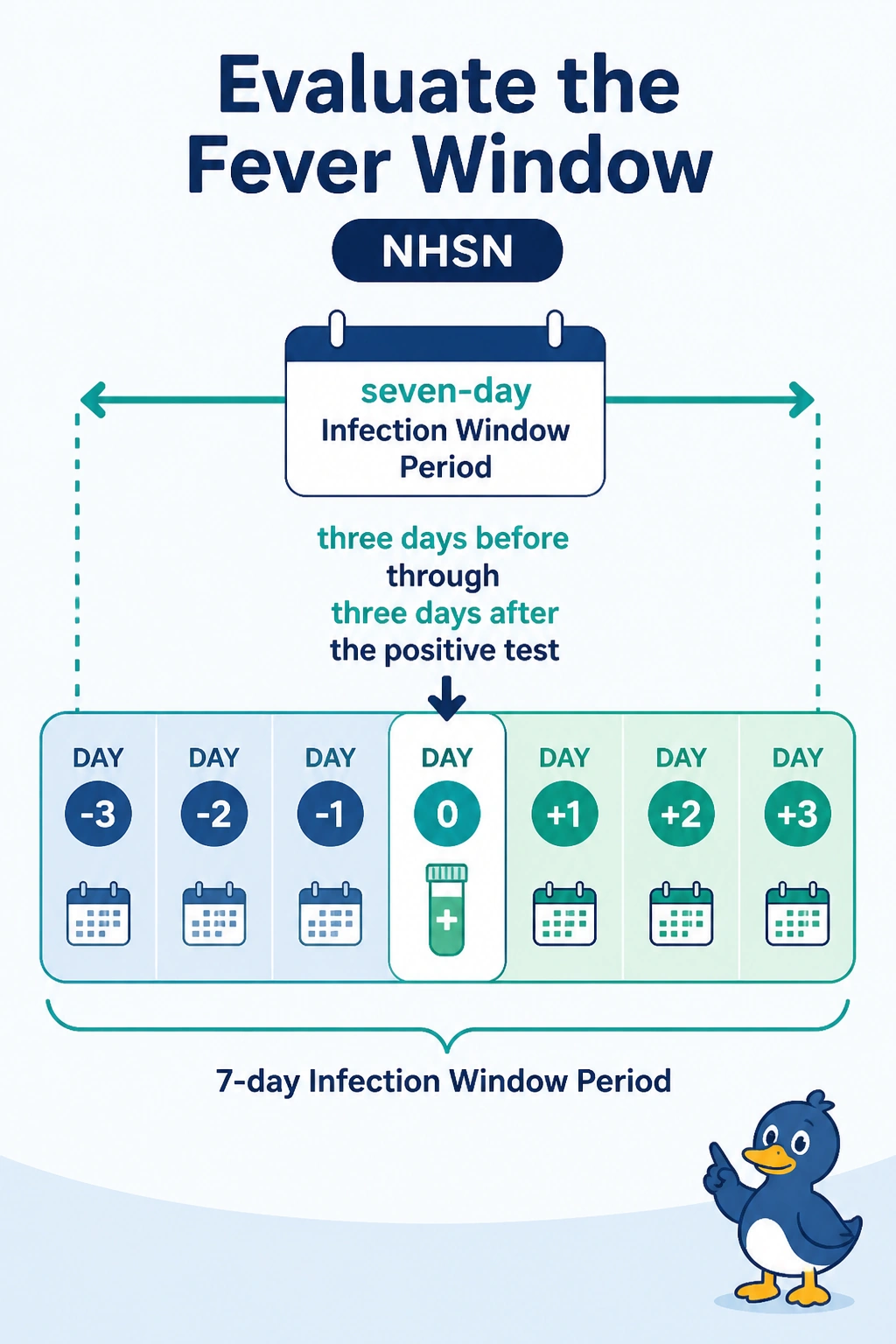
In NHSN surveillance, a positive culture does not stand alone—it anchors a strict seven-day calendar window for matching symptoms. You must check three days before and three days after the test date to see whether fever qualifies. Avoid the trap of confusing this seven-day window with the fourteen-day Repeat Infection Timeframe.
Full Explanation
The seven-day Infection Window Period spanning three days before through three days after the positive test is the standardized NHSN timeframe used to link site-specific signs and symptoms, such as fever, to the first positive diagnostic test. All required elements of the surveillance definition must occur within those seven calendar days to confirm a healthcare-associated infection. Only the exact calendar date on which the positive urine specimen was collected and processed by the laboratory is too narrow and would miss fevers that prompted the culture a day earlier or spiked the day after. The entire fourteen-day Repeat Infection Timeframe beginning on the calendar date of the positive urine culture serves a different purpose, preventing duplicate reporting of the same infection event rather than establishing initial symptom alignment. The full length of the patient's inpatient admission from hospital day one through the date of discharge would improperly link unrelated early or late fevers to a mid-stay positive culture. Caveat: the Infection Window Period is anchored by the first positive diagnostic test. Apply the permitted POA lookback and transfer/discharge attribution rules; a discovered event with DOE on discharge or the next day can be attributable to the discharging location. The IWP is not categorically truncated at discharge. Operational check: map the collection date and surrounding three-day buffers on a calendar grid during every NHSN chart review.
Prefer to study offline? Printable PDF study book + test engine ($7.50, unofficial). These questions stay free here.