
After three catheter-associated urinary tract infections occur on a medical unit in one month, the nurse manager asks to post affected patients' names and room numbers on the breakroom board to raise staff awareness. The board is accessible to visitors and staff without a role in these patients’ care, and its purpose is general education rather than care coordination. How should the infection preventionist respond?
Select an answer to reveal the explanation.
Short Explanation
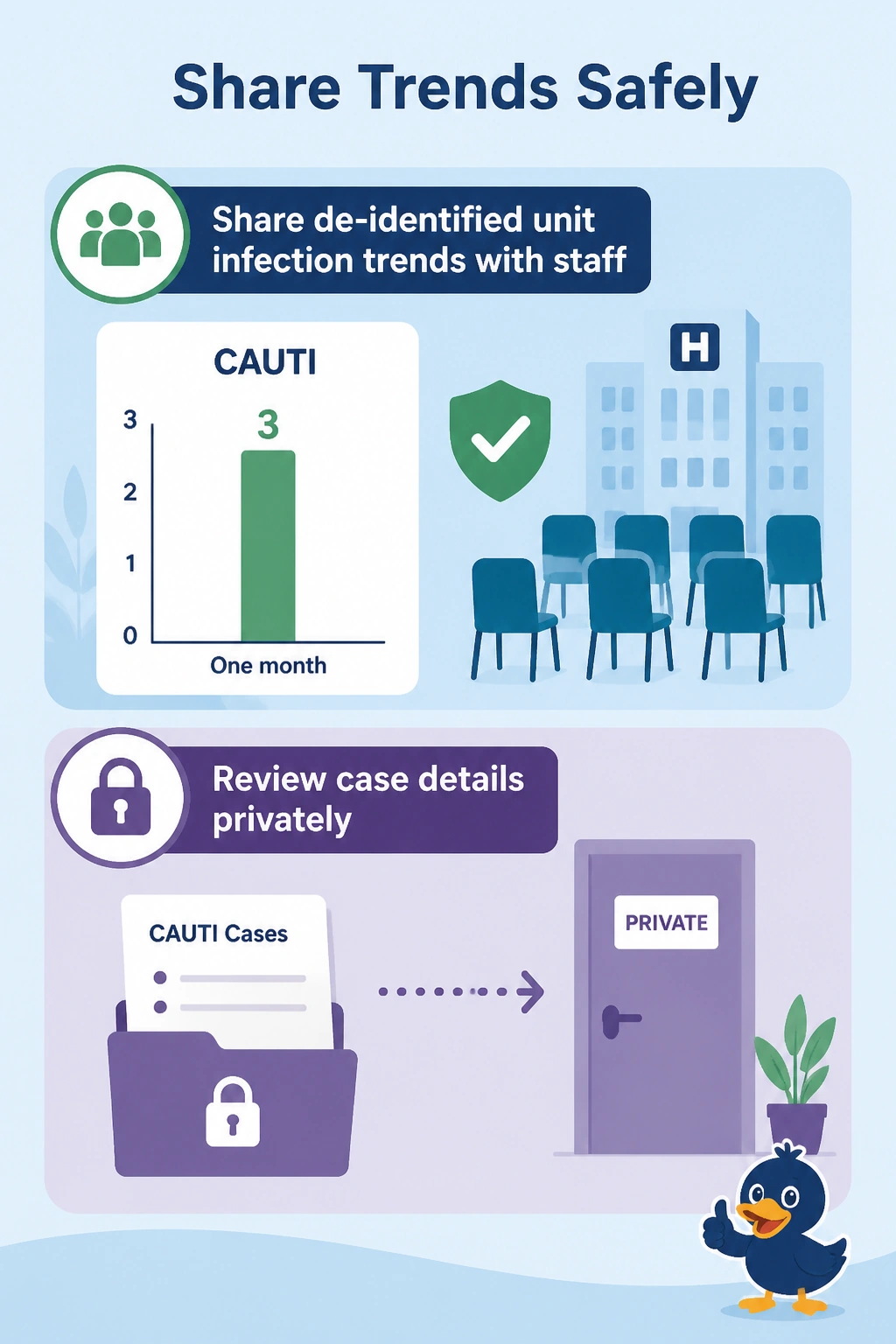
Think of surveillance feedback like a weather report for the unit: you want everyone to see the storm patterns without putting individual patients on display. Identifiable information may be used for authorized treatment or healthcare operations with appropriate safeguards; this publicly accessible educational board creates unnecessary disclosure. Share aggregate feedback and restrict case-level review to authorized participants.
Full Explanation
Effective infection prevention communication balances transparency for quality improvement with strict protection of patient health information. Choosing to Share de-identified unit infection trends with staff and review case details privately gives bedside teams actionable rate and compliance feedback while keeping identifiable clinical reviews restricted to authorized quality improvement personnel. Identifiable information may be used for authorized treatment or healthcare operations with appropriate safeguards; this publicly accessible educational board creates unnecessary disclosure. Posting patient room numbers linked to catheter information on this publicly accessible educational board creates unnecessary disclosure even without names. Choosing to Withhold all unit-specific infection rates from frontline staff until annual board review undermines timely feedback and delays process corrections on the unit. Choosing to Email full microbiology reports with patient identifiers to all unit nurses for transparency distributes confidential records to staff who do not have a clinical need to know. Share aggregate feedback and restrict case-level review to authorized participants.
Prefer to study offline? Printable PDF study book + test engine ($7.50, unofficial). These questions stay free here.