
An acute care hospital prepares to discharge a medically stable patient colonized with carbapenemase-producing Enterobacterales to a skilled nursing facility. Which communication step should the infection preventionist ensure is completed before transport?
Select an answer to reveal the explanation.
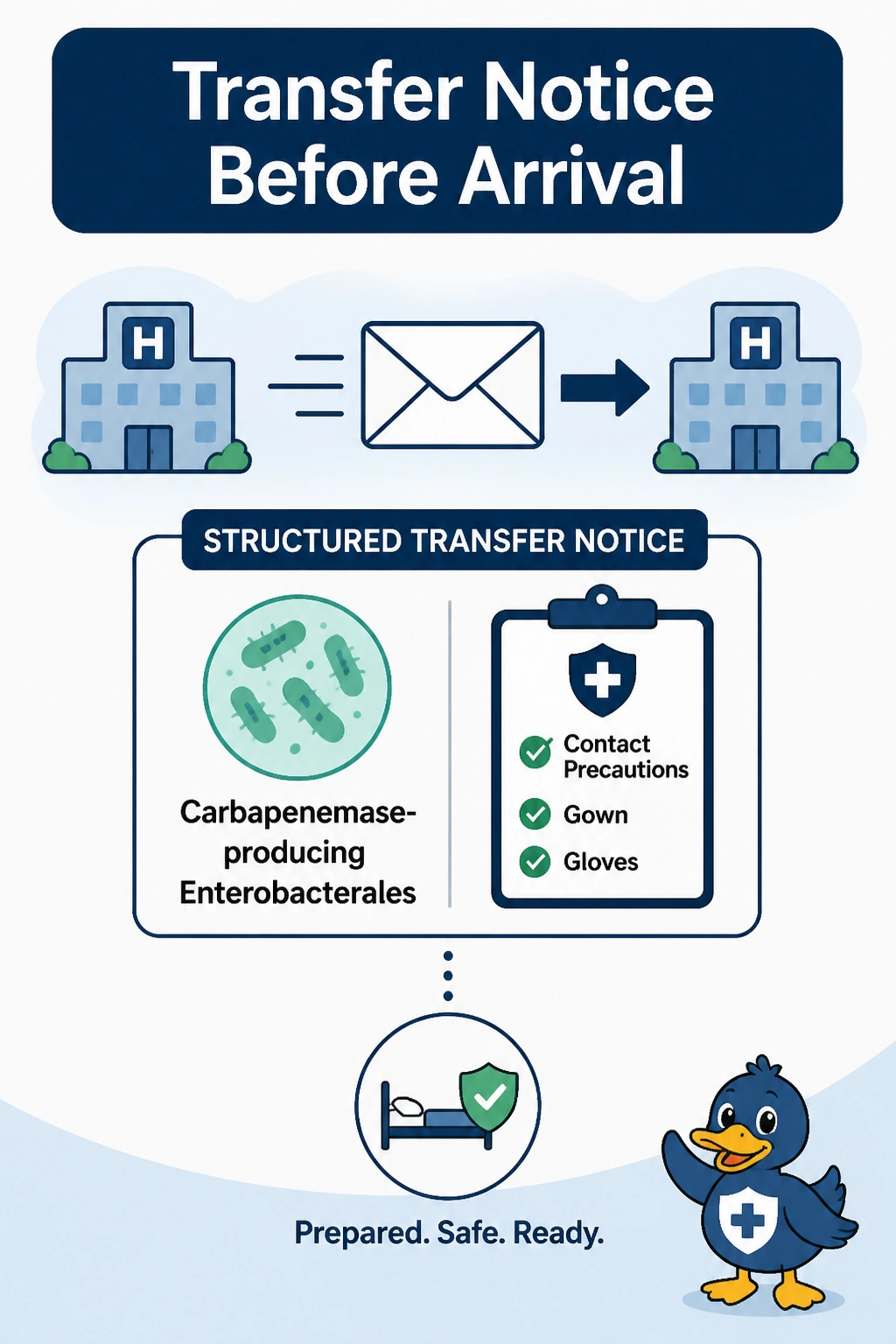
Short Explanation
Think of patient transfers like passing a baton in a relay race: if you drop the isolation details, the next facility gets caught off guard. The trap is holding a colonized patient indefinitely for negative cultures or assuming the receiving team will ask later. Always send written organism and precaution details before arrival.
Full Explanation
Choosing to "Send a structured transfer notice detailing the organism and required precautions before arrival" allows the receiving skilled nursing facility to prepare an appropriate room and dedicated supplies before the patient enters the building. The nursing facility selects Contact or Enhanced Barrier Precautions as indicated; uncomplicated MDRO colonization does not automatically require full Contact Precautions in a nursing home. Acute diarrhea, uncontained drainage or outbreak conditions may warrant Contact Precautions. Under CDC multidrug-resistant organism containment guidance, proactive inter-facility communication prevents unrecognized transmission across healthcare networks. Attempting to "Delay the discharge until three consecutive negative rectal surveillance cultures are documented" is unnecessary and blocks timely care transitions because intestinal colonization frequently persists for months after clinical recovery. Choosing to "Wait for the receiving facility to request microbiology records after admission intake" creates a dangerous gap during initial room placement and caregiving. Relying on "Notify only the ambulance crew verbally without sharing written isolation precautions" leaves the receiving nursing and medical staff uninformed once transport ends. As an important caveat, transfer communication must accompany the patient at every transition, including emergency department referrals and outpatient dialysis. For an operational check, audit monthly discharges of patients with targeted multidrug-resistant organisms to confirm that written transfer notices were transmitted and acknowledged before transport departed.
Prefer to study offline? Printable PDF study book + test engine ($7.50, unofficial). These questions stay free here.