
An infection preventionist wants to introduce a new bedside urinary catheter maintenance checklist across an eight-unit hospital, but nursing leaders worry about workflow disruption. Which quality improvement approach should the infection preventionist use first?
Select an answer to reveal the explanation.
Short Explanation
Rolling out an untested workflow across an entire hospital is a classic way to stall your quality improvement effort! The trap is pushing a hospital-wide mandate or endlessly surveying staff instead of running a quick, small-scale pilot to iron out kinks first.
Full Explanation
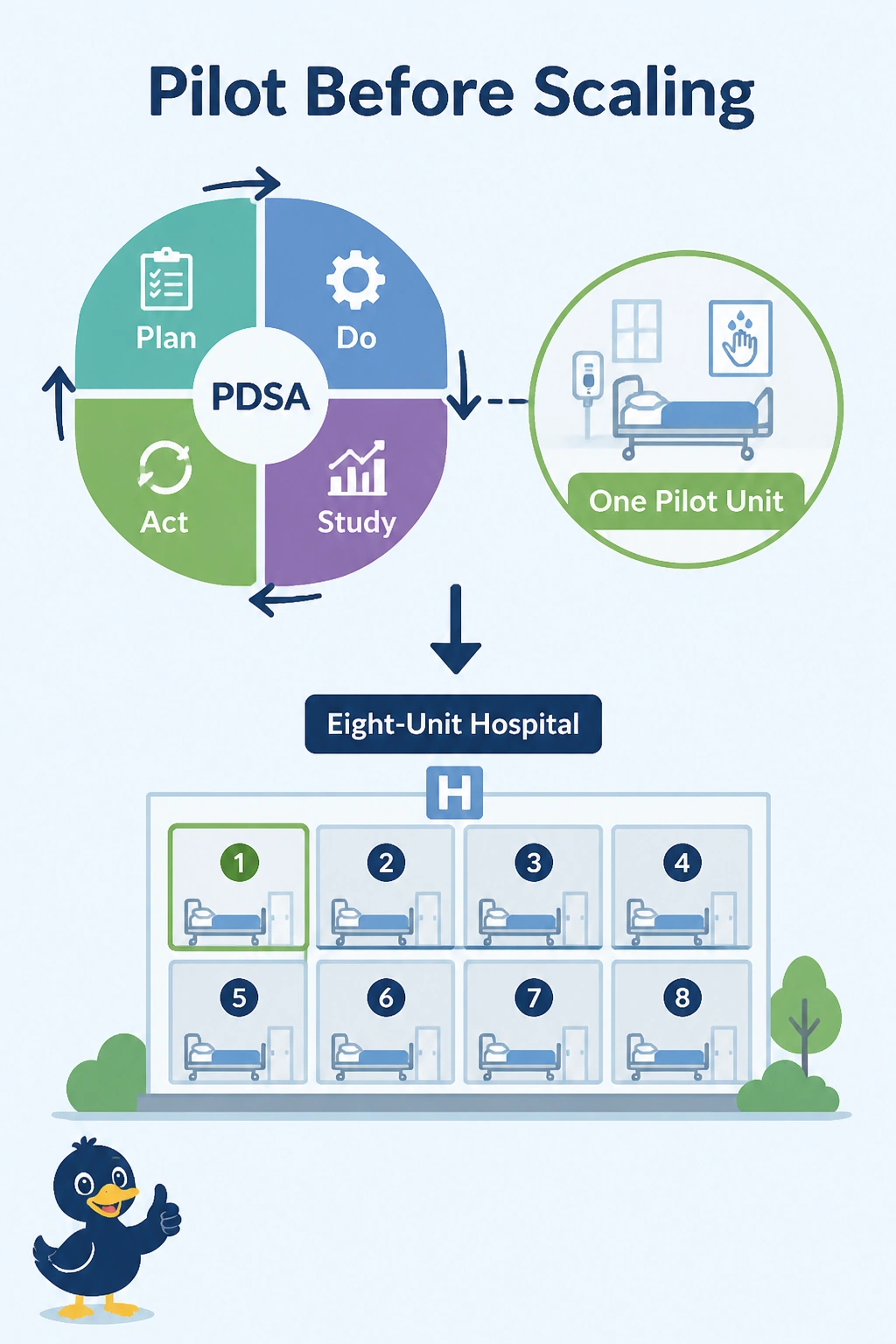
Quality improvement frameworks emphasize iterative testing, which is why the best first step is to Run a small Plan-Do-Study-Act cycle on one pilot unit before scaling hospital-wide. Testing on a single unit lets the team measure usability, identify unintended bottlenecks, and refine the checklist using real frontline feedback before committing hospital-wide resources. Choosing to Mandate the checklist across all eight units immediately and audit monthly compliance risks widespread workarounds and staff resistance if the tool does not fit bedside workflows. Deciding to Survey nurses on their preferred documentation format without testing the workflow gathers opinions but fails to reveal actual operational barriers during patient care. Opting to Wait until annual competency training to introduce the checklist to every department delays patient safety improvements and still lacks small-scale validation. As a caveat, a PDSA cycle requires clearly defined baseline and post-pilot metrics so the Study phase produces actionable evidence. For an operational check, review pilot compliance data and nurse feedback with unit champions after two weeks to decide whether to adopt, adapt, or abandon the draft.
Prefer to study offline? Printable PDF study book + test engine ($7.50, unofficial). These questions stay free here.