
An endoscopy technician discovers that a colonoscope used on four patients earlier in the week missed its high-level disinfection cycle because of an automated reprocessor fault. What should the infection preventionist do immediately after ensuring the affected scope is removed from service?
Select an answer to reveal the explanation.
Short Explanation
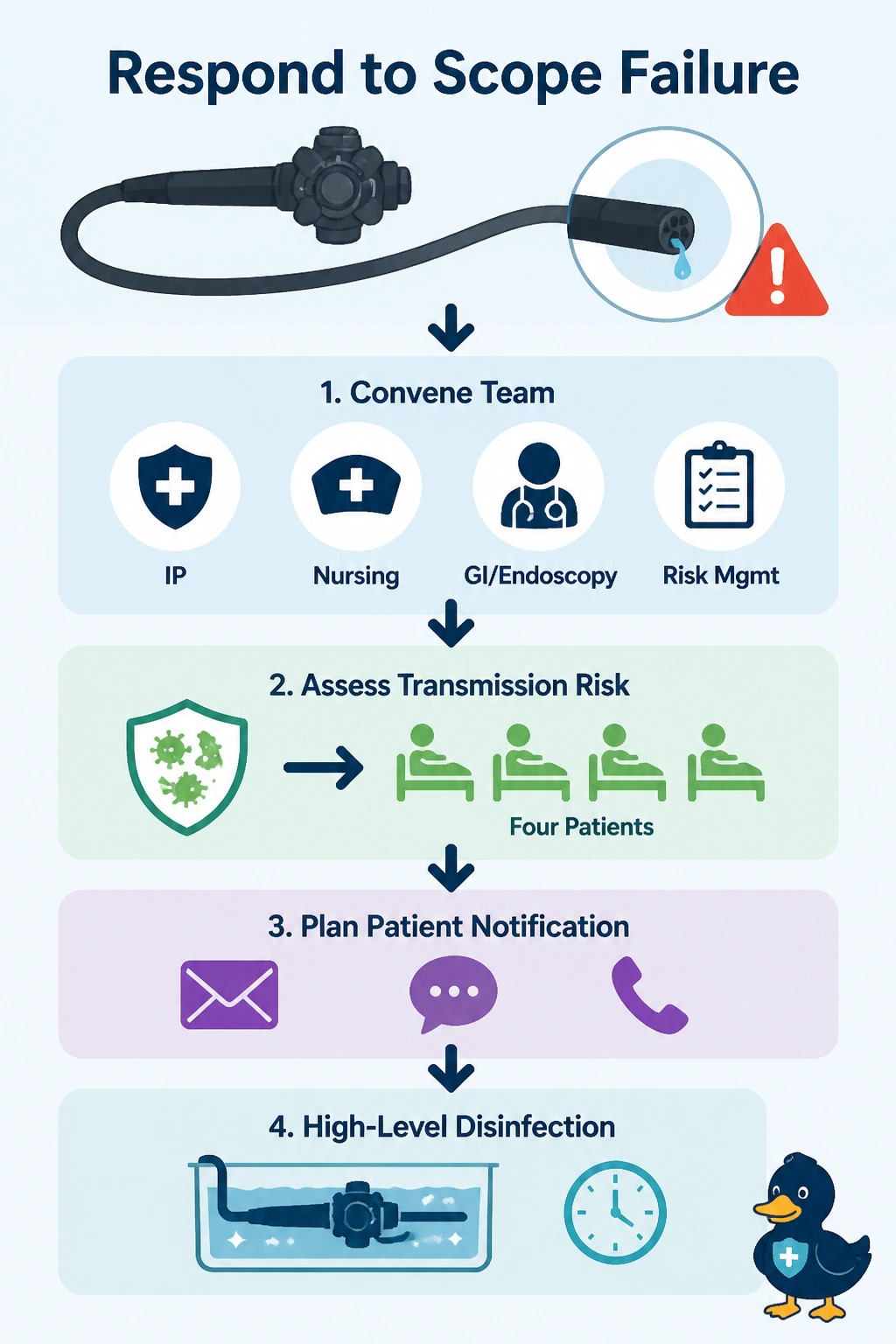
When a reprocessing breach hits your desk, speed and structure matter more than quiet damage control. Reprocessing the scope twice and resuming scheduling without notifying leadership, or waiting for a documented infection before escalating, delays a needed response. You should convene a multidisciplinary team immediately to assess transmission risk and plan patient notification.
Full Explanation
Convene a multidisciplinary team to assess transmission risk and plan patient notification because a high-level disinfection failure exposes patients to potential bloodborne and enteric pathogens and requires structured clinical, legal, and public health coordination. Following CDC breach-evaluation guidance, after removing the affected equipment from service, the infection preventionist should engage facility leadership, risk management, endoscopy clinicians, and sterile processing to review exposure records and determine patient notification and testing needs. Reprocessing the scope twice and resuming normal scheduling without notifying leadership fails to escalate a serious breach and leaves exposed patients unassessed. Delaying internal escalation until a patient develops a documented post-procedure infection misses the window for timely screening and post-exposure counseling. Contacting the four patients individually to offer prophylactic antibiotics before reviewing records bypasses formal risk stratification and relies on empiric antibiotics that do not address viral or procedural risks. Caveat: check automated reprocessor cycle printouts and maintenance history to confirm whether earlier procedures were also affected. Practical check: verify the scope is tagged out of service, pull all procedure logs for that reprocessor, and schedule an immediate multidisciplinary review.
Prefer to study offline? Printable PDF study book + test engine ($7.50, unofficial). These questions stay free here.