
A newly hired infection preventionist at a community hospital is updating the annual infection prevention risk assessment and surveillance plan. Several department managers request surveillance for low-volume, low-severity conditions alongside high-risk device-associated infections. Which criterion should primarily guide resource prioritization in the annual plan?
Select an answer to reveal the explanation.
Short Explanation
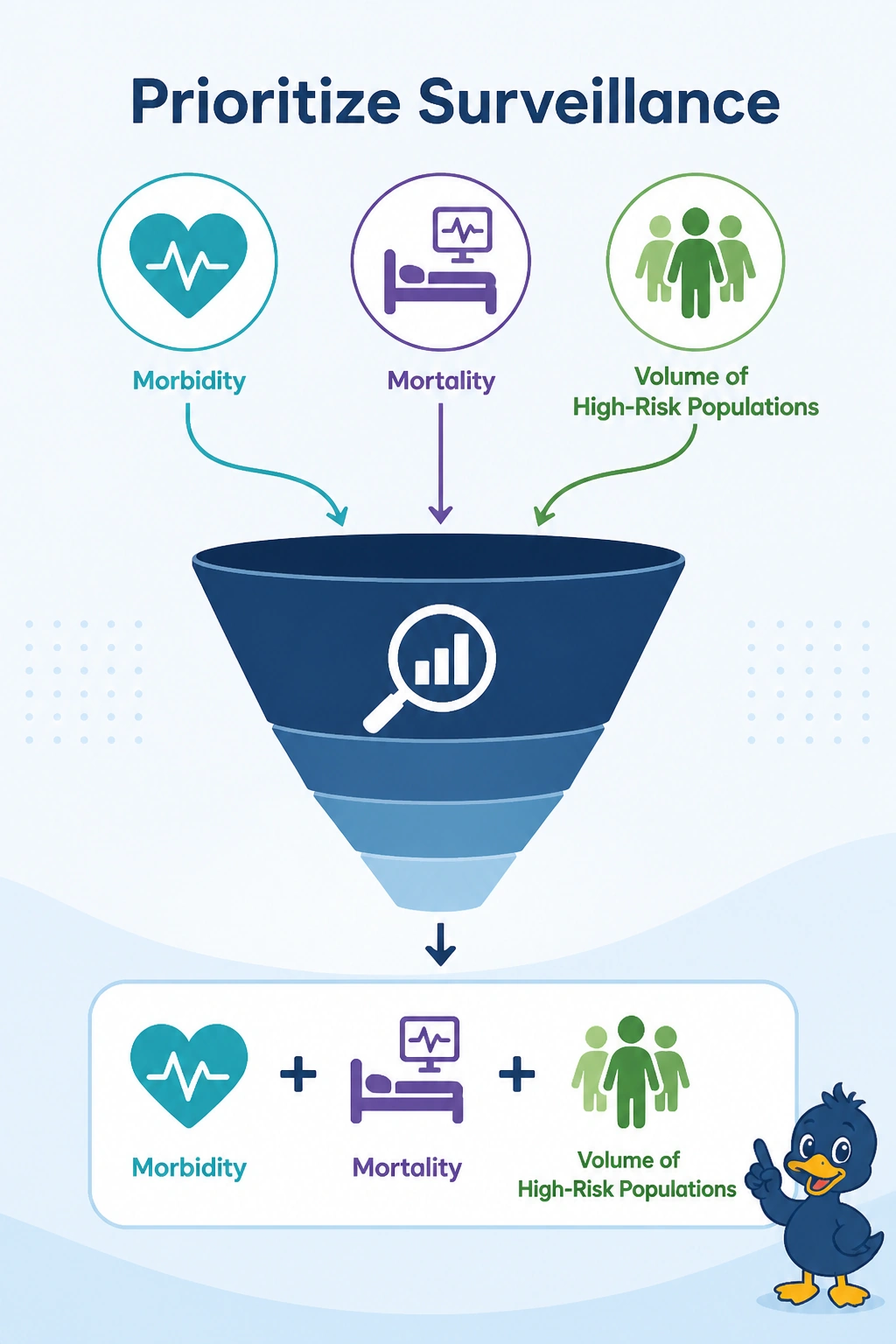
Think of your surveillance plan like an emergency room triage desk—you focus first on the threats most likely to harm patients. You should prioritize by morbidity, mortality, and high-risk volume, rather than falling into the trap of chasing easy data or equal coverage everywhere.
Full Explanation
Targeted surveillance under an annual infection prevention risk assessment is driven by Potential impact on morbidity, mortality, and volume of high-risk populations. Because infection prevention resources are finite, epidemiologic surveillance focuses on high-volume, high-risk, and problem-prone procedures, devices, and vulnerable patient groups where interventions yield measurable harm reduction. Attempting Equal surveillance coverage across every inpatient and outpatient unit regardless of patient acuity dilutes staff capacity on low-risk areas and misses concentrated hazards in intensive care or surgical units. Relying on Anecdotal clinician requests submitted during quarterly quality committee meetings introduces subjective bias rather than objective risk scoring based on facility data and community prevalence. Selecting metrics based on Ease of automated data extraction from the existing electronic health record prioritizes convenience over patient safety and leaves critical manual-review outcomes unmonitored. As a caveat, regulatory mandates such as state or federal reporting requirements must still be incorporated into the baseline plan even if local volume is low. For an operational check, score each identified infection risk for probability, severity, and organizational preparedness with multidisciplinary stakeholders and document the annual plan approval.
Prefer to study offline? Printable PDF study book + test engine ($7.50, unofficial). These questions stay free here.