
A pregnant registered nurse on a pediatric medical unit is assigned to care for a toddler hospitalized with congenital cytomegalovirus (CMV) infection who sheds virus in urine and saliva. Under CDC occupational infection control guidelines, what work practice should occupational health recommend?
Select an answer to reveal the explanation.
Short Explanation
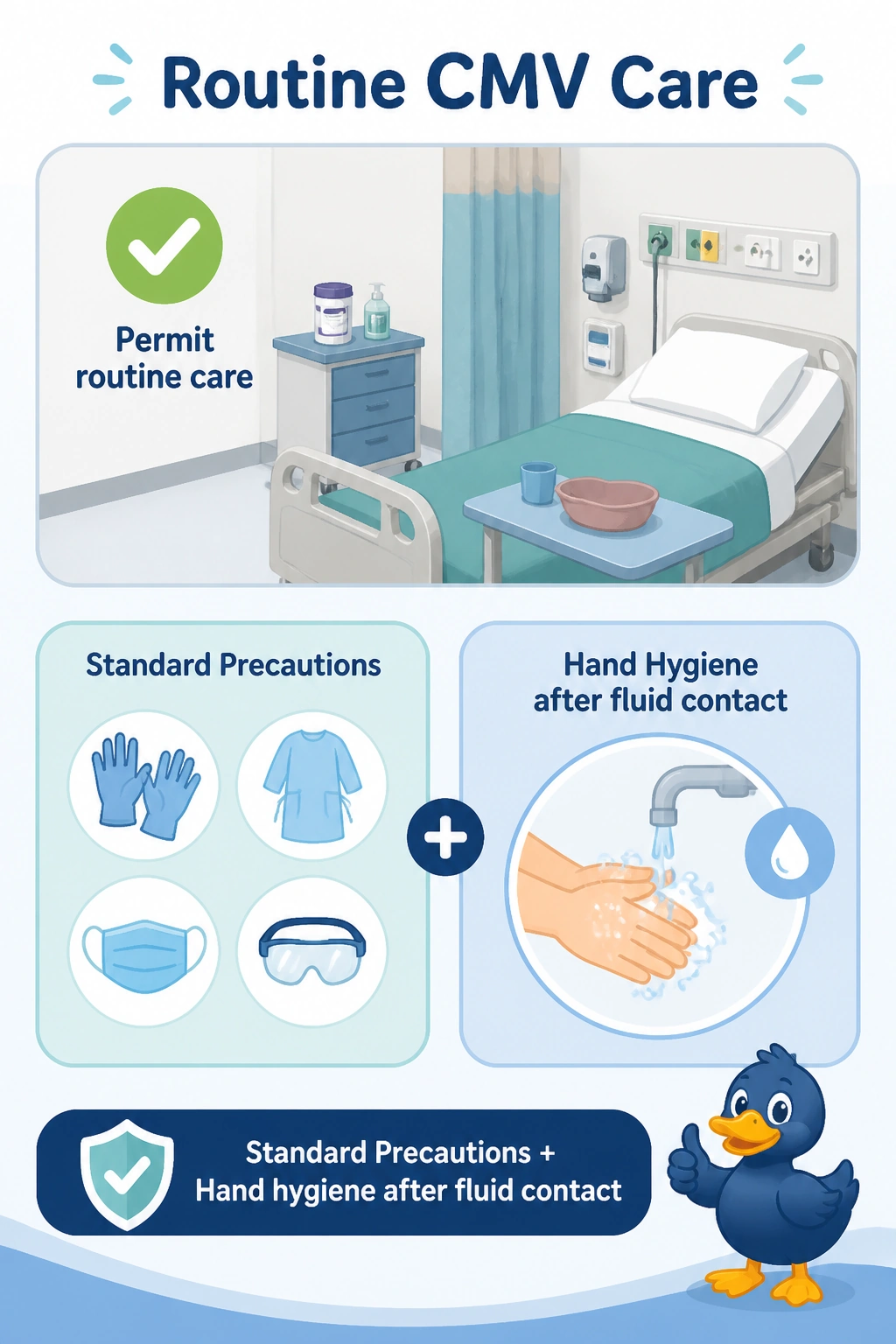
CMV reaches you through direct contact with body fluids such as urine and saliva, not through the air. You can provide routine care with Standard Precautions, gloves for fluid contact, and careful hand hygiene; pregnancy alone does not mean you need reassignment.
Full Explanation
CMV spreads through direct mucous membrane contact with infectious body fluids such as urine and saliva, rather than through airborne aerosols. You can provide routine care using Standard Precautions: consistent glove use during diaper changes or oral care, followed by handwashing after fluid contact, helps prevent transmission. Reassigning you to non-clinical administrative duties for the remainder of pregnancy is not recommended as a routine measure; CDC guidance does not advise routinely excluding or reassigning pregnant staff from CMV patient care. A fit-tested N95 respirator and Airborne Precautions are unnecessary because CMV is not transmitted via airborne droplet nuclei. Prophylactic antiviral medication is also not indicated for occupational exposure; systemic antivirals can have toxicity and teratogenic risks. As an exam caveat, non-immune pregnant personnel may still need restrictions when caring for patients with varicella or rubella. In practice, check that gloves and hand-hygiene supplies are available at the point of care, and reinforce splash protection during suctioning.
Prefer to study offline? Printable PDF study book + test engine ($7.50, unofficial). These questions stay free here.