
An infection preventionist and occupational health manager are conducting the annual update of the hospital's Exposure Control Plan under the OSHA Bloodborne Pathogens Standard (29 CFR 1910.1030), including evaluating new safety-engineered intravenous catheters. Who must be involved in the identification and selection of these safer medical devices?
Select an answer to reveal the explanation.
Short Explanation
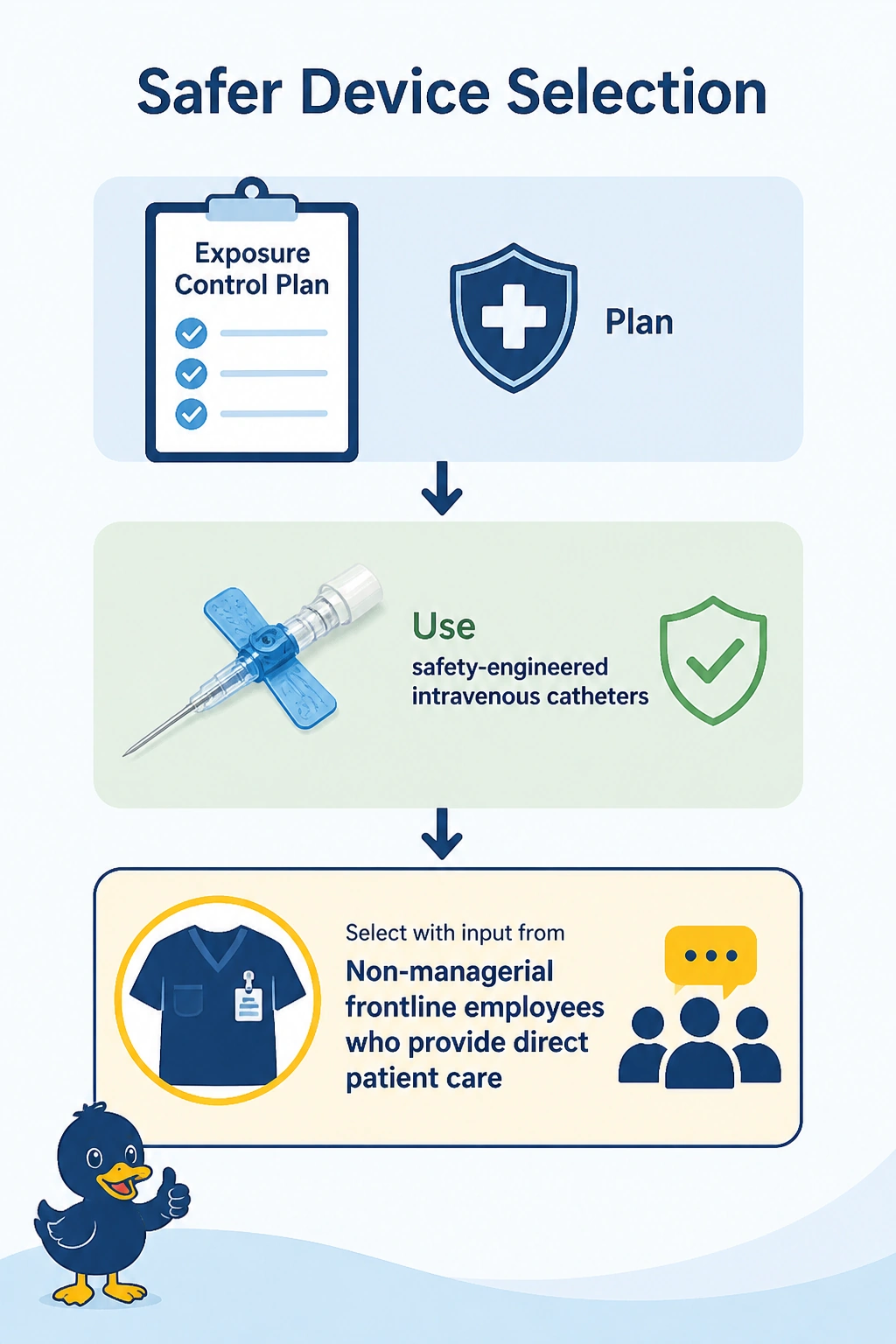
You would not buy work boots for a construction crew without letting the crew walk in them first. Under OSHA's Bloodborne Pathogens Standard, picking safer needles from a boardroom misses the real-world ergonomics that keep staff from getting stuck. Make sure you bring non-managerial frontline clinicians to the table when evaluating safety devices.
Full Explanation
Under the OSHA Bloodborne Pathogens Standard (29 CFR 1910.1030), employers must solicit input from non-managerial frontline employees who provide direct patient care when identifying, evaluating, and selecting effective engineering and work practice controls, including safety-engineered sharps. Frontline nurses, phlebotomists, and technicians actually activate the safety mechanisms during chaotic bedside procedures, so their feedback uncovers usability flaws that could otherwise cause staff to bypass safety features or sustain needlestick injuries. Administrative, engineering or vendor input may contribute, but cannot replace required input from nonmanagerial employees responsible for direct patient care who face sharps exposure. That means relying only on the hospital's purchasing director and infection control committee chair, only on external device manufacturer representatives and biomedical engineers, or on hospital legal counsel and risk management leadership without clinical staff leaves out the mandated end users. As a caveat, the Exposure Control Plan must be reviewed and updated at least annually and whenever new tasks or technologies affect occupational exposure, with employee involvement documented. For an operational check, retain signed evaluation forms and meeting rosters showing frontline clinical participation during annual OSHA compliance audits.
Prefer to study offline? Printable PDF study book + test engine ($7.50, unofficial). These questions stay free here.