
An outpatient pediatric nurse develops a paroxysmal cough, and a nasopharyngeal swab confirms Bordetella pertussis infection. Under CDC infection control guidelines for healthcare personnel, when may the nurse safely return to direct patient care?
Select an answer to reveal the explanation.
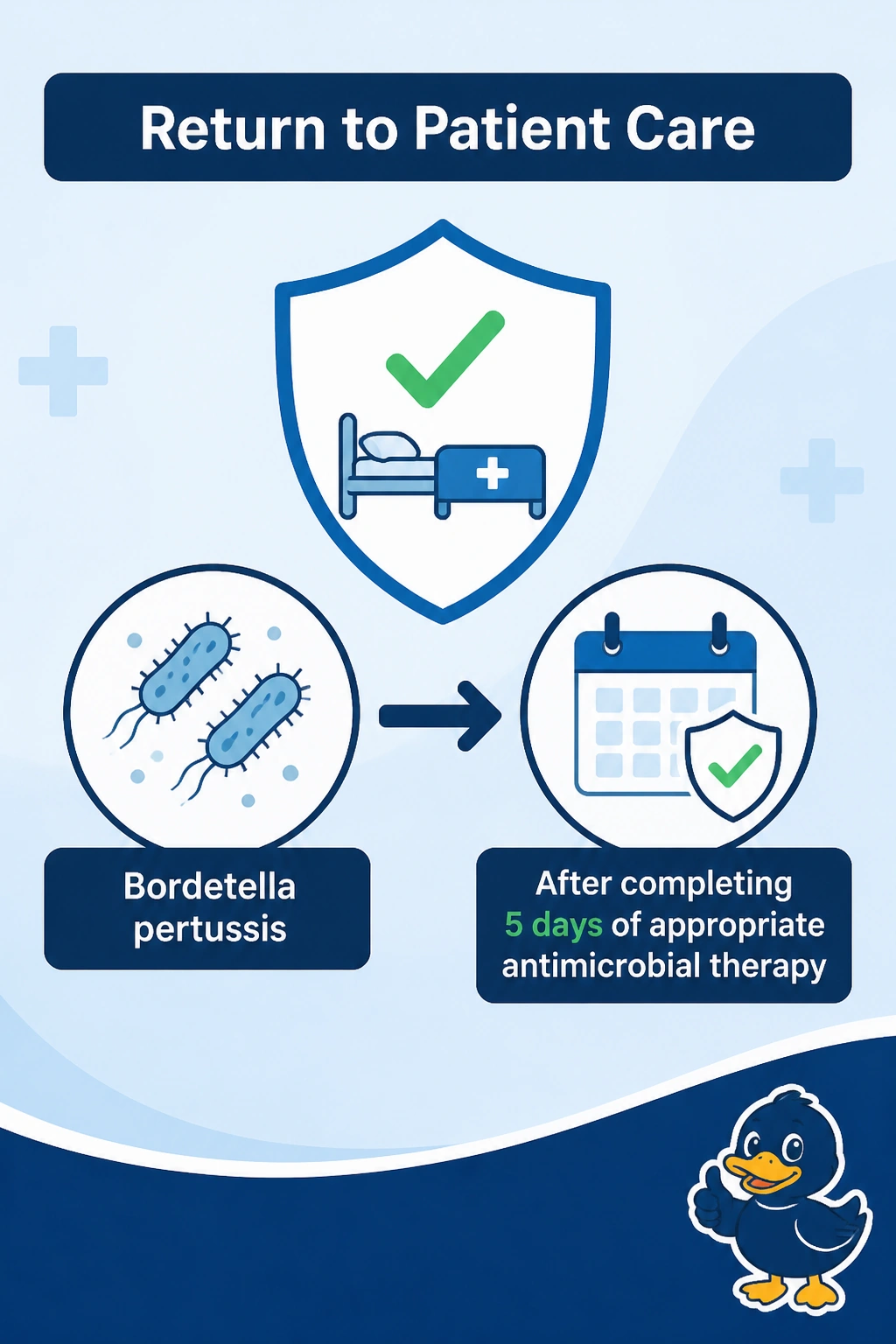
Short Explanation
You protect young patients by keeping a clinician with pertussis away from direct care until 5 days of appropriate antimicrobial therapy are complete. A first dose, a fever-free day, or a negative-test requirement does not replace that treatment interval.
Full Explanation
Healthcare personnel with confirmed pertussis may return to direct patient care after completing 5 days of appropriate antimicrobial therapy. This interval reduces the risk of transmitting Bordetella pertussis in clinical settings, where infants and other vulnerable patients may be exposed. Returning immediately after the first dose of an appropriate macrolide is too soon; one dose does not end the period of contagiousness. Requiring two consecutive negative nasopharyngeal PCR tests is unnecessary because PCR may remain positive after viable bacteria have been cleared, and test results are not the return-to-work criterion. Returning after 24 hours without fever, even without fever-reducing medication, is also not a reliable guide: pertussis may be afebrile while the person remains contagious. An exam caveat is that untreated personnel should be excluded for 21 days from onset of cough. As a practical check, occupational health should verify the treatment start date and arrange post-exposure prophylaxis for exposed high-risk contacts.
Prefer to study offline? Printable PDF study book + test engine ($7.50, unofficial). These questions stay free here.