
A clinician collects a cerebrospinal fluid specimen from an adult with suspected acute bacterial meningitis and plans to place the tube in a 4 degrees Celsius refrigerator because microbiology processing is delayed for two hours. Why should the infection preventionist advise against refrigerating this specimen?
Select an answer to reveal the explanation.
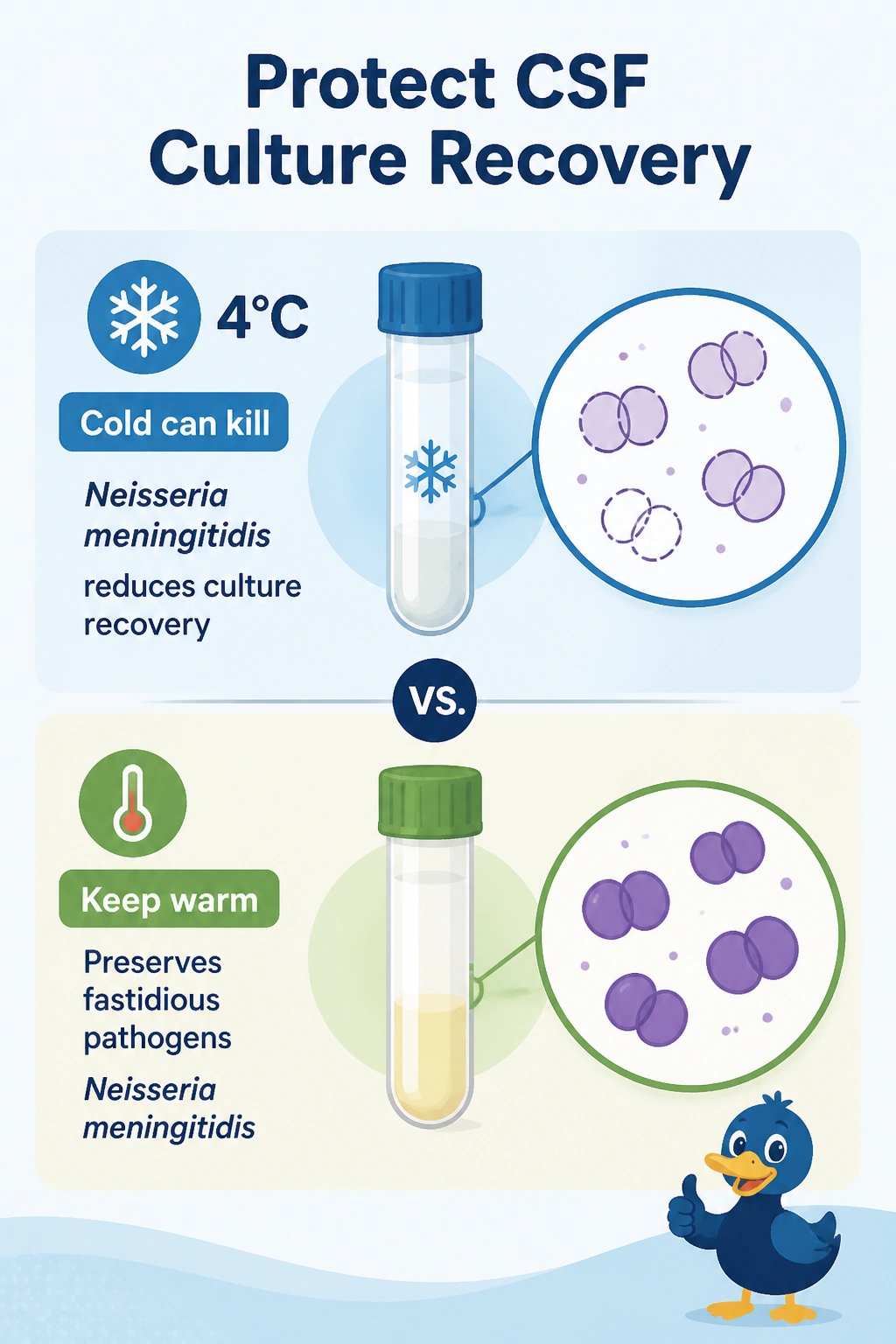
Short Explanation
Treat a fresh spinal fluid sample like a tropical houseplant: sticking it in the fridge for a couple of hours can wipe out the exact organism you are trying to grow. When processing is delayed, you want to protect delicate bacteria at room temperature or in an incubator. The trap is assuming cold storage preserves every clinical specimen the same way it preserves urine.
Full Explanation
Advising against refrigeration is critical because Cold temperatures can kill fastidious pathogens such as Neisseria meningitidis and reduce culture recovery, including Haemophilus influenzae and Streptococcus pneumoniae. Preserving viability ensures accurate Gram stain, culture, and susceptibility results to guide therapy. Neither assertion is correct; fastidious bacterial viability and rapid processing are critical, while cell counts also deteriorate with delay. The claim that Refrigeration reliably preserves all common bacterial meningitis pathogens, but prevents cell counting after rewarming is wrong because cold kills delicate bacteria and counts deteriorate rather than pause for rewarming. The idea that Cold transport improves culture yield enough to justify delaying processing until the next routine laboratory run reverses truth because cold lowers yield and delay risks organism loss. Similarly, Low temperatures inactivate bacterial beta-lactamase enzymes needed for susceptibility testing is wrong because chilling does not erase enzyme expression; killing the organism prevents testing. Follow separate molecular-test aliquot requirements, as viral molecular tubes may have different refrigeration rules. Verify units deliver spinal fluid immediately at ambient temperature and never refrigerate bacterial culture tubes.
Prefer to study offline? Printable PDF study book + test engine ($7.50, unofficial). These questions stay free here.