
An adult inpatient with chronic cough and cavitary lung lesions has a sputum specimen that is positive for acid-fast bacilli (AFB) on smear microscopy. The clinical team debates whether to discontinue airborne precautions while awaiting mycobacterial culture results in several weeks. Which diagnostic step best clarifies whether the patient has Mycobacterium tuberculosis complex?
Select an answer to reveal the explanation.
Short Explanation
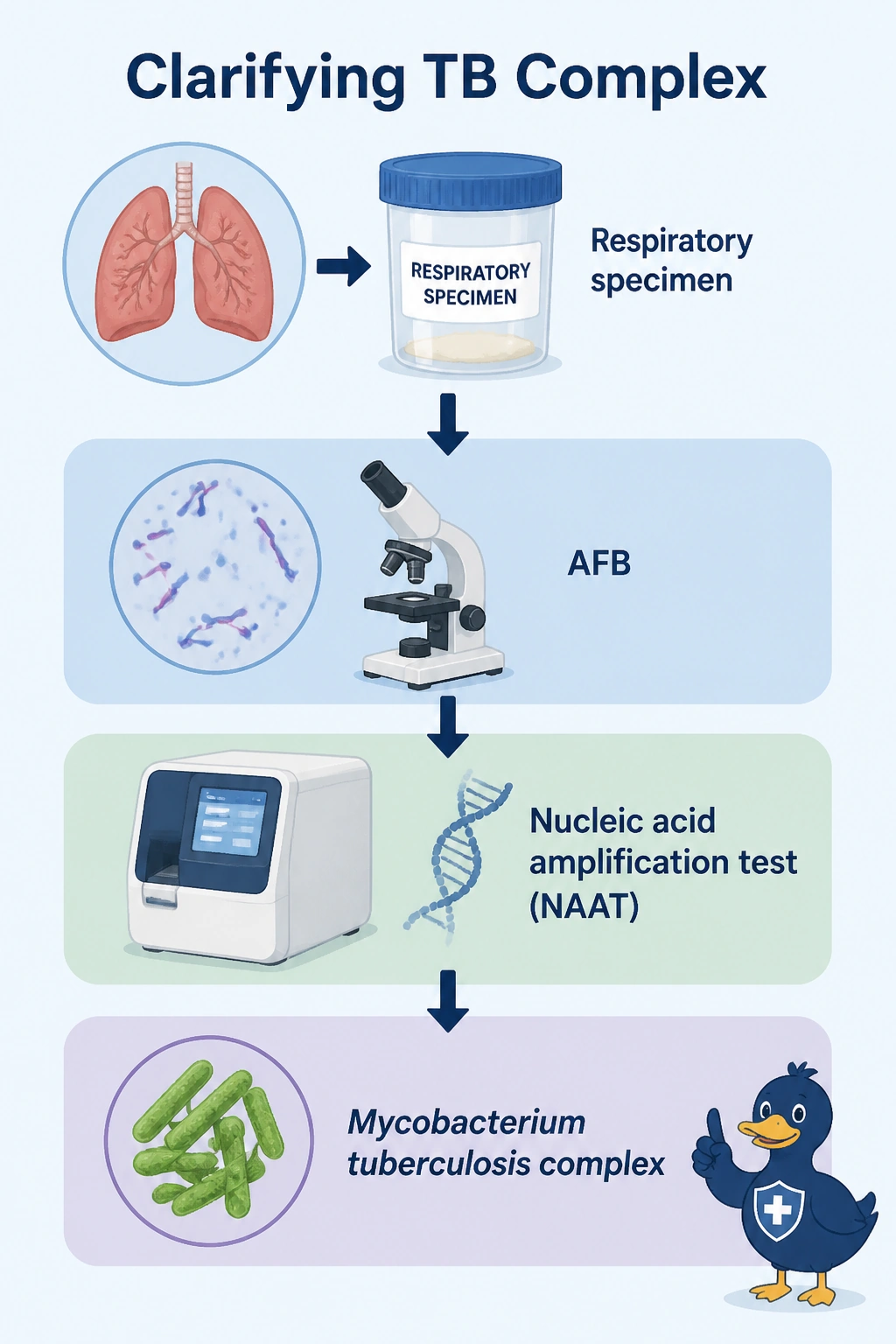
Think of an acid-fast bacilli smear like spotting a flashing red light—you know something mycobacterial is there, but not which species triggered it. The trap is relying on repeat smears or blood-based latent tests while waiting weeks for culture growth. A nucleic acid amplification test rapidly distinguishes Mycobacterium tuberculosis complex from nontuberculous mycobacteria so you can manage isolation safely.
Full Explanation
Performing a nucleic acid amplification test on the respiratory specimen is the CDC-recommended step because AFB smear microscopy detects mycobacteria generally without differentiating Mycobacterium tuberculosis complex from nontuberculous mycobacteria (NTM). Rapid molecular amplification targets M. tuberculosis complex DNA, delivering actionable results within hours to days so clinicians and infection preventionists can confirm whether prolonged Airborne Precautions and multi-drug therapy are warranted. Repeating three additional morning sputum acid-fast bacilli smears over the next week fails because additional smears still cannot separate M. tuberculosis from NTM species. Ordering an interferon-gamma release assay to confirm active pulmonary disease is incorrect because IGRAs measure immune sensitization and cannot distinguish latent infection from active disease or rule out active tuberculosis. Waiting for solid-media mycobacterial culture identification before any testing delays definitive isolation and treatment decisions for weeks, increasing exposure or unnecessary isolation risk. As a caveat, a negative NAAT does not by itself exclude culture-positive tuberculosis when clinical suspicion remains high, especially in smear-negative cases. Operationally, verify that the laboratory's AFB smear-positive workflow automatically triggers NAAT testing and immediate infection prevention notification.
Prefer to study offline? Printable PDF study book + test engine ($7.50, unofficial). These questions stay free here.