
During a pre-operative clinic evaluation, an adult patient has a reactive hepatitis C virus antibody (anti-HCV) screening test. Which laboratory step is required next to determine the patient's current infection status?
Select an answer to reveal the explanation.
Short Explanation
An antibody test only tells you whether the immune system has ever met hepatitis C, not whether the virus is still in the room. You need viral RNA confirmation rather than treating a reactive antibody screen as proof of active infection.
Full Explanation
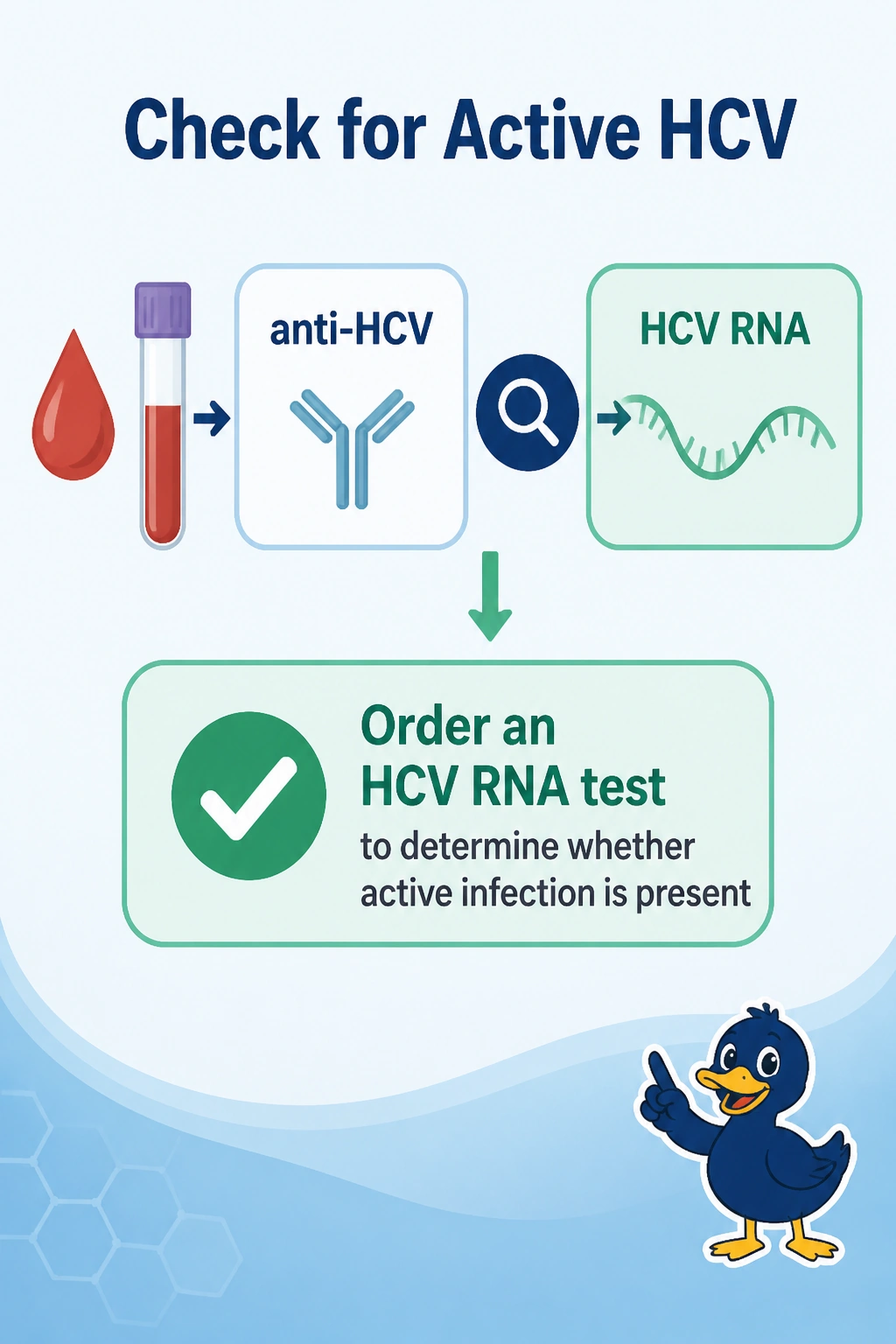
Under the CDC hepatitis C testing algorithm, a reactive anti-HCV antibody screen must be followed by nucleic acid testing to Order an HCV RNA test to determine whether active infection is present, ideally via automatic laboratory reflex testing on the same specimen. Anti-HCV antibodies remain reactive for years after spontaneous viral clearance or successful antiviral treatment, so to Confirm active hepatitis C infection using the reactive antibody result alone misclassifies resolved infections as active viremia. Choosing to Repeat the anti-HCV antibody immunoassay in six months without viral testing cannot distinguish cleared infection from ongoing viremia because antibodies persist in both states. To Diagnose acute hepatitis C solely from a positive IgM core antibody assay confuses hepatitis C with hepatitis B serology, where IgM anti-HBc is used to identify acute hepatitis B infection. As a diagnostic caveat, immunocompromised patients with suspected acute or early hepatitis C may have false-negative anti-HCV antibodies and require direct HCV RNA testing. For an operational check, review laboratory order sets with microbiology leadership to verify that reactive anti-HCV screens automatically reflex to quantitative or qualitative HCV RNA testing without requiring a second blood draw.
Prefer to study offline? Printable PDF study book + test engine ($7.50, unofficial). These questions stay free here.