
A patient with suspected pulmonary tuberculosis is admitted to an Airborne Infection Isolation Room on a medical unit. Which environmental monitoring practice should staff verify daily while the room is occupied?
Select an answer to reveal the explanation.
Short Explanation
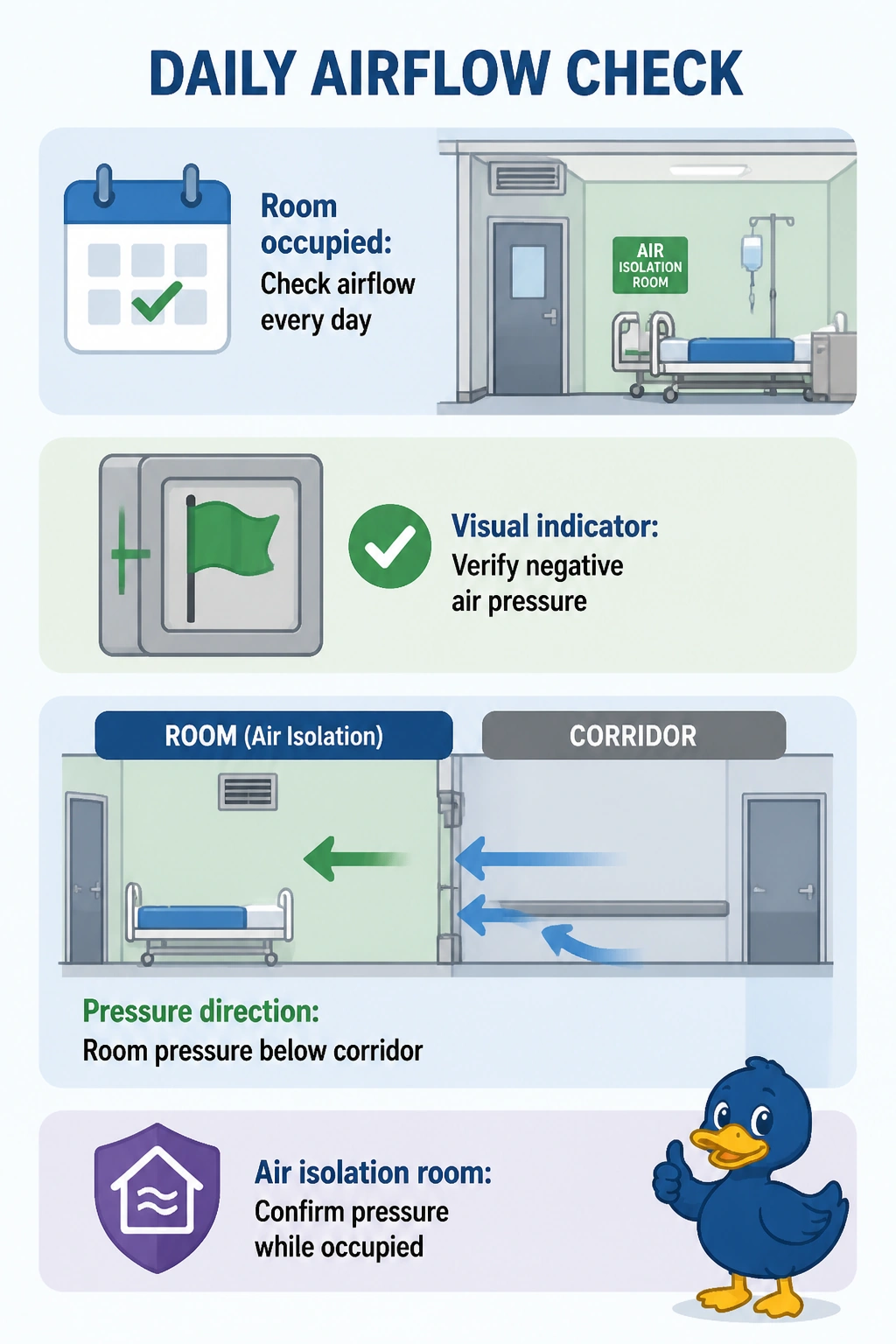
You can think of an Airborne Infection Isolation Room as a gentle vacuum: negative pressure pulls air inward from the hallway so infectious droplets do not drift toward other patients. Check the visual indicator daily while the room is occupied; a fan or damper problem can silently reverse airflow, and routine visual checks are different from periodic engineering measurements.
Full Explanation
Under CDC Guidelines for Environmental Infection Control in Health-Care Facilities, staff must confirm negative air pressure relative to the corridor while an Airborne Infection Isolation Room is occupied. Use a visual indicator daily, even if a differential-pressure sensing device is installed, and review the monitor and alarms. Negative pressure draws air from the cleaner corridor into the room, where it is exhausted safely outside or through HEPA filtration, containing Mycobacterium tuberculosis droplet nuclei. Confirming positive air pressure relative to the corridor with a smoke tube test describes the opposite pressure relationship, used for Protective Environment rooms housing severely immunocompromised patients; it would push infectious aerosols into the hallway. Propping the anteroom door open between care episodes destroys the pressure differential needed for containment. Testing the room’s air exchange rate with a balometer at the start of every nursing shift confuses engineering commissioning and periodic preventive maintenance with the simple daily verification of pressure direction. As a caveat, if daily monitoring shows loss of negative pressure, relocate the patient or notify engineering immediately while enforcing interim precautions. For a practical check, review daily AIIR pressure logs during unit rounds and verify alarm thresholds with facilities engineering.
Prefer to study offline? Printable PDF study book + test engine ($7.50, unofficial). These questions stay free here.