
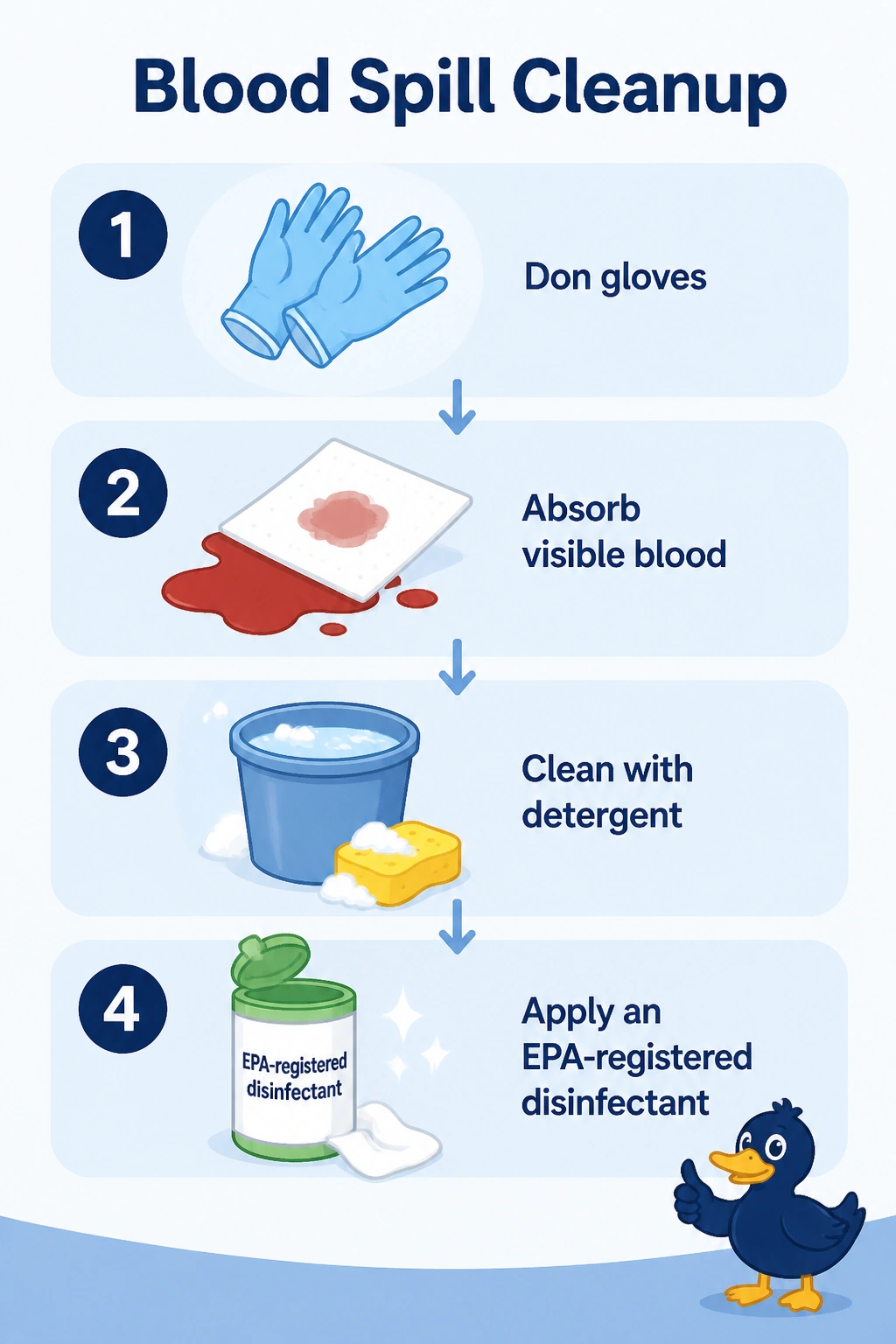
During a busy shift in an outpatient hemodialysis clinic, a patient's vascular access bleeds onto the vinyl floor beside the treatment chair, leaving a visible pool of blood. Which decontamination sequence should the infection preventionist instruct environmental services staff to follow?
Select an answer to reveal the explanation.
Short Explanation
You’re on the right track: cleaning removes blood and other organic matter so the disinfectant can work. Use spill-volume-specific PPE and your facility’s validated protocol; for large spills, CDC also describes an initial germicide application before bulk removal, cleaning, and final disinfection, and a dry-looking floor does not prove safe disinfection.
Full Explanation
Under CDC Guidelines for Environmental Infection Control in Health-Care Facilities and the OSHA Bloodborne Pathogens Standard (29 CFR 1910.1030), the appropriate sequence is to don gloves, absorb visible blood, clean with detergent, and apply an EPA-registered disinfectant. Heavy organic matter can shield microbes and inactivate disinfectants, so removing bulk blood and cleaning first helps the product work; follow its label contact time. Use spill-volume-specific PPE and your facility’s validated protocol. As an exam caveat, CDC also describes an initial germicide application before cleaning for large blood spills to reduce handling risk, followed by bulk removal, cleaning, and final disinfection. Spraying disinfectant directly onto pooled blood and wiping it away after the contact time does not remove gross contamination first and may cause splashing or aerosolization. Absorbing bulk blood and briefly wiping with alcohol does not establish validated disinfection, and a dry appearance is not proof of safety. Mopping with standard neutral floor cleaner and sending the soiled mop head to routine facility laundry can spread blood and expose laundry workers to biohazard without reliably killing pathogens. As a practical check, confirm the disinfectant is EPA-registered for the intended use and keep the surface wet for the full label contact time.
Prefer to study offline? Printable PDF study book + test engine ($7.50, unofficial). These questions stay free here.