
During an outpatient clinic visit, a 58-year-old man with type 2 diabetes and an A1C of 9.4% asks a diabetes care and education specialist who is not a licensed prescriber and has no standing order, delegated authority or medication-titration protocol for this change to increase his sulfonylurea dose today and send a new prescription to his pharmacy. Which action best aligns with professional practice standards?
Select an answer to reveal the explanation.
Short Explanation
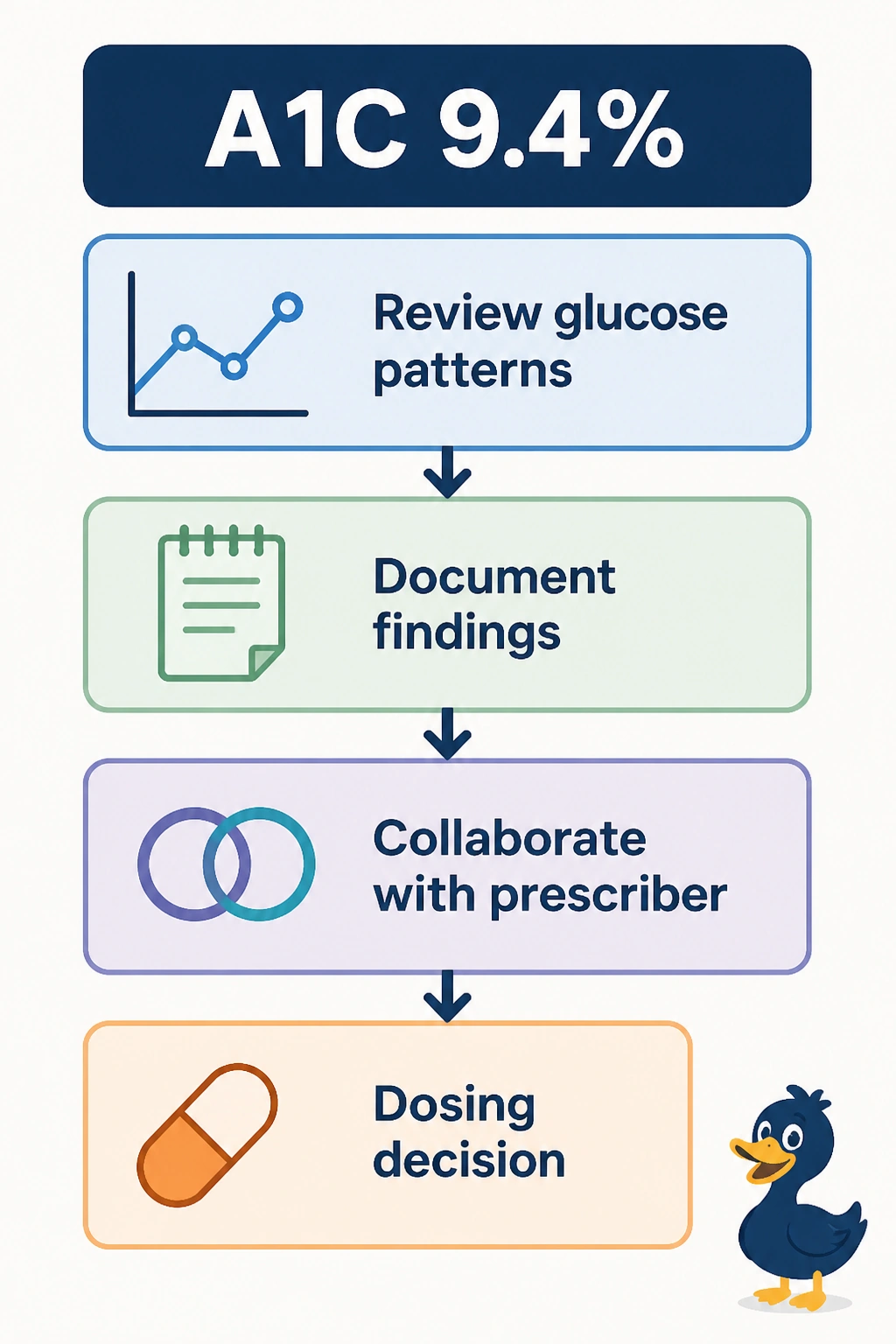
You can support a safe dose decision by reviewing glucose patterns, documenting what you find, and collaborating with the prescriber. Calling in a higher dose or advising an extra half-tablet would overstep your authority, while forwarding the request without assessing the situation misses a chance to help. This teamwork keeps your patient’s care coordinated and within professional boundaries.
Full Explanation
Professional practice standards for diabetes care and education specialists emphasize interprofessional collaboration while respecting scope-of-practice boundaries. Reviewing glucose patterns, documenting findings, and collaborating with the prescriber for a dosing decision uses the specialist’s assessment skills to support safe therapy adjustment. Without prescribing or protocol authority, the specialist should assess, document, and coordinate the medication decision with an authorized clinician. Calling in the higher dose to the pharmacy and notifying the clinician later bypasses evaluation by an authorized clinician. Instructing the patient to take an extra half-tablet daily until the next visit risks hypoglycemia from an unguided dose change without prescriber input. Sending the request to the prescriber without assessing recent glucose patterns or medication-use barriers misses the educator’s role in gathering self-management data and advocating for timely care. As an exam caveat, some specialists practice under formal collaborative practice agreements that define specific titration protocols; these must be verified locally. As a practical check, send the prescriber a structured summary of recent glucose trends and adherence barriers before the patient leaves.
Prefer to study offline? Printable PDF study book + test engine ($7.50, unofficial). These questions stay free here.