
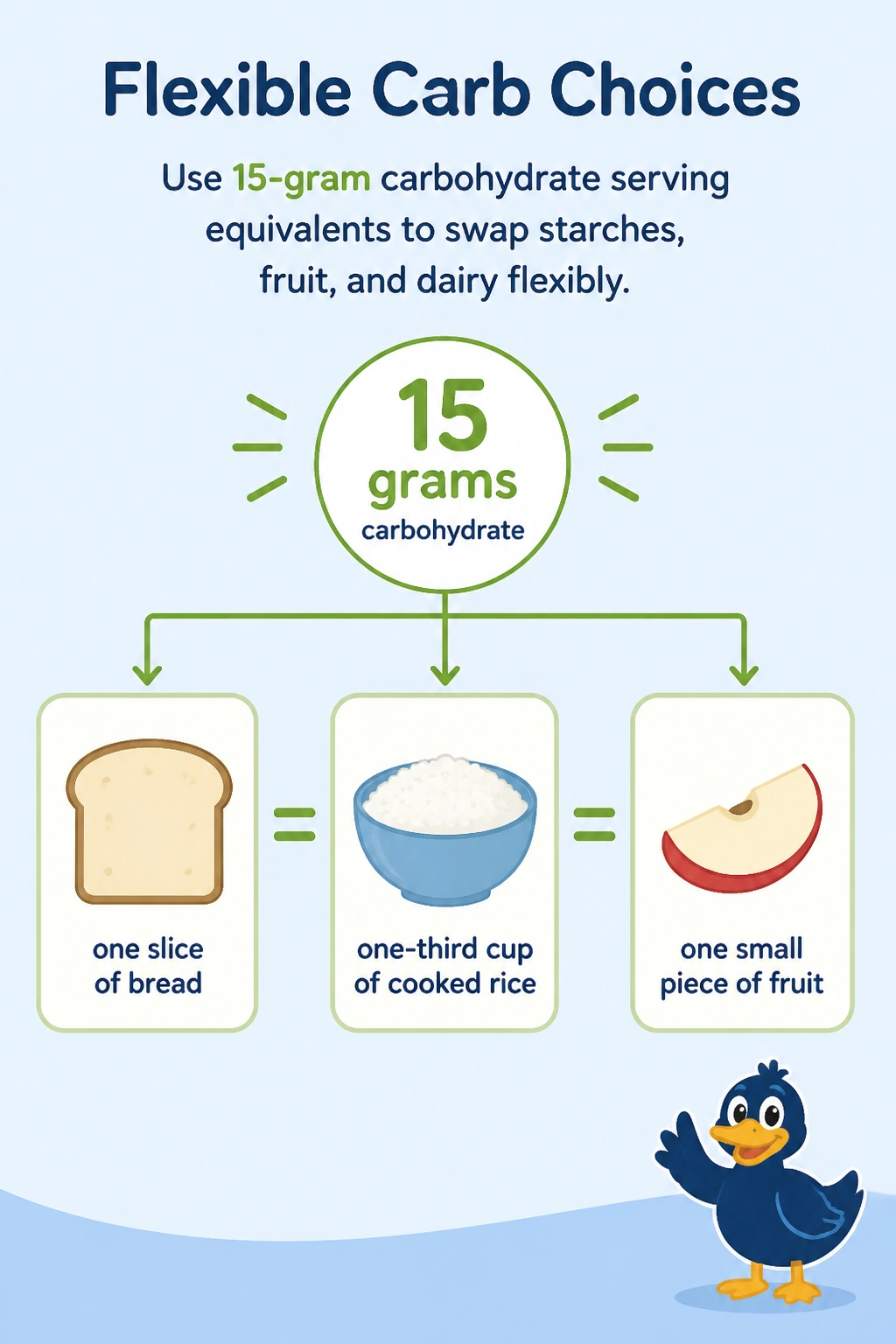
A 51-year-old woman with type 2 diabetes wants to build varied meals using a simple system where one slice of bread, one-third cup of cooked rice, and one small piece of fruit each count as one carbohydrate choice. Which nutrition concept should the diabetes care and education specialist teach?
Select an answer to reveal the explanation.
Short Explanation
Think of carbohydrate choices like swapping tokens of equal value at an arcade: whether you pick bread, rice, or fruit, each token represents roughly 15 grams of carbohydrate. You get variety without complicated math when you swap by total carbohydrate grams, not by added sugars, cup volumes, or calories.
Full Explanation
Choosing to Use 15-gram carbohydrate serving equivalents to swap starches, fruit, and dairy flexibly directly teaches the carbohydrate-choice method. In diabetes nutrition education, one carbohydrate choice equals approximately 15 grams of total carbohydrate, allowing exchange of one slice of bread, one-third cup of cooked rice, one small fruit, or one cup of milk while keeping meal carbohydrate load consistent. This supports variety, cultural preferences, and sustainable planning. Choosing to Use 15 grams of added sugar, rather than total carbohydrate, as one carbohydrate choice fails because all digestible carbohydrate — starches, lactose, and natural fruit sugars — raises postprandial glucose, not added sugar alone. Choosing to Use equal food volumes, such as one cup, as interchangeable carbohydrate choices fails because carbohydrate density varies by food, so equal cups do not provide equal grams. Choosing to Exchange foods by equal calorie amounts rather than equal carbohydrate grams fails because calories from fat and protein do not predict glycemic impact like carbohydrate grams do. As a caveat, portions are estimates and high-fiber or high-fat meals can alter absorption speed. As an operational check, have the patient assemble two sample meals with measuring cups to verify accurate 15-gram swaps.
Prefer to study offline? Printable PDF study book + test engine ($7.50, unofficial). These questions stay free here.