
A 49-year-old man with type 2 diabetes using basal insulin and metformin feels overwhelmed by lengthy clinic handouts and asks for a simple, at-a-glance guide on what to do when his blood glucose is in range, mildly high, or dangerously low. Which individualized education tool should the diabetes care and education specialist co-create with him?
Select an answer to reveal the explanation.
Short Explanation
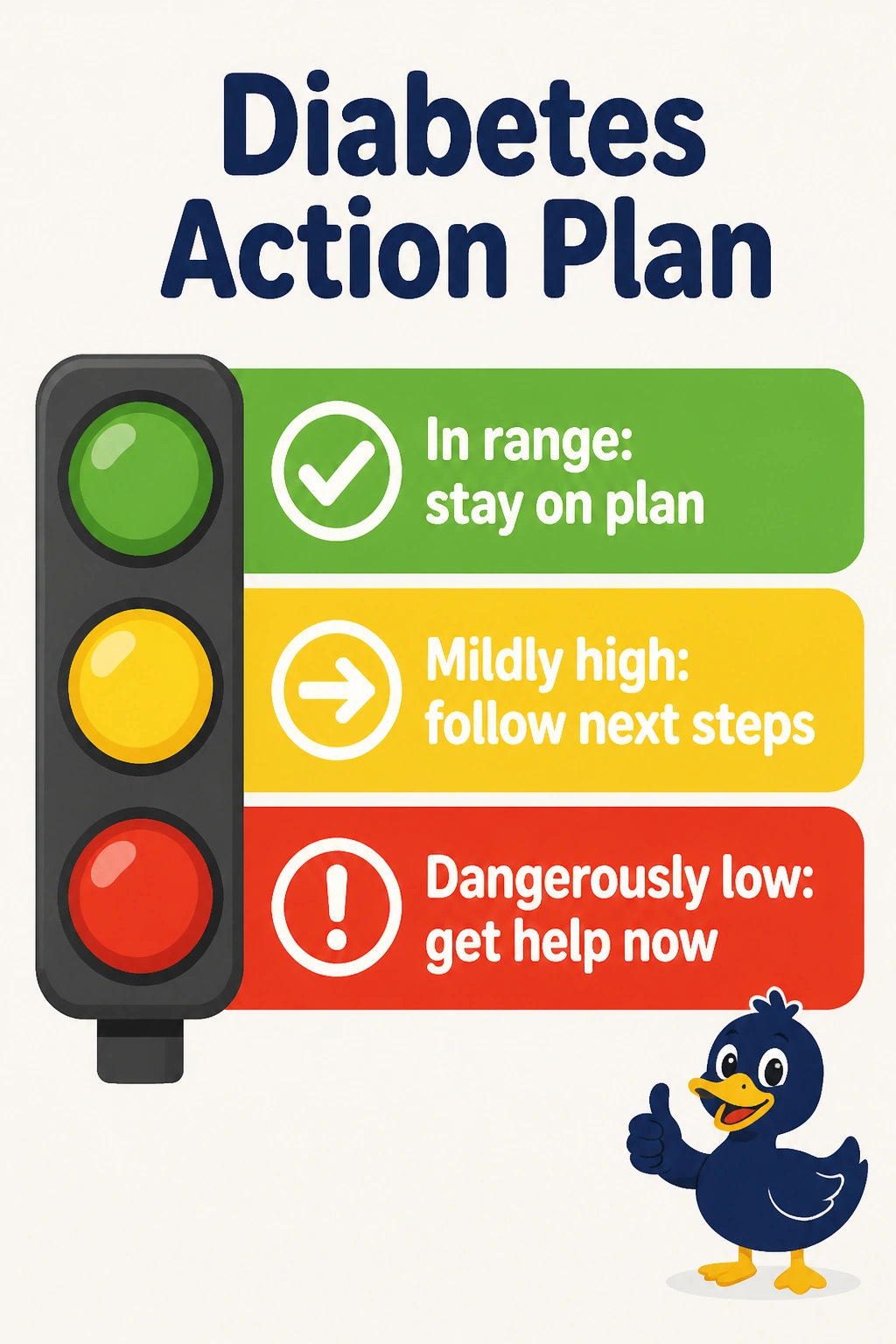
When blood sugar swings hit, nobody wants to flip through a textbook to figure out the next move. A simple, color-coded action plan gives you clear green, yellow, and red steps at a glance so you know when to stay the course and when to reach out for help.
Full Explanation
Visual, plain-language action plans translate complex clinical instructions into immediate, actionable decisions that reduce cognitive overload and improve safety. A color-coded Diabetes Action Plan pairing glucose zones with clear next steps organizes his individualized target range, non-urgent troubleshooting steps, and urgent warning signs into an easy-to-scan reference he can keep on a refrigerator or phone. Providing target numbers without linking ranges to actions leaves him knowing what is normal but not what to do next for a mild high or a low, defeating the at-a-glance purpose. Using action zones based only on A1C rather than current glucose confuses a 2- to 3-month average with real-time decision-making and cannot guide immediate steps for in-range, high, or low values. Providing a generic glucose log before specifying safety actions prioritizes data collection over urgent guidance and leaves him without clear thresholds, symptoms to watch for, and contact steps when action is needed. As a caveat, every zone must reflect his prescriber-approved targets and specify exact clinic contact instructions for persistent highs or recurrent lows. As an operational check, use teach-back to have him point to the yellow and red zones and explain in his own words what action he would take for each scenario.
Prefer to study offline? Printable PDF study book + test engine ($7.50, unofficial). These questions stay free here.