
A 66-year-old woman with type 2 diabetes and bilateral peripheral neuropathy notices a thick corn on her fourth toe and asks whether she can apply an over-the-counter medicated salicylic acid corn pad at home. Which guidance should the diabetes care and education specialist provide?
Select an answer to reveal the explanation.
Short Explanation
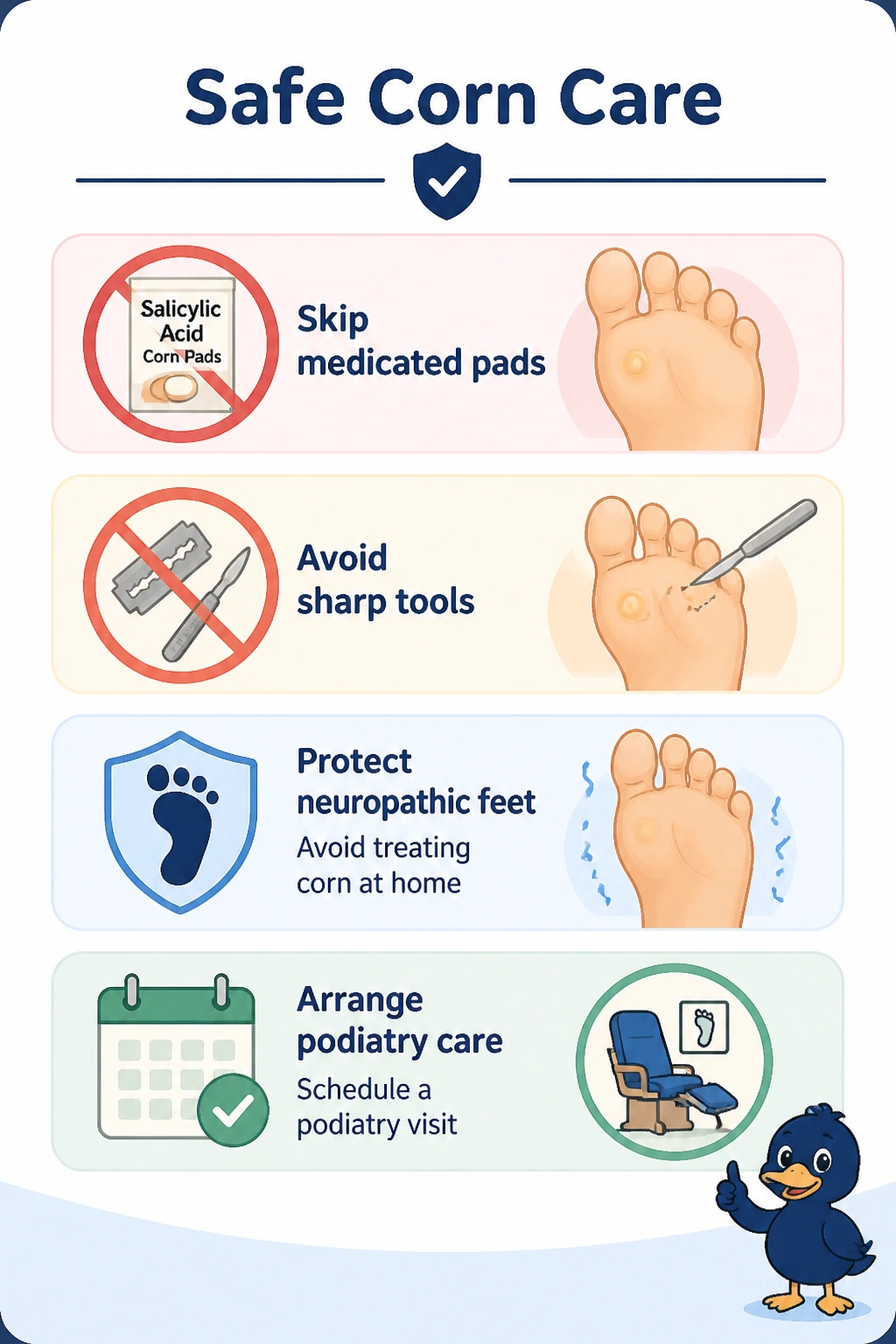
When nerve sensation is dulled, chemical corn removers act like invisible acid burns you cannot feel! The trap is treating a simple corn with drugstore pads or blades that damage healthy tissue and spark ulcers. Safe care means keeping chemicals and sharp tools away and letting a foot specialist handle it.
Full Explanation
The medicated salicylic-acid corn pad described here can damage surrounding healthy skin as well as the corn, which can cause painless chemical burns and ulceration in people with loss of protective sensation, making Avoid medicated corn pads and sharp tools, and schedule a podiatry visit the safest recommendation. Professional debridement protects tissue integrity and addresses underlying footwear pressure. Following Apply the medicated corn pad nightly until the thickened skin peels away exposes neuropathic skin to progressive chemical injury. Following Soak the foot in warm water and pare the corn down with a clean razor blade combines thermal burn and maceration risks with high risk of accidental laceration. Choosing Use the medicated pad for a shorter contact time because the corn is painless still exposes insensate skin to chemical injury, and lack of pain does not mean lack of tissue damage. As a clinical caveat, even minor friction or chemical irritation on a neuropathic toe can escalate rapidly into a limb-threatening ulcer. As an operational check, inspect her shoes for tight toe boxes and confirm she has a podiatry appointment scheduled.
Prefer to study offline? Printable PDF study book + test engine ($7.50, unofficial). These questions stay free here.