
A 59-year-old man with newly diagnosed type 2 diabetes says printed clinic pamphlets feel confusing and asks how he can remember his daily self-care steps without getting overwhelmed. Which teaching strategy should the diabetes care and education specialist use?
Select an answer to reveal the explanation.
Short Explanation
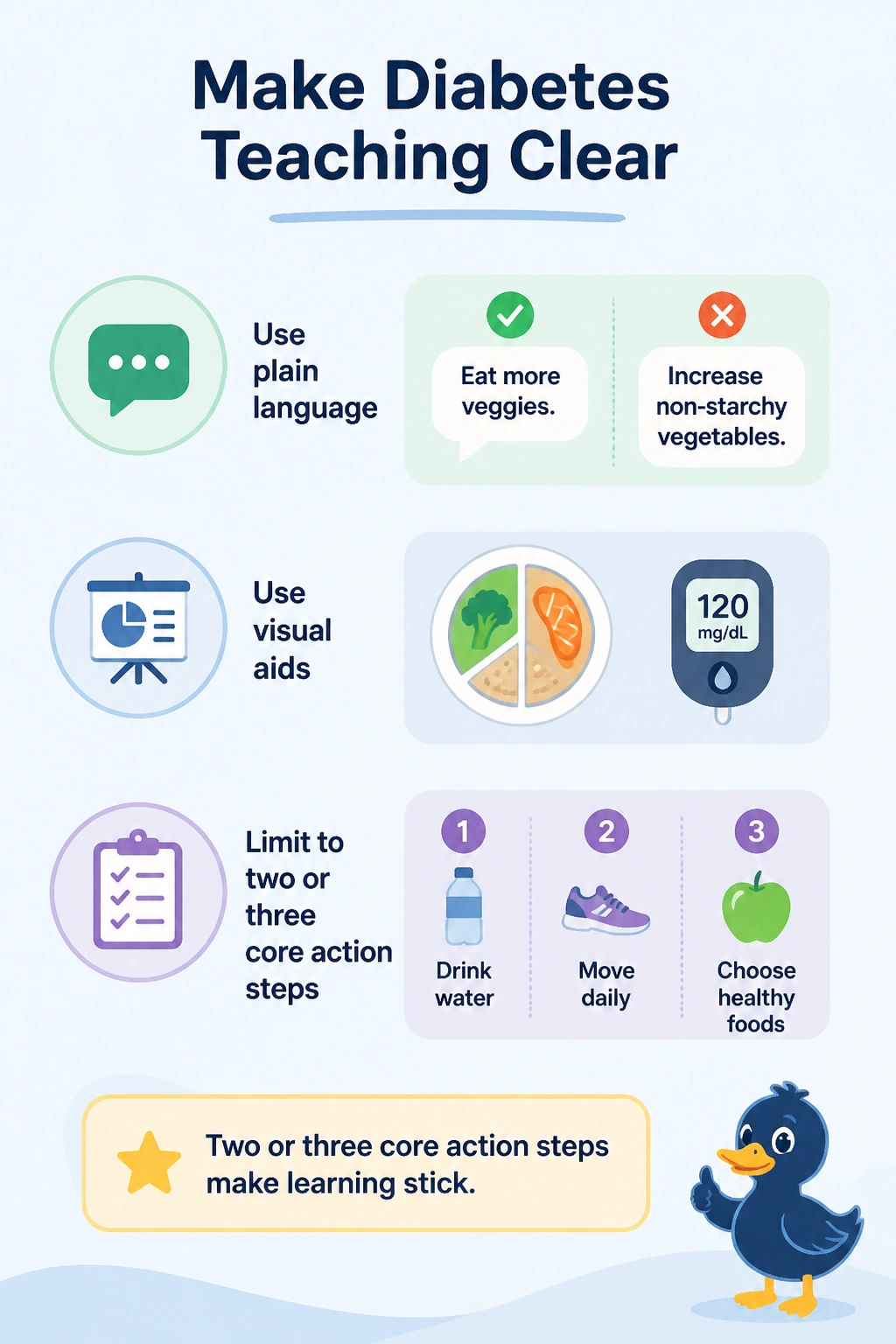
Handing an overwhelmed learner a textbook is like trying to teach someone to swim by throwing them into the deep end. When you use plain language, visual aids, and focus on just two or three core steps, you make self-care doable right away. Skip the dense manuals and lectures that only bury your patient in jargon.
Full Explanation
Choosing to Use plain language, visual aids, and limit each session to two or three core action steps applies health literacy best practices recommended in diabetes self-management education. Chunking information into small, actionable behaviors paired with pictures or demonstrations lowers cognitive load and improves recall for adults who struggle with dense text. Choosing to Provide a comprehensive reference manual covering all diabetes complications increases reading burden and anxiety without helping him execute immediate daily habits. Choosing to Ask him to take written notes during a lecture on glucose pathophysiology relies heavily on note-taking skills and abstract physiology rather than practical behavior change. Choosing to Email him links to clinical guidelines to read independently at home shifts technical, provider-facing material onto a patient who already expressed confusion with basic clinic handouts. As a practical caveat, plain language should simplify medical jargon without talking down to the learner or omitting essential safety warnings. As an operational check, use teach-back at the end of the visit to verify he can state and demonstrate his two or three priority steps in his own words.
Prefer to study offline? Printable PDF study book + test engine ($7.50, unofficial). These questions stay free here.