
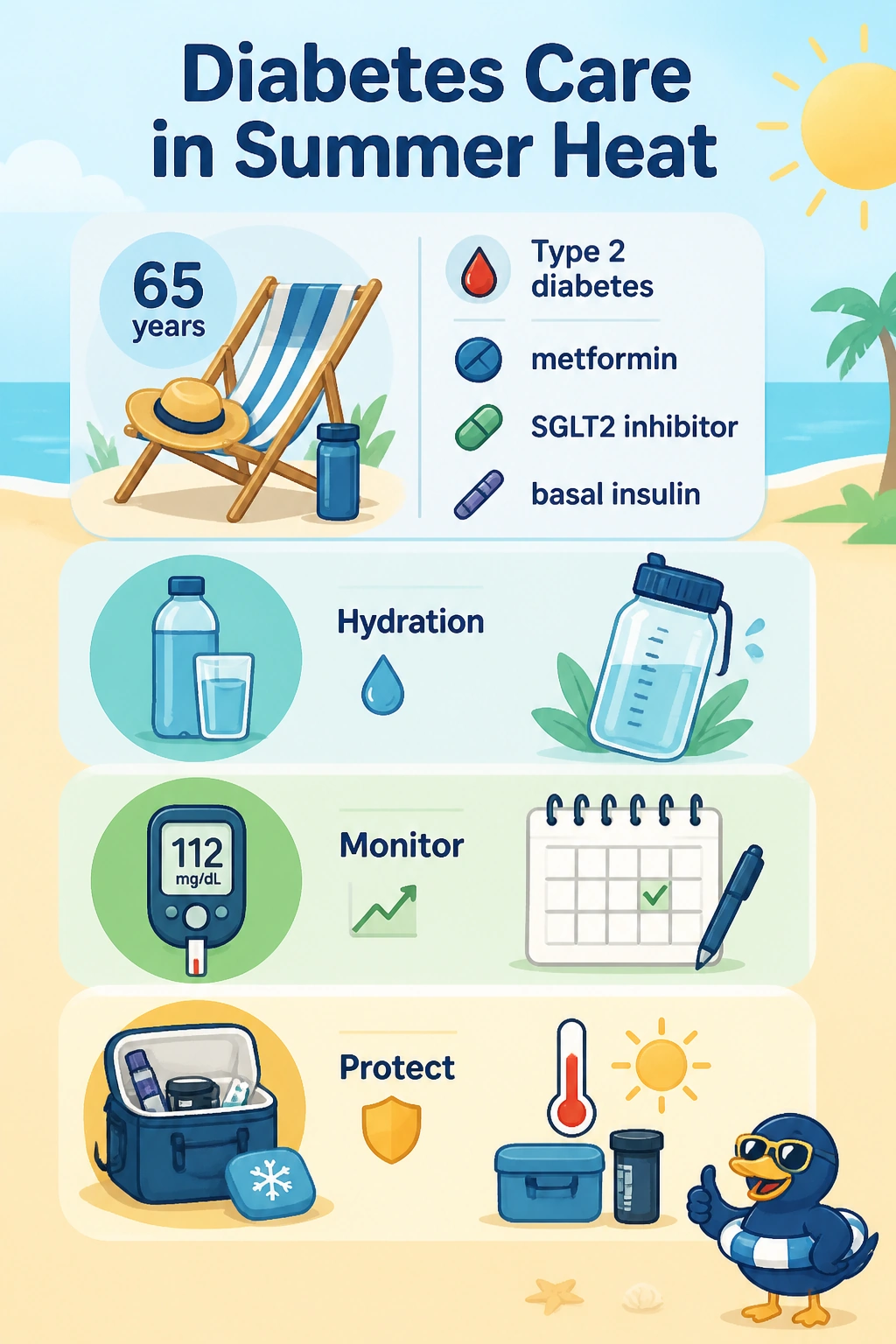
A 65-year-old man with type 2 diabetes taking metformin, an SGLT2 inhibitor, and basal insulin plans to work outdoors during a summer heatwave and asks how hot weather affects his diabetes self-management. Which guidance should the diabetes care and education specialist prioritize?
Select an answer to reveal the explanation.
Short Explanation
Summer heat puts double stress on your body and your diabetes gear, drying you out faster while cooking sensitive insulin and test strips. The trap is overlooking supply protection or hydration when working outside, so plan ahead for both.
Full Explanation
High ambient temperatures increase fluid losses through sweat, raise the risk of volume depletion and acute kidney injury—especially when taking an SGLT2 inhibitor—and can alter insulin absorption or degrade insulin and test strips. Recommending to "Maintain steady hydration, monitor glucose closely, and protect insulin and strips from heat" addresses both physiological safety and supply integrity. Advising to "Store backup insulin pens in a parked car so they stay close by" exposes insulin to extreme temperatures that rapidly reduce potency. Telling him to "Restrict fluid intake during outdoor work to prevent urination" worsens dehydration, increases ketoacidosis and hyperosmolar risk, and strains kidney function. Suggesting to "Use the usual monitoring schedule without considering added heat exposure or work intensity" is unsafe because heat, exertion, and fluid shifts can change glucose unpredictably and require more frequent checks. As a caveat, patients on diuretics or SGLT2 inhibitors should know when to contact their clinician if dizziness, vomiting, or dark urine occurs. For an operational check, review insulated cooling-pouch options and verify he carries fast-acting carbohydrates and water before starting outdoor shifts.
Prefer to study offline? Printable PDF study book + test engine ($7.50, unofficial). These questions stay free here.