
A 30-year-old woman with type 1 diabetes keeps her emergency glucagon kit in the glove compartment of her car year-round so it is always nearby, and she has not checked the box since filling the prescription two years ago. Which maintenance instruction should the diabetes care and education specialist provide?
Select an answer to reveal the explanation.
Short Explanation
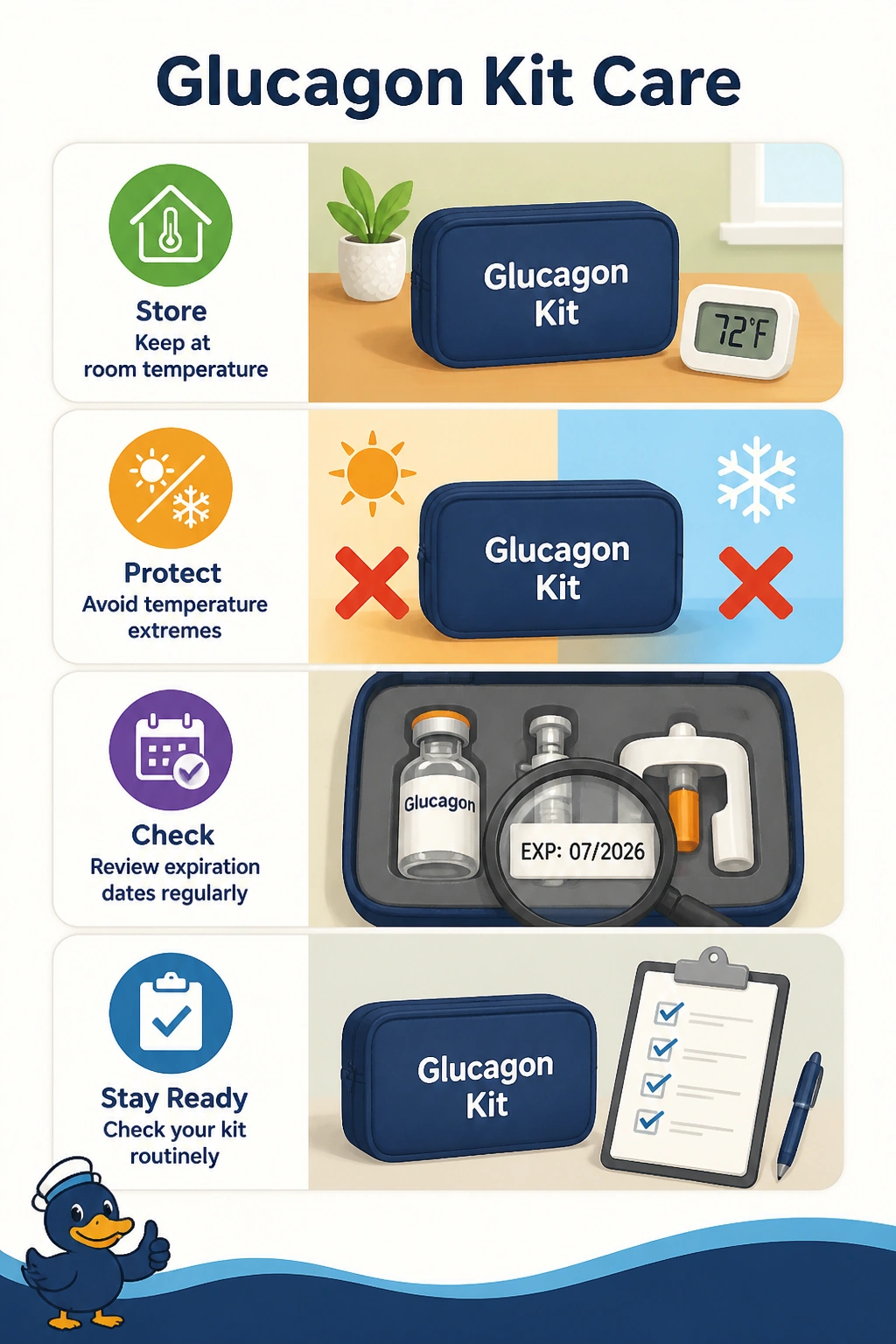
Your rescue kit only helps if it still works when an emergency hits—leaving it in a baking or freezing car is like letting your fire extinguisher expire. Convenience matters, but keeping glucagon at room temperature and checking its expiration date regularly helps ensure your backup is ready.
Full Explanation
Store glucagon at room temperature away from extremes and check expiration dates regularly to preserve medication potency so emergency treatment works reliably during severe hypoglycemia. Car glove compartments can reach extreme heat in summer and freezing temperatures in winter, and both may degrade glucagon before the printed expiration date. Relying on the printed date alone while disregarding heat exposure can create false confidence in medication that has lost potency. Leaving the kit in the car because quick access outweighs heat or cold exposure risks having an ineffective rescue dose when a life-threatening low occurs. Checking storage and expiration only after a severe low is also unsafe because maintenance needs to be proactive; discovering a degraded or expired kit during an emergency leaves no time for replacement. One caveat is that room-temperature ranges and shelf-life timelines vary by glucagon formulation, so verify the package labeling; when traveling outdoors, carry the kit in an insulated bag. As a practical check, inspect the current kit’s expiration date today and set a recurring calendar reminder ahead of that date.
Prefer to study offline? Printable PDF study book + test engine ($7.50, unofficial). These questions stay free here.