
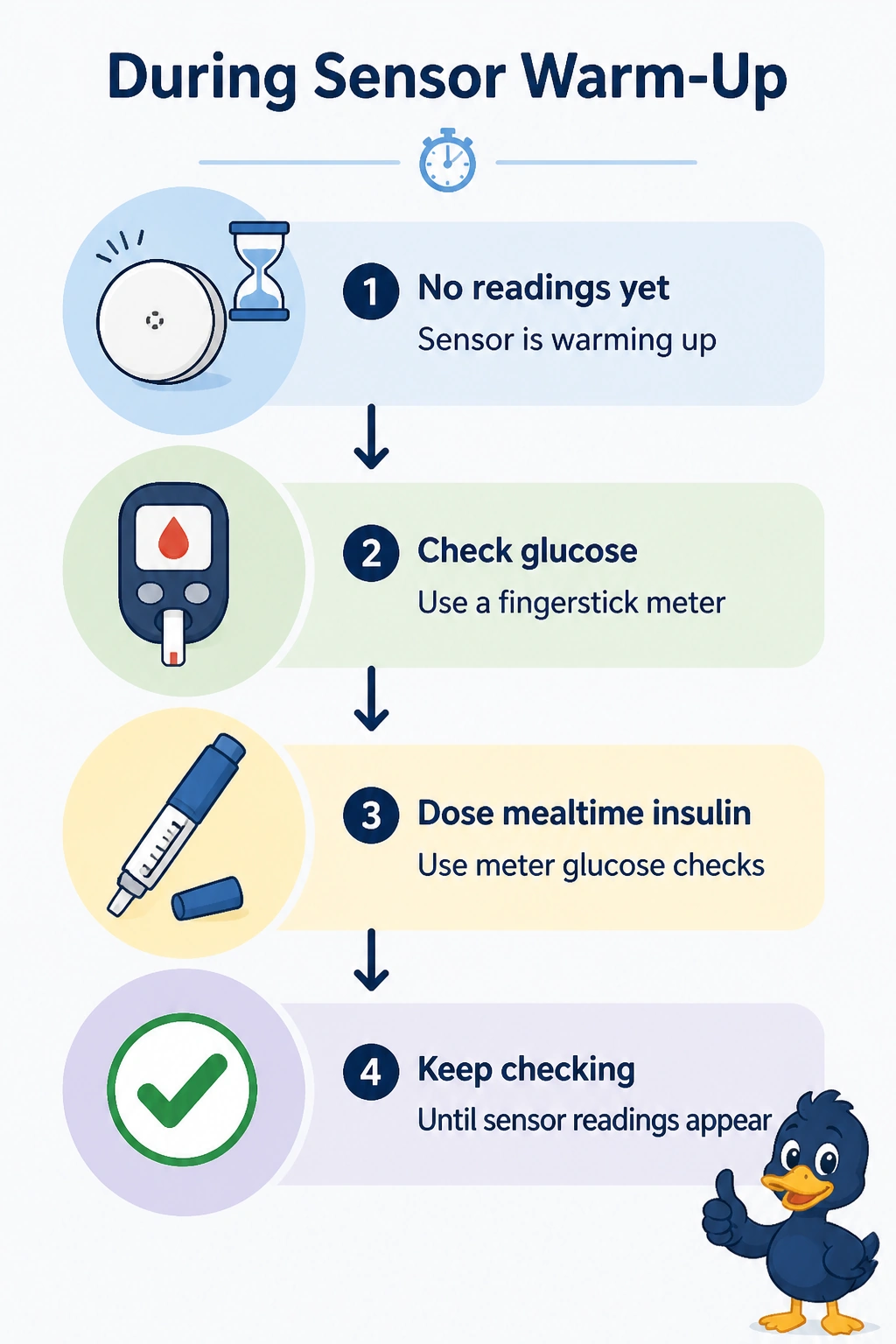
A 44-year-old man with type 1 diabetes is inserting his first continuous glucose monitor sensor at home and asks how he should check his glucose and dose mealtime insulin during the initial sensor warm-up period before readings appear. What should the diabetes care and education specialist recommend?
Select an answer to reveal the explanation.
Short Explanation
Think of a continuous glucose monitor warm-up like waiting for a new thermometer to calibrate before trusting its numbers. The trap is guessing a dose or skipping insulin altogether while the screen is blank, so you should keep a backup meter ready for safe decisions.
Full Explanation
During the warm-up period after inserting a new continuous glucose monitor sensor, the transmitter and sensor equilibrate in interstitial fluid and do not display glucose values or trend alerts. Advising the person to "Perform fingerstick blood glucose meter checks until sensor readings appear" ensures accurate capillary measurements for mealtime insulin dosing and hypoglycemia detection. Advising him to "Delay all meals and insulin doses until the sensor warm-up timer completes" is unnecessary and unsafe, particularly when basal or scheduled nutrition is needed. Telling him to "Rely on his previous sensor's final reading and trend arrow for mealtime dosing" ignores that glucose levels can shift rapidly within minutes, creating dosing errors. Recommending that he "Take his usual fixed mealtime insulin dose without checking his blood glucose" removes essential pre-meal safety verification and increases the risk of severe hypoglycemia or hyperglycemia. One important caveat is that even after warm-up ends, a fingerstick check is still warranted whenever symptoms do not match the displayed sensor value. As an operational check, confirm during training that the patient has unexpired test strips, lancets, and a working meter on hand before every sensor change.
Prefer to study offline? Printable PDF study book + test engine ($7.50, unofficial). These questions stay free here.