
A 31-year-old woman using an insulin pump says she often leaves a standard plastic-cannula infusion set labeled for replacement every 2 to 3 days in the same abdominal spot for five to six days when her blood glucose looks fine, and asks why routine changes matter. Which explanation should the diabetes care and education specialist provide?
Select an answer to reveal the explanation.
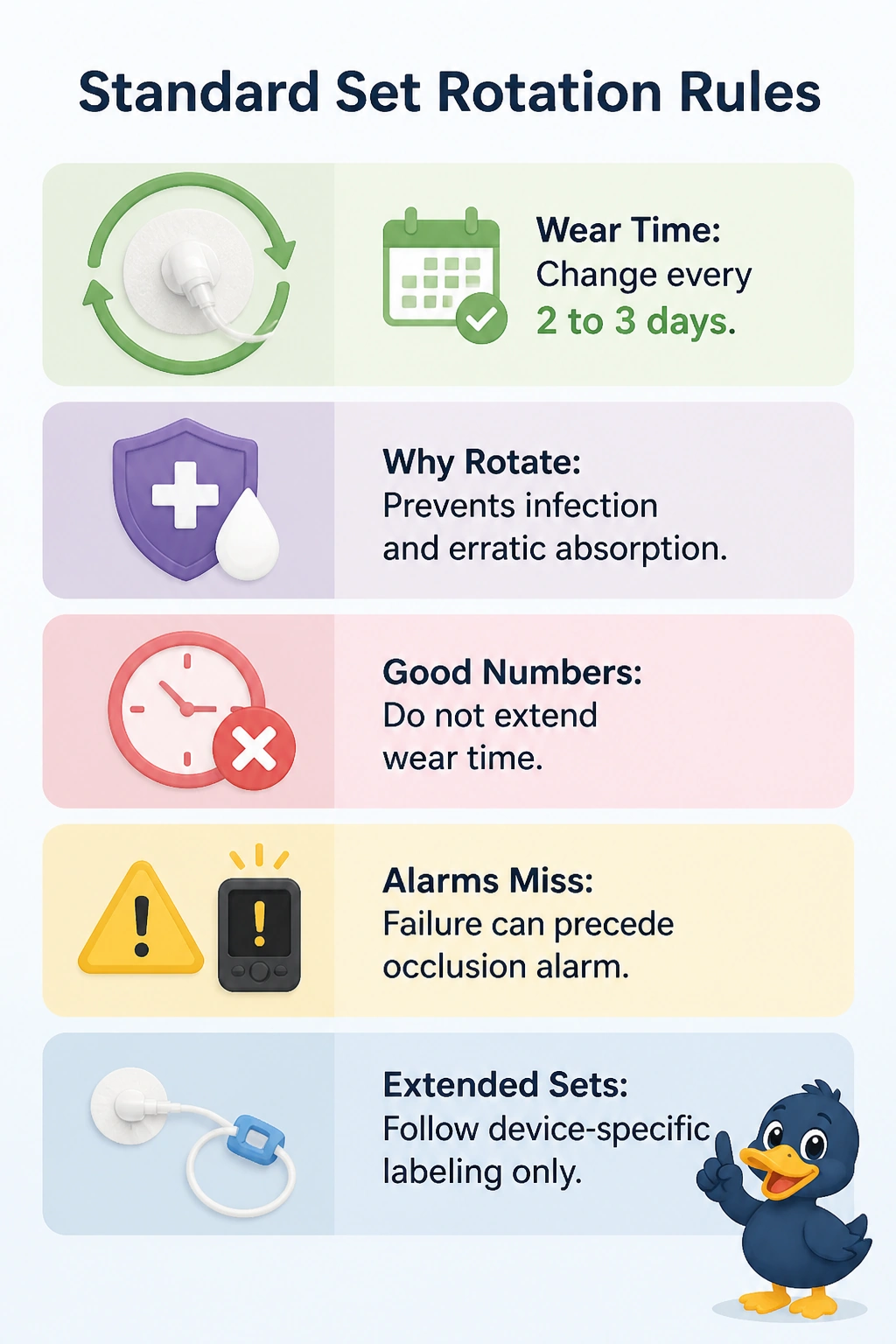
Short Explanation
Even when your numbers look calm on day four, you still need to change this standard set on schedule because irritation and erratic absorption build quietly. Changing and rotating every 2 to 3 days keeps your insulin delivery predictable and protects your skin.
Full Explanation
Standard diabetes technology education emphasizes that Change and rotate this set every 2 to 3 days to reduce infection and erratic absorption risk for a standard plastic-cannula set labeled for that interval. Leaving the cannula in the same abdominal spot for five to six days increases local inflammation, lipohypertrophy, bacterial colonization, and variable subcutaneous absorption, which can cause sudden unexplained hyperglycemia, ketosis, or site infection even when early fasting readings look in target. Continuing wear simply because fasting glucose remains in target is unsafe because stable numbers do not rule out evolving tissue injury and impending absorption failure. Waiting to replace the set only when an occlusion alarm occurs is inadequate because many site failures present as gradual hyperglycemia without triggering a pressure alarm. Keeping the same overused site because a different site once gave a high reading preserves a deteriorating site and does not address rotation technique, insertion education, or troubleshooting. Caveat: extended-wear sets have different cleared wear times, so follow device-specific labeling and replace any set immediately for unexplained hyperglycemia, ketosis, pain, or redness.
Prefer to study offline? Printable PDF study book + test engine ($7.50, unofficial). These questions stay free here.