
A 72-year-old man with type 2 diabetes, heart failure, and hypertension is starting an SGLT2 inhibitor while continuing a loop diuretic. Which safety counseling point should the diabetes care and education specialist emphasize regarding hydration and symptom monitoring?
Select an answer to reveal the explanation.
Short Explanation
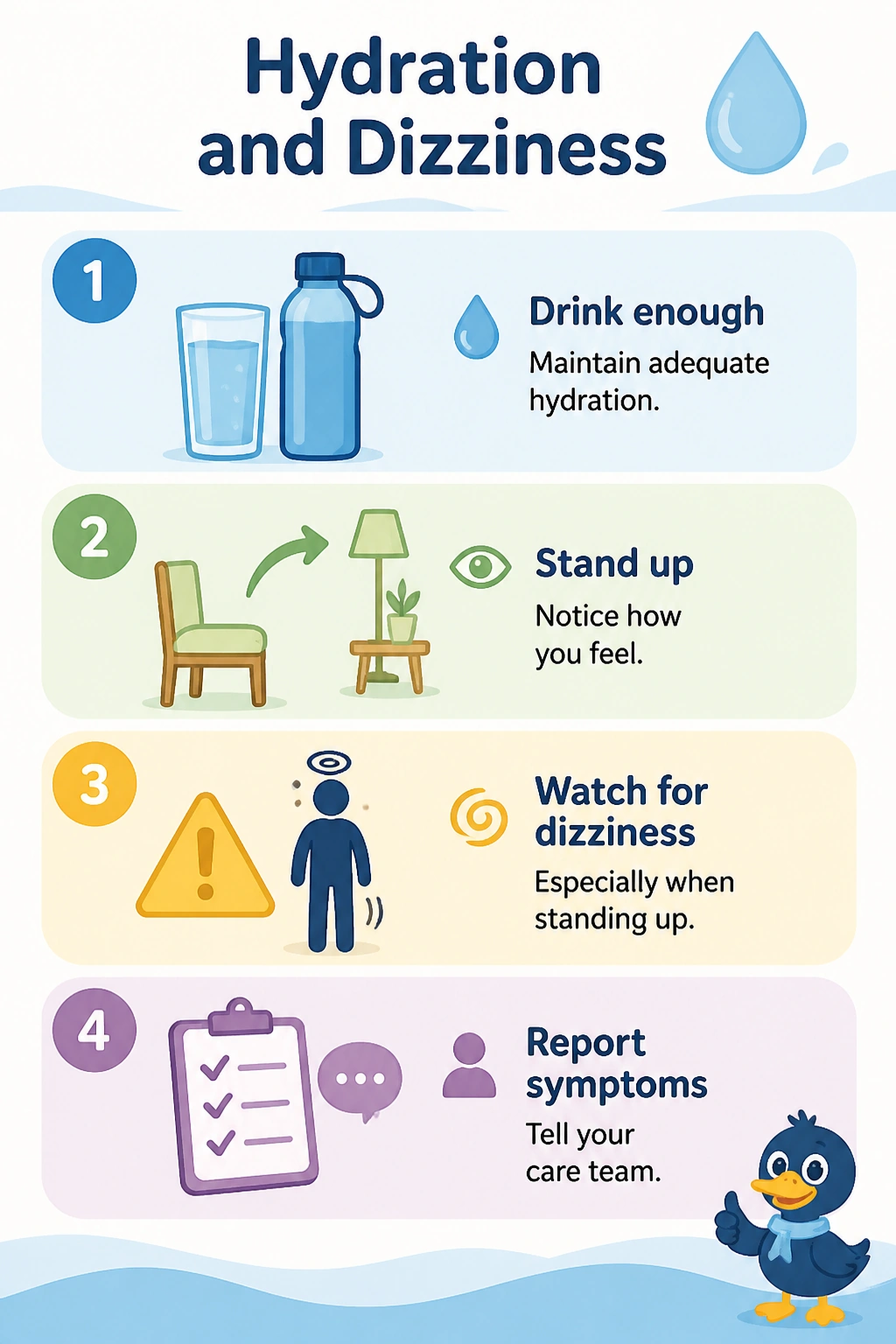
Combining an SGLT2 inhibitor with a loop diuretic acts like opening two drains at once, which can drop blood volume faster than an older adult expects. You want to coach the patient to stay hydrated and watch for lightheadedness on standing, rather than waiting until a fall happens. The trap is telling someone to restrict fluids or stop a prescribed diuretic without prescriber direction.
Full Explanation
Maintain adequate hydration and report dizziness when standing up from a chair. is correct because SGLT2 inhibitors promote osmotic diuresis and natriuresis, which can compound volume depletion and orthostatic hypotension in older adults taking loop diuretics. Restrict daily water intake to prevent fluid overload from the new medication. is wrong because SGLT2 inhibitors increase urinary fluid loss rather than causing fluid retention, so unnecessary fluid restriction worsens dehydration. Stop the loop diuretic immediately on the first day of SGLT2 inhibitor therapy. is inappropriate because Diuretic changes require an authorized prescriber or an approved protocol within the clinician’s professional scope. Check urine ketones every morning because SGLT2 inhibitors cause severe dehydration. misstates the indication for ketone testing is indicated according to the individualized risk and sick-day plan, especially with illness, reduced intake, nausea or possible ketoacidosis. Caveat: older adults with heart failure may have specific clinician-ordered fluid targets, so hydration advice should align with their cardiology plan. Operational check: review orthostatic warning signs and confirm the patient knows when to contact the clinic.
Prefer to study offline? Printable PDF study book + test engine ($7.50, unofficial). These questions stay free here.