
A 58-year-old man with type 2 diabetes, no history of heart attack or stroke, no other established atherosclerotic cardiovascular disease, and a recent minor gastrointestinal bleed asks why his clinician discontinued his daily over-the-counter low-dose aspirin. Which explanation should the diabetes care and education specialist provide?
Select an answer to reveal the explanation.
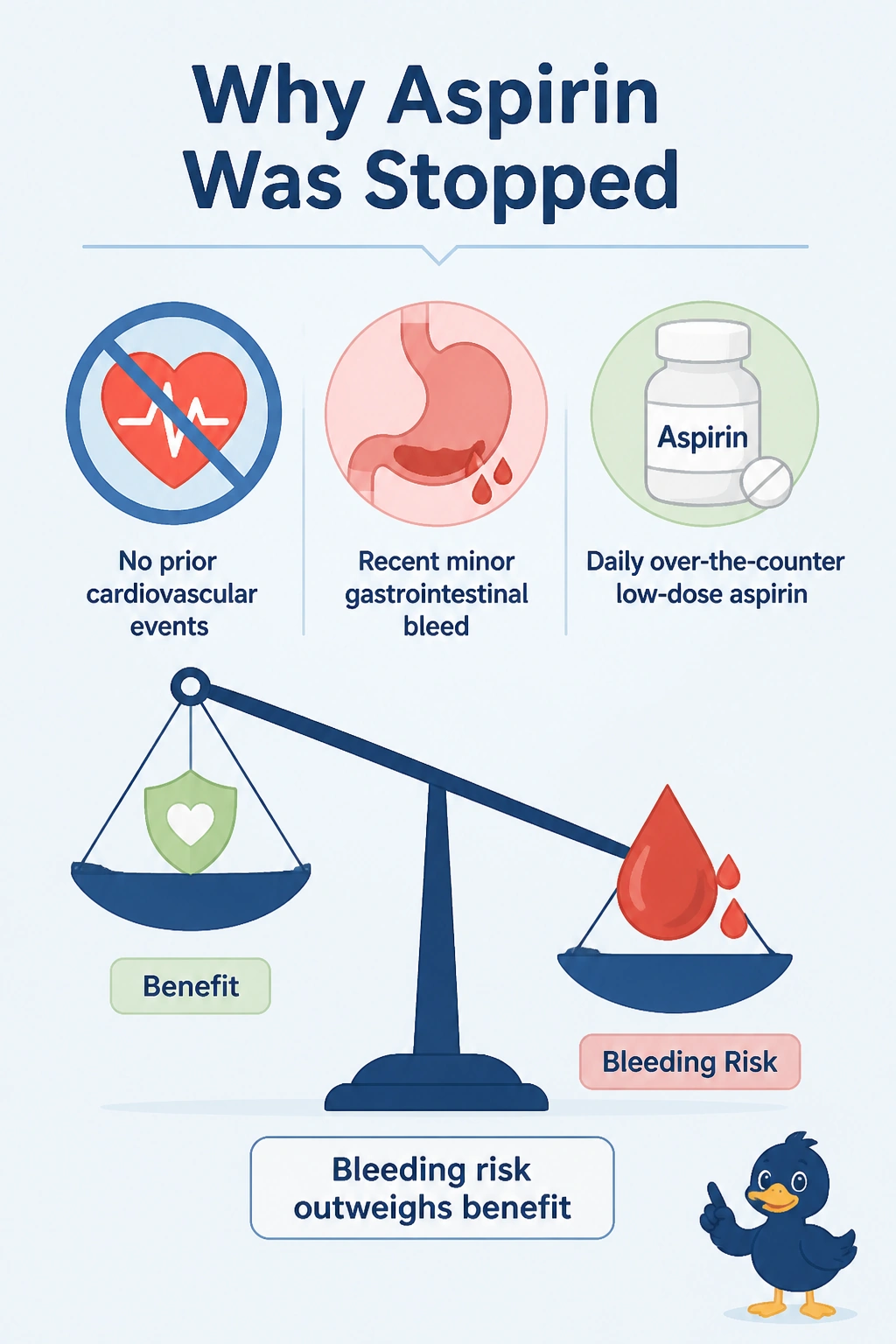
Short Explanation
Think of daily aspirin like a strong umbrella that works great in a downpour but can trip you up on a dry sidewalk. For someone without prior cardiovascular disease, you explain that bleeding risks—especially after a recent GI bleed—can outweigh the modest preventive benefit. The trap is assuming aspirin is a harmless, universal requirement for everyone with diabetes.
Full Explanation
For people without prior cardiovascular events, bleeding risks can outweigh aspirin benefits reflects current cardiovascular prevention guidance. Low-dose aspirin is strongly supported for secondary prevention when established atherosclerotic cardiovascular disease is present, but routine primary prevention is not recommended when bleeding risk is elevated, such as after a recent gastrointestinal bleed. Absence of heart attack or stroke alone does not exclude other established ASCVD, so review should also confirm no other atherosclerotic disease before considering primary prevention. The idea that aspirin is routinely required for everyone with diabetes regardless of bleeding history is incorrect because diabetes alone does not mandate aspirin and bleeding history must be weighed against modest primary prevention benefit. The idea that A1C alone determines whether aspirin is appropriate for primary prevention is incorrect because glycemic level does not by itself establish cardiovascular versus bleeding risk. The idea that a prior normal cholesterol result removes the need to assess cardiovascular and bleeding risks is incorrect because a single lipid result does not eliminate overall risk assessment. Caveat: never advise restarting aspirin without the prescribing clinician's approval, especially after gastrointestinal bleeding. Operational check: confirm the patient has removed aspirin from his pillbox and knows which over-the-counter pain relievers to avoid.
Prefer to study offline? Printable PDF study book + test engine ($7.50, unofficial). These questions stay free here.