
A 31-year-old man with type 1 diabetes is reviewing his written sick-day action plan with the diabetes care and education specialist before flu season. Which symptom should the specialist emphasize as an immediate reason to seek urgent medical evaluation?
Select an answer to reveal the explanation.
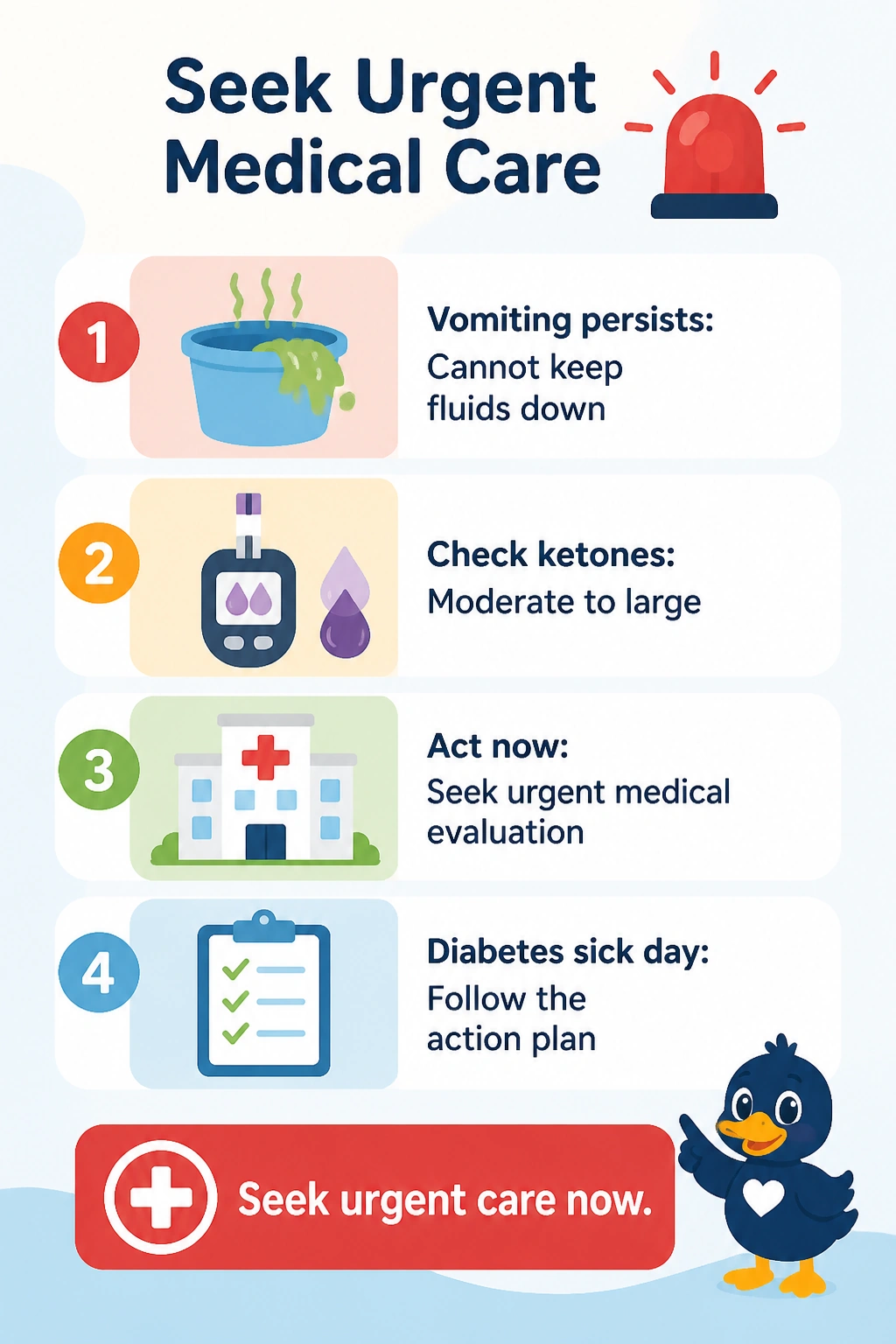
Short Explanation
A sick-day plan only protects your patient if they know the exact line between home care and emergency care. The trap is overreacting to a mild cold or a single post-meal reading while overlooking persistent vomiting and rising ketones, which signal impending ketoacidosis.
Full Explanation
Persistent vomiting with inability to keep fluids down and moderate-to-large ketones is a classic medical emergency warning sign in type 1 diabetes because dehydration combined with ketone accumulation rapidly progresses to diabetic ketoacidosis and requires intravenous fluids and supervised insulin therapy. A single blood glucose reading of 210 mg/dL two hours after eating soup reflects a modest postprandial elevation that can typically be monitored at home alongside hydration and prescribed sick-day guidance. Mild nasal congestion with normal appetite and negative ketone strips indicates an uncomplicated upper respiratory illness that is safely managed with routine monitoring and fluids. A mild sore throat with stable blood glucose readings around 140 mg/dL likewise shows intact metabolic stability without signs of ketosis or dehydration. As a clinical caveat, emphasize that red-flag symptoms also include deep rapid breathing, fruity breath odor, abdominal pain, or confusion, and remind the patient never to stop basal insulin during illness. For an operational check, confirm the patient has a written sick-day card with clinic after-hours phone numbers, unexpired ketone strips, and clear instructions on when to go directly to emergency care.
Prefer to study offline? Printable PDF study book + test engine ($7.50, unofficial). These questions stay free here.