
A 53-year-old woman with type 2 diabetes asks whether choosing low-glycemic-index foods like steel-cut oats means she no longer needs to pay attention to portion sizes. Which nutrition explanation should the diabetes care and education specialist provide?
Select an answer to reveal the explanation.
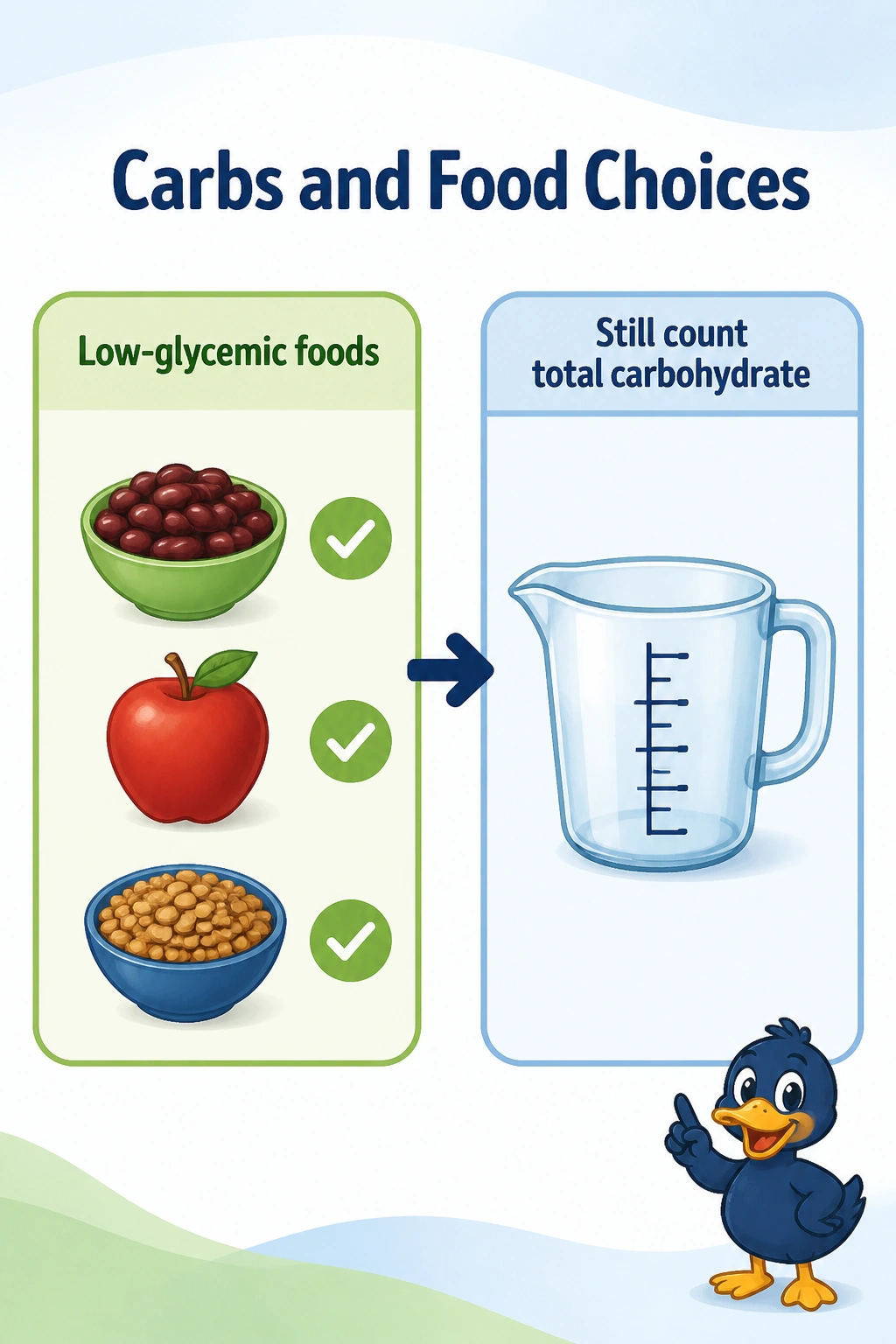
Short Explanation
A low glycemic index slows down how fast glucose enters your bloodstream, but a big bowl still carries a big load. The trap is treating low-glycemic grains like unlimited free foods, so you still need to keep an eye on your total carbohydrate portion.
Full Explanation
Explaining that Total carbohydrate quantity remains primary while glycemic index refines choices gives accurate, evidence-based nutrition guidance. Low-glycemic-index foods like steel-cut oats or legumes are digested more slowly and may blunt sharp post-meal spikes compared with refined grains, yet large portions still deliver substantial total carbohydrate that raises blood glucose. Suggesting to Count low-glycemic-index starches as half their listed total carbohydrate regardless of portion is false, because carbohydrate counting must use the full listed amount since glycemic index does not remove digestible carbohydrate. Saying that Glycemic index values eliminate the need to monitor post-meal blood glucose trends overlooks wide individual variation in glycemic response and meal composition. Advising to Choose portions by the published glycemic-index value without reviewing total carbohydrate misleads patients into overconsuming dense carbohydrate portions, since index ranks speed of rise rather than total load. As a practical caveat, pairing carbohydrates with protein, fiber, and healthy fats also slows absorption regardless of a food's published index. For an operational check, review her usual oatmeal serving size and compare pre-meal and two-hour post-meal readings to see how her body responds.
Prefer to study offline? Printable PDF study book + test engine ($7.50, unofficial). These questions stay free here.