
A 33-year-old woman with type 1 diabetes using a continuous glucose monitor says she silenced all alerts on her phone because the high-glucose alarm buzzes dozens of times a day at 160 mg/dL. Which intervention should the diabetes care and education specialist recommend first?
Select an answer to reveal the explanation.
Short Explanation
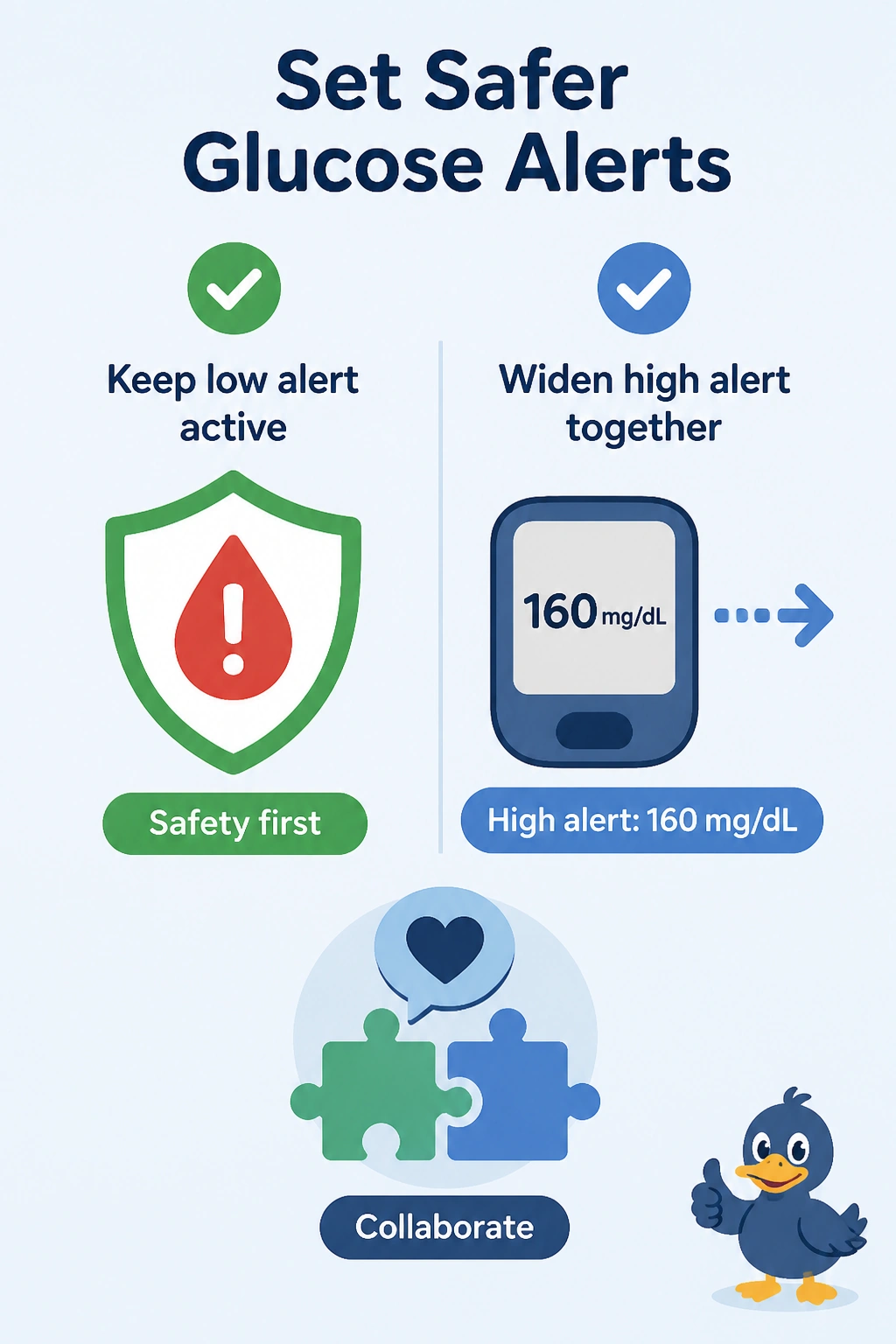
When your sensor buzzes dozens of times a day, it is understandable that you want to silence everything. You protect yourself best by keeping low alerts active while working together to widen the high-alert threshold to a level you can act on. Carrying your phone more consistently or reviewing trends without changing the settings leaves the nuisance alarms in place, while turning off high alerts entirely removes useful prompts without an agreed target.
Full Explanation
Keeping safety-critical low alerts active while collaboratively widening the high-glucose alert threshold addresses alarm fatigue without sacrificing protection from hypoglycemia. Frequent, non-actionable alerts can lead you to ignore or disable notifications altogether, increasing the danger of unrecognized lows. A personalized high-alert threshold that prompts a meaningful action, while preserving low and urgent-low alerts, can restore trust in the device and support safety. Keeping current thresholds and focusing first on carrying your phone more consistently misses the root cause: a threshold of 160 mg/dL that triggers dozens of alarms daily remains unchanged. Offering trend-review education while leaving all alert settings unchanged also leaves the driver of alarm fatigue in place, so nuisance buzzing may continue to prompt silencing despite improved knowledge. Turning off high alerts entirely without first agreeing on an actionable target goes too far, removing useful hyperglycemia prompts and the collaborative buy-in that supports sustained use. Caveat: alert changes should align with your overall glycemic targets and comfort level. Practical check: review the sensor’s alert history at follow-up to confirm fewer nuisance alarms and no missed low events.
Prefer to study offline? Printable PDF study book + test engine ($7.50, unofficial). These questions stay free here.