
A 38-year-old man with type 1 diabetes calls the clinic with a fever, sore throat, and poor appetite, saying he usually checks his blood glucose twice a day when he feels well. Which immediate monitoring guidance should the diabetes care and education specialist give him?
Select an answer to reveal the explanation.
Short Explanation
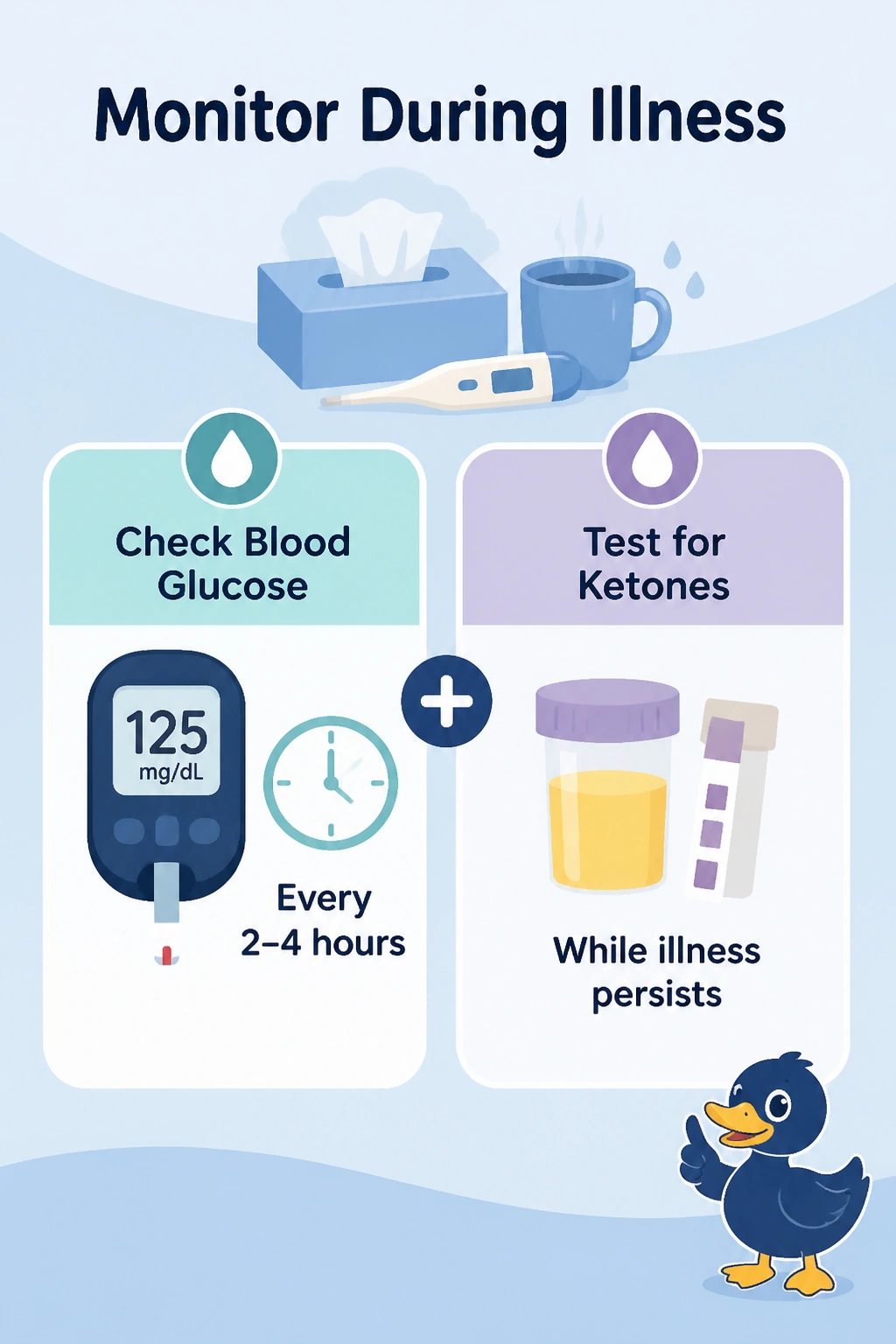
During an acute infection, stress hormones can push blood glucose up fast, even when you are barely eating. You need to teach checking glucose every two to four hours and testing for ketones so rising insulin needs are caught early. The trap is sticking to a healthy-day schedule or waiting for severe vomiting before checking ketones.
Full Explanation
Check blood glucose every two to four hours and test for ketones while illness persists. Acute illness triggers counterregulatory hormones such as cortisol and epinephrine, which increase hepatic glucose output and insulin resistance, raising the risk of diabetic ketoacidosis in type 1 diabetes. Frequent monitoring every two to four hours—alongside ketone testing when ill—allows timely hydration, correction dosing, and early clinician contact. Continue checking blood glucose only twice daily so frequent fingersticks do not disrupt rest. Twice-daily checks miss rapid glycemic deterioration and delay recognition of impending ketoacidosis. Wait to check ketones until blood glucose rises above 400 mg/dL or persistent vomiting begins. Waiting until 400 mg/dL or vomiting delays detection until ketoacidosis may already require emergency care, and ketosis can occur at lower glucose levels and illness alone should prompt testing. Use symptoms alone rather than glucose and ketone data while appetite is poor. Relying on symptoms alone misses silent hyperglycemia and ketosis precisely when poor intake masks rising insulin needs. Caveat: emphasize never stopping basal insulin and seeking urgent care for persistent vomiting, inability to keep fluids down, or moderate-to-large ketones. Operational check: review the person's written sick-day plan and confirm they have unexpired ketone strips and emergency contact numbers at home.
Prefer to study offline? Printable PDF study book + test engine ($7.50, unofficial). These questions stay free here.