
An adult with type 2 diabetes using a blood glucose meter prefers lancing his forearm to avoid sore fingertips. Which sampling instruction should the specialist give when glucose is changing rapidly or hypoglycemia is suspected?
Select an answer to reveal the explanation.
Short Explanation
Your forearm is like the caboose on a train—it arrives at the station later than the engine at your fingertips. The trap is trusting an alternate site when glucose is swinging fast, which can hide an urgent low.
Full Explanation
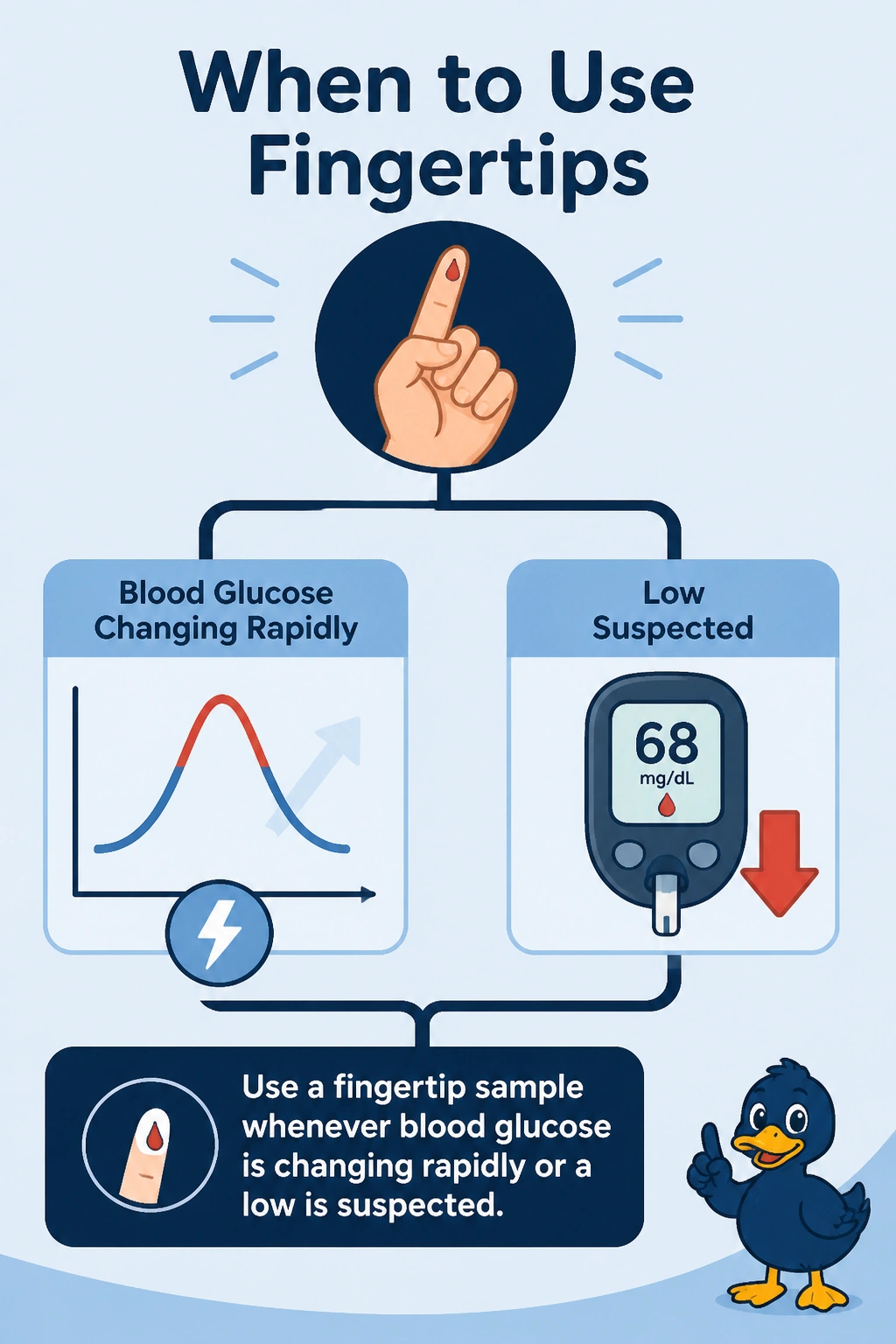
Capillary blood flow in the fingertips reflects rapid shifts in blood glucose much faster than blood flow in the forearm, upper arm, or thigh. Therefore, Using a fingertip sample whenever blood glucose is changing rapidly or a low is suspected—such as after mealtime insulin, during exercise, or when feeling shaky—prevents dangerous lag-time errors. Using the forearm site whenever symptoms of hypoglycemia first appear can display a falsely reassuring normal reading even while brain glucose is dropping. Switching exclusively to palm testing right after rapid-acting insulin still risks lag compared with fingertips during active insulin absorption and post-meal swings. Rubbing the forearm vigorously so alternate site readings match venous labs does not eliminate physiological lag during rapid glycemic shifts and is not a substitute for fingertip sampling in urgent situations. A practical caveat is that alternate site testing is generally reserved for steady-state fasting or pre-meal checks when the meter is cleared for it. As an operational check, have the patient demonstrate proper lancing on the side of a fingertip and review the specific situations that require fingertip confirmation.
Prefer to study offline? Printable PDF study book + test engine ($7.50, unofficial). These questions stay free here.