
A 51-year-old woman with type 2 diabetes and obesity expresses frustration that she gained six pounds after starting a sulfonylurea and asks whether all diabetes medications cause weight gain. Which evidence-based education point should the diabetes care and education specialist share?
Select an answer to reveal the explanation.
Short Explanation
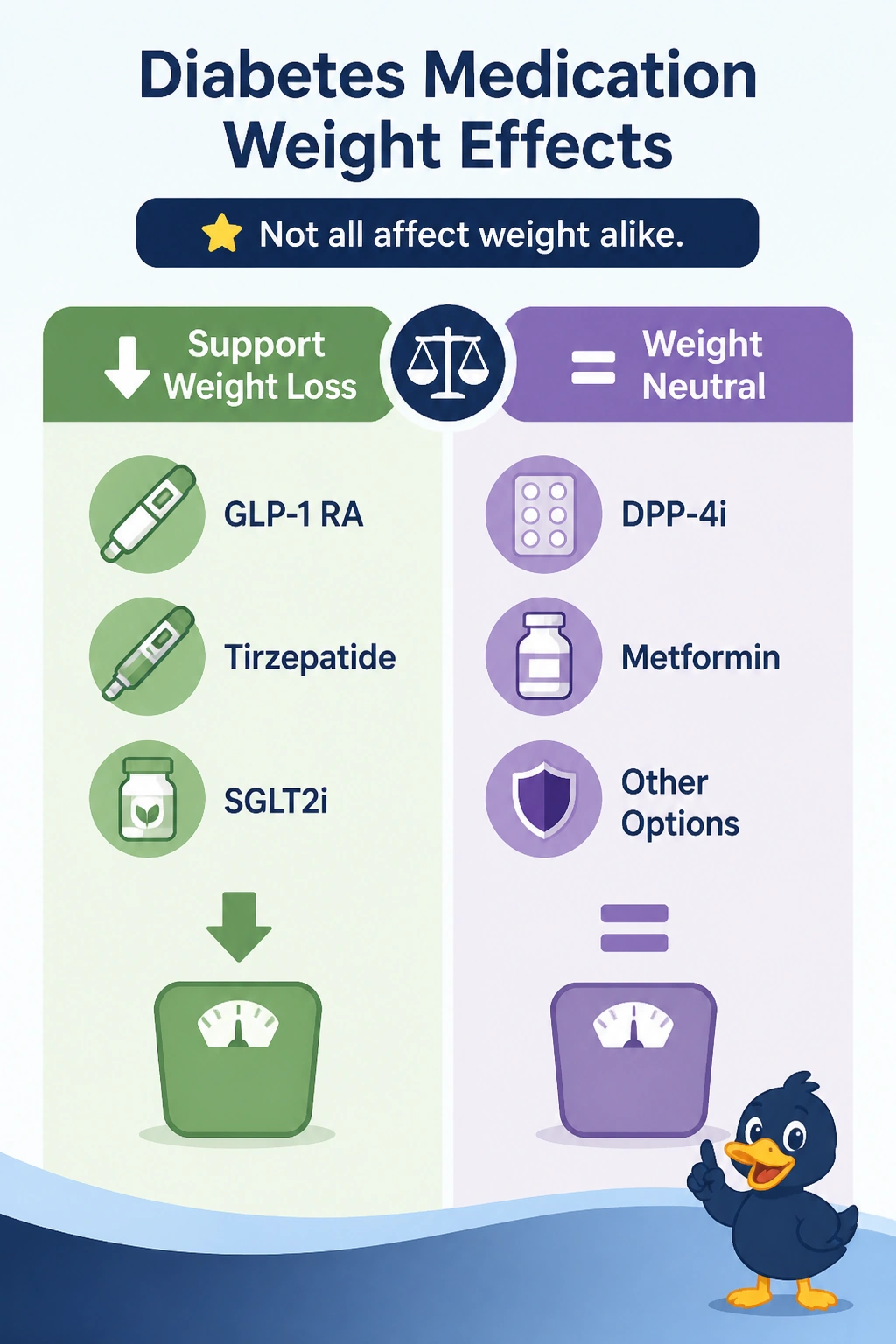
Not every diabetes medication puts weight on the scale—think of them like different tools in a toolbox, where some add mass while others actually help trim it. The trap is assuming all glucose-lowering drugs cause weight gain, when your care team can discuss weight-neutral or weight-lowering options.
Full Explanation
Glucose-lowering therapies differ substantially in their effects on body weight, so Medication classes vary in weight impact, and some options support weight loss or weight neutrality is the accurate and empowering message. Medications such as insulin, sulfonylureas, and thiazolidinediones are commonly associated with weight gain, whereas metformin and DPP-4 inhibitors are generally weight neutral, and GLP-1 receptor agonists and SGLT2 inhibitors often promote weight loss. All glucose-lowering medications cause weight gain because better glycemic control always stores excess calories is false and discourages adherence by ignoring the distinct metabolic mechanisms of newer drug classes. Use meal timing changes alone without discussing the medication’s weight effects is inadequate because it sidesteps the medication-related concern and misses the chance to address weight-informed pharmacologic choices alongside lifestyle habits. Assume that switching to basal insulin will necessarily reverse sulfonylurea-related weight gain is misleading because basal insulin can also contribute to weight gain and does not guarantee weight reversal. Medication changes depend on the specialist’s underlying prescribing or protocol authority and should be coordinated with the treatment team. Operationally, document the person's weight goals and encourage discussing medication options alongside sustainable nutrition and physical activity habits at her next medical visit.
Prefer to study offline? Printable PDF study book + test engine ($7.50, unofficial). These questions stay free here.