
A 37-year-old man with type 1 diabetes calls the clinic because his blood glucose has stayed above 280 mg/dL for two days despite usual insulin doses. He mentions leaving his insulin bag in a parked car during a hot summer afternoon earlier in the week and notices small white clumps inside his clear rapid-acting vial. Which action should the specialist recommend?
Select an answer to reveal the explanation.
Short Explanation
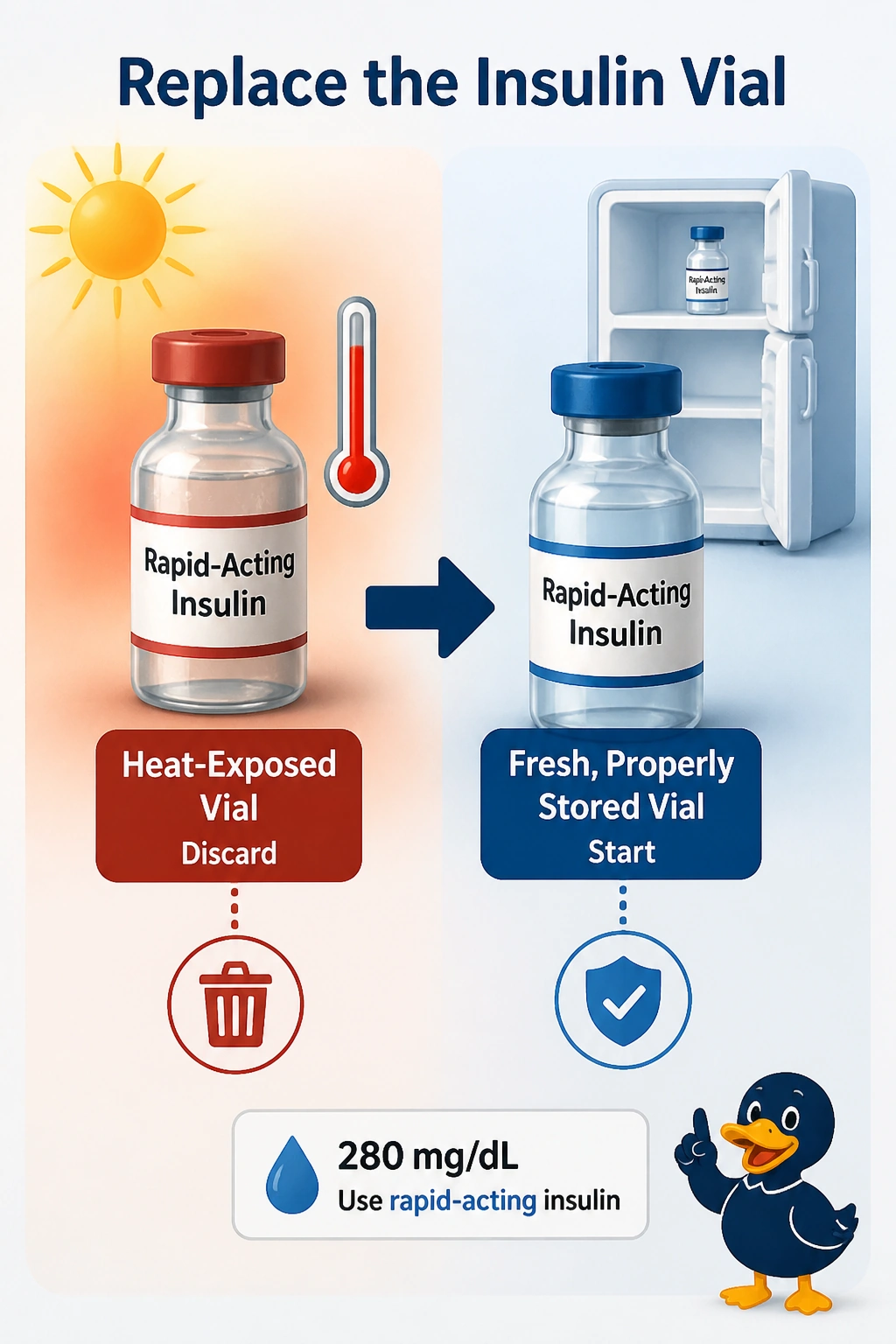
Think of heat-damaged insulin like milk left in a hot car: once it clumps, chilling it again won’t restore its safety or effectiveness. Don’t shake the clumps away or double your dose; discard the vial and use fresh, properly stored insulin.
Full Explanation
Insulin is a protein hormone that can denature after exposure to extreme heat or freezing, so discard the heat-exposed vial and start a fresh, properly stored vial. Clumping, frosting, or discoloration in normally clear rapid-acting insulin makes it unsuitable for use and may contribute to persistent unexplained hyperglycemia. Shaking the vial vigorously to dissolve the clumps is ineffective and may worsen protein aggregation and foaming, leading to inaccurate dosing. Refrigerating the clumped vial overnight cannot restore its potency because thermal denaturation is irreversible. Doubling the usual rapid-acting dose from the damaged vial is dangerous: its potency is unpredictable, risking persistent hyperglycemia or unexpected severe hypoglycemia. An exam caveat is that abnormal appearance is a warning sign even when poor glucose control could have other causes; do not assume the insulin is usable because it was clear before heat exposure. Check ketones now and promptly assess persistent type 1 hyperglycemia and emergency symptoms to rule out impending diabetic ketoacidosis. As a practical check, verify storage temperatures for backup supplies and inspect each vial or pen for clarity before use.
Prefer to study offline? Printable PDF study book + test engine ($7.50, unofficial). These questions stay free here.