
A 60-year-old man with type 2 diabetes and hypertension brings his home blood pressure log to clinic, noting his readings jump widely when he checks right after climbing stairs with his arm resting in his lap. Which measurement technique should the specialist reinforce?
Select an answer to reveal the explanation.
Short Explanation
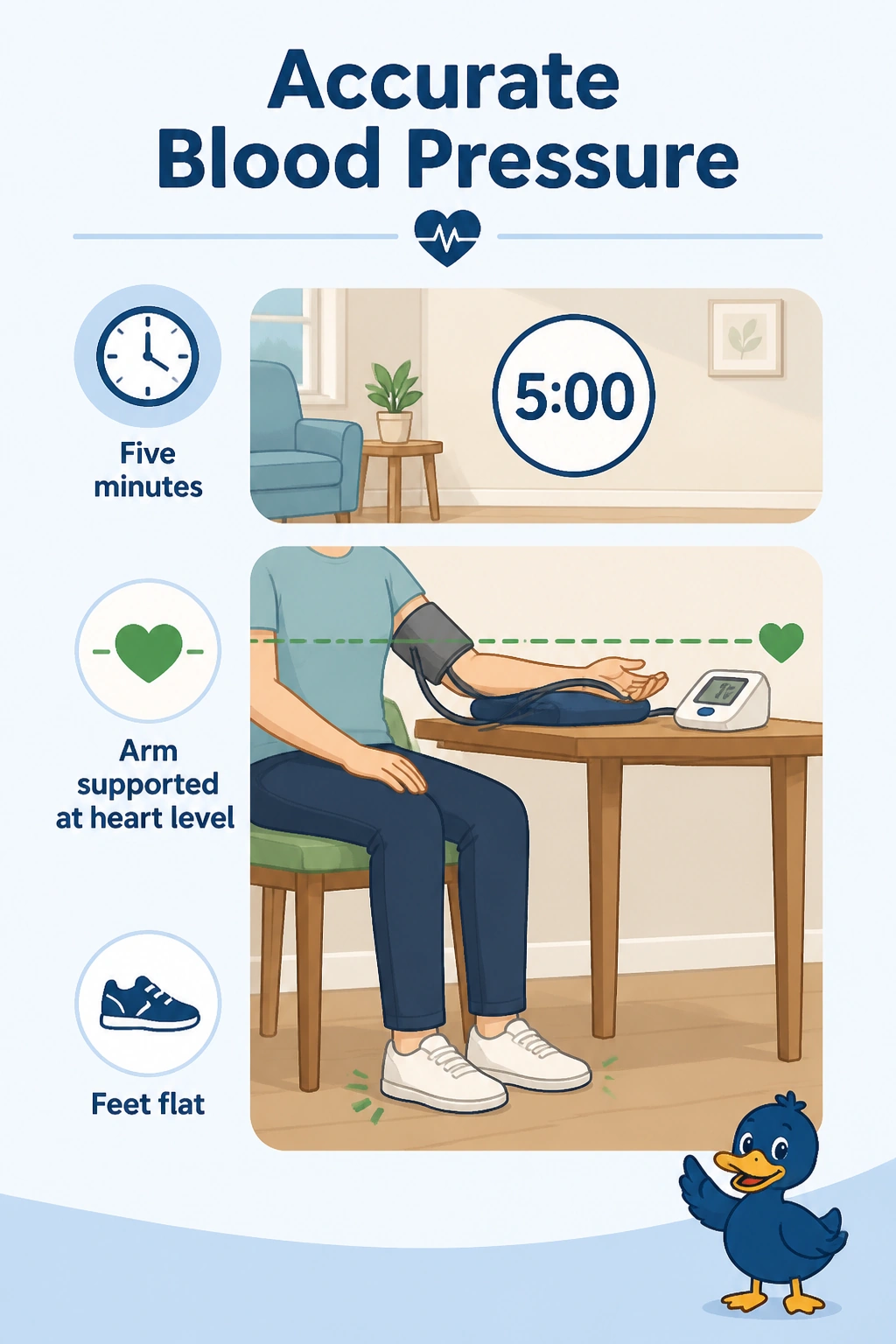
Home blood pressure numbers are only as trustworthy as the posture and pause behind them. You want to avoid the trap of checking right after exertion or with a dangling arm, because both artificially spike the reading and can mislead treatment decisions.
Full Explanation
Accurate home blood pressure monitoring requires standardized preparation so readings reflect true resting vascular pressure rather than transient exertion or positioning artifacts. Avoid exercise, caffeine and smoking for at least 30 minutes, use a correctly sized cuff on a bare arm, and rest quietly for at least five minutes. Teaching the person to rest quietly for five minutes with feet flat and arm supported at heart level eliminates post-stair sympathetic surges and hydrostatic errors, yielding reliable trends for cardiovascular risk management in diabetes. Taking the reading immediately after walking up stairs while standing beside the kitchen counter captures acute exercise-related elevation and standing posture variability. Supporting the arm below heart level while using an otherwise appropriate cuff introduces hydrostatic error that falsely elevates systolic and diastolic values despite correct cuff size. Taking one reading while talking and recording it without repeating combines a talking-related pressor effect with failure to average out intrinsic variability and confirm stability. As an operational check, have the person demonstrate home cuff placement and seated posture in clinic using an appropriately sized cuff on a bare arm.
Prefer to study offline? Printable PDF study book + test engine ($7.50, unofficial). These questions stay free here.