
A 28-year-old man with type 1 diabetes recently started using an automated insulin delivery system, a hybrid system that requires user-entered carbohydrate meal boluses, and stopped entering carbohydrate boluses before meals, assuming the algorithm will handle all food intake. His continuous glucose monitor now shows sharp post-meal spikes followed by late afternoon lows. Which education point should the diabetes care and education specialist emphasize?
Select an answer to reveal the explanation.
Short Explanation
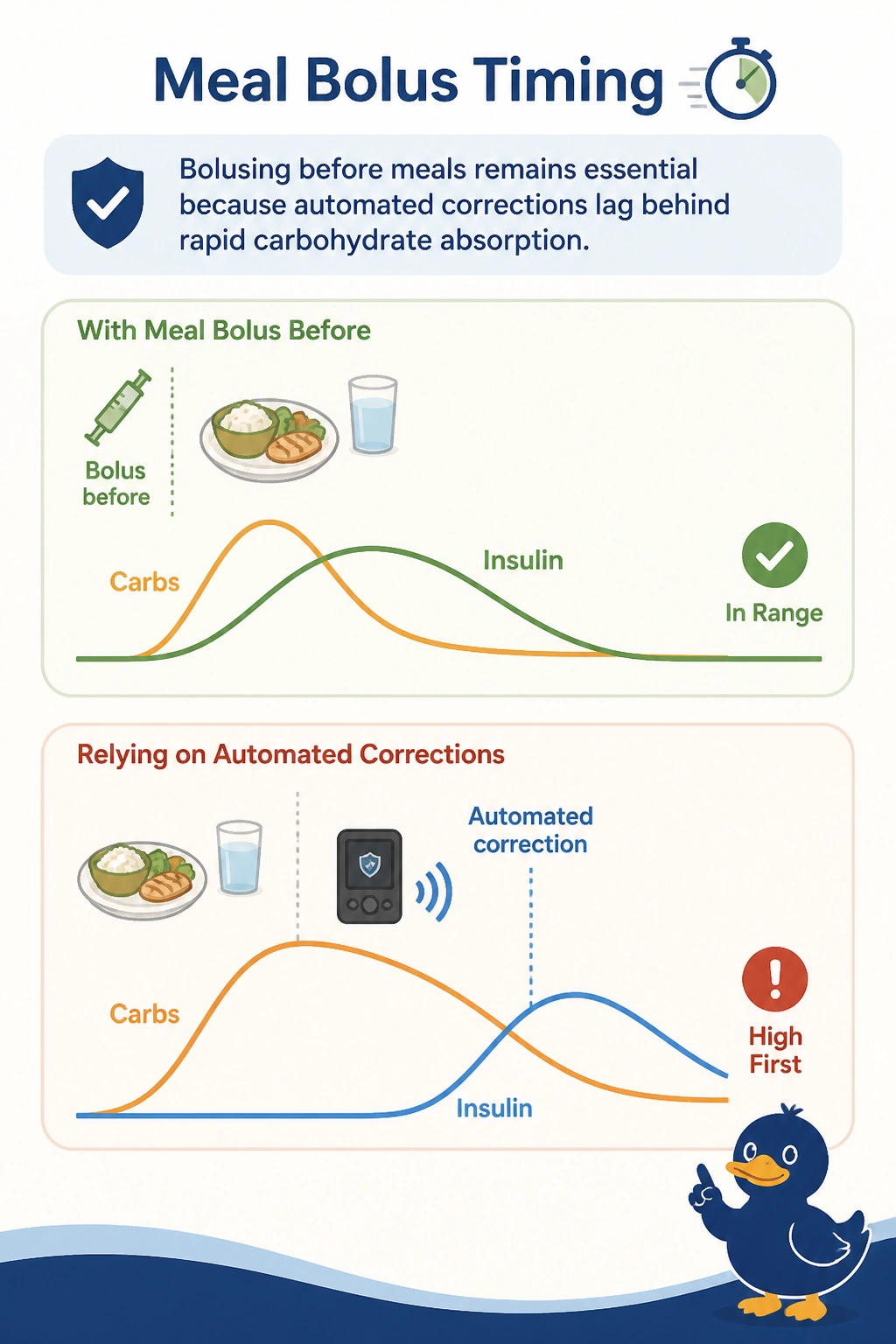
Think of your hybrid system like cruise control on a hilly highway: it adjusts to gentle slopes, but you still need to press the pedal yourself for steep climbs. You may assume automation replaces pre-meal bolusing, but you still need your prescribed meal bolus because delayed corrections can leave you with post-meal spikes and later lows.
Full Explanation
AID systems differ in insulin-adjustment and meal-announcement methods. This system still requires the prescribed meal bolus; some systems use qualitative meal announcements instead of carbohydrate counting or user-calculated doses. For this hybrid system, algorithms adjust basal insulin and deliver small correction micro-boluses as sensor glucose rises, but they cannot respond as quickly as carbohydrates are absorbed. Bolusing before meals remains essential because automated corrections lag behind rapid carbohydrate absorption: when a meal is unannounced, glucose rises sharply while the system catches up, and insulin delivered late in digestion can contribute to hypoglycemia hours later. Switching to manual mode during daytime meals does not prevent delayed hypoglycemia, because removing automated basal modulation takes away a safeguard without replacing the missed meal bolus. Raising the target glucose setting after lunch does not eliminate the post-meal rise, because a higher target reduces insulin delivery and can worsen postprandial hyperglycemia. Increasing the basal insulin rate during overnight hours does not compensate for missed daytime mealtime boluses, because overnight changes do not match daytime meals and can increase nocturnal hypoglycemia risk.
Prefer to study offline? Printable PDF study book + test engine ($7.50, unofficial). These questions stay free here.