
A 48-year-old man with newly diagnosed type 2 diabetes asks his diabetes care and education specialist for the exact percentage of daily calories from carbohydrates, protein, and fat that everyone with diabetes must follow. Which nutrition principle should the specialist explain?
Select an answer to reveal the explanation.
Short Explanation
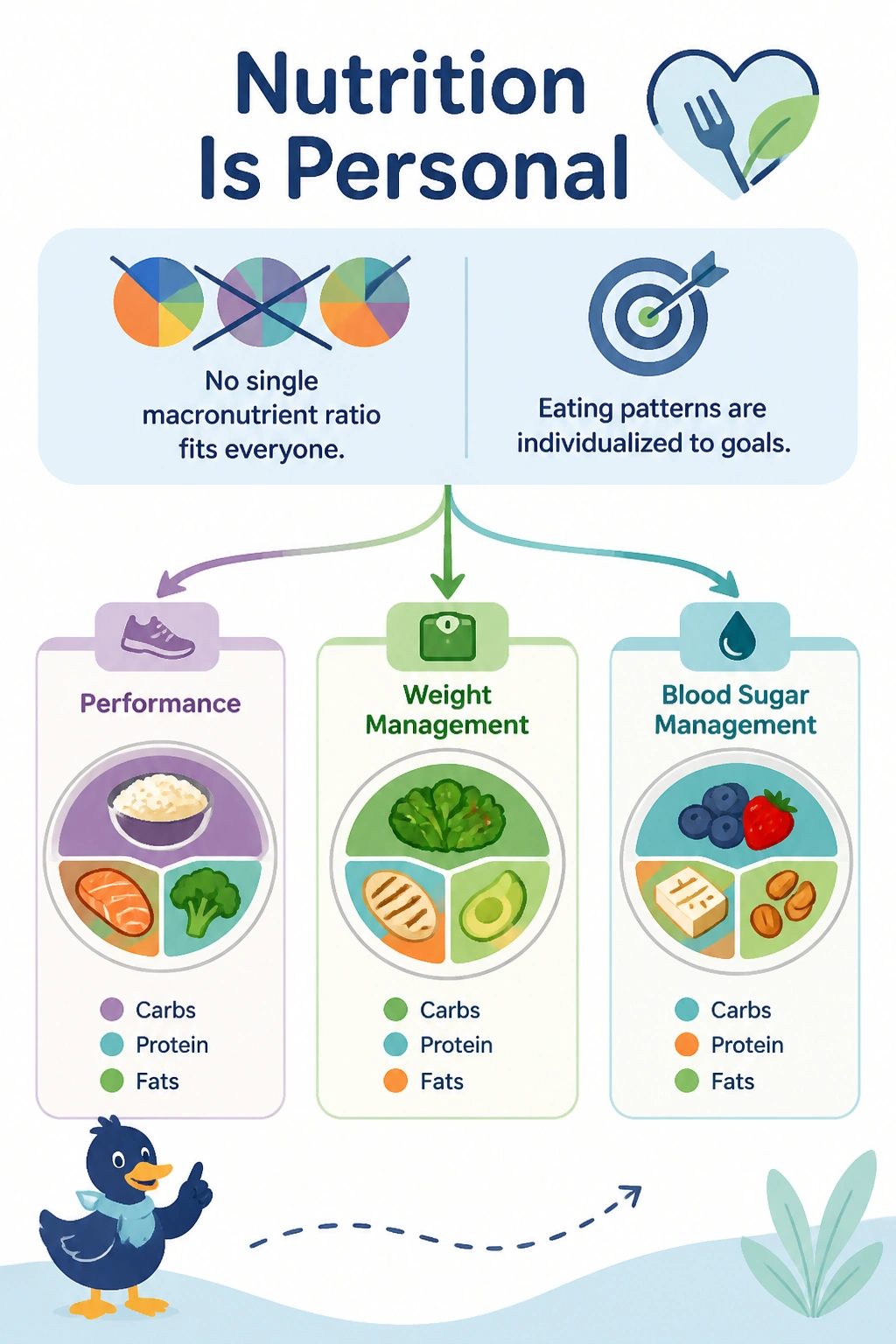
Nutrition in diabetes is much more like tailoring a suit than handing out a one-size-fits-all uniform. You might feel tempted to quote a rigid macro split, but the trap is forgetting that guidelines recommend individualizing eating patterns to each person's metabolic goals and food preferences.
Full Explanation
Evidence-based nutrition therapy guidelines emphasize that there is no single ideal percentage of calories from carbohydrates, protein, and fat for all people with diabetes. Explaining that No single macronutrient ratio fits everyone, so eating patterns are individualized to goals empowers the person to build a sustainable plan around their metabolic targets, medications, kidney status, and cultural foods. Claiming that Every adult with diabetes must restrict carbohydrates to under twenty percent of total daily calories overgeneralizes very-low-carbohydrate approaches, which are optional for select adults rather than mandatory for all. Stating that A strict low-fat diet with sixty percent carbohydrates is required for all people with type 2 diabetes imposes an outdated, rigid formula that can worsen postprandial glucose or triglycerides in some individuals. Suggesting that Use the same macronutrient percentages for everyone while changing only total calories imposes a one-size-fits-all ratio and ignores the need to tailor distribution to metabolic goals, preferences, and risk factors. One important caveat is that flexibility does not mean ignoring total energy balance or carbohydrate consistency when matching mealtime insulin. As an operational check, review a three-day food recall together and confirm that the chosen eating pattern aligns with the person's A1C, lipid, blood pressure, and weight goals.
Prefer to study offline? Printable PDF study book + test engine ($7.50, unofficial). These questions stay free here.