
A 45-year-old woman with type 2 diabetes starting mealtime rapid-acting insulin reports post-dinner glucose spikes above 230 mg/dL followed by mild lows before bedtime when she injects her dose after finishing dinner. Which timing principle should the diabetes care and education specialist reinforce?
Select an answer to reveal the explanation.
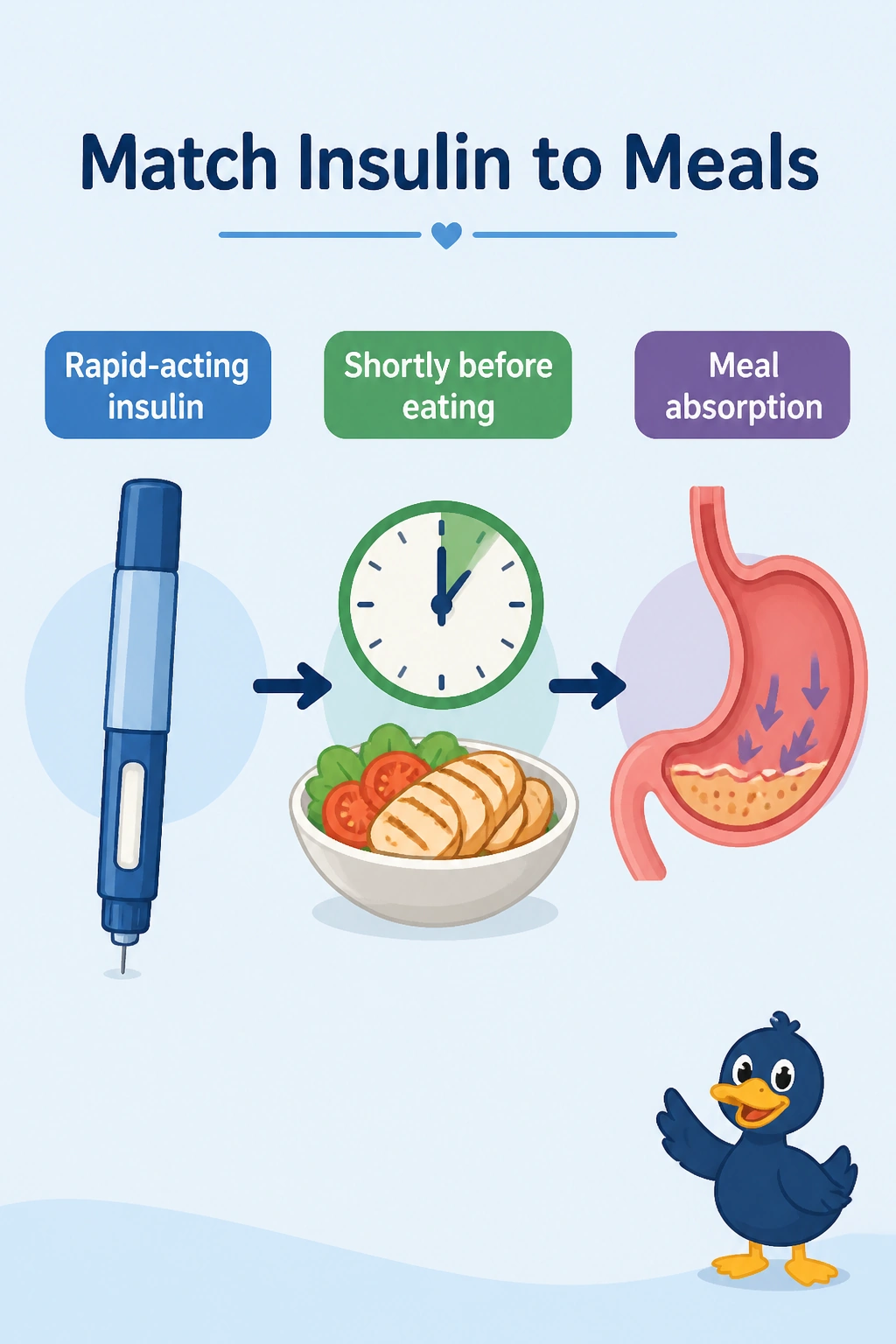
Short Explanation
Rapid-acting insulin works best when it meets your food at the door instead of chasing it down the hallway an hour later. Taking it shortly before eating helps you match peak insulin action with carbohydrate absorption, smoothing out both the spike and the late drop for typical use. Your exact timing is still individualized to your product, glucose trend, expected intake, and digestion, so confirm any postmeal dosing with your prescriber.
Full Explanation
Carbohydrates from a typical meal begin raising blood glucose within minutes, whereas injected rapid-acting insulin requires a brief lag time to absorb and reach peak action. Reinforcing the principle to Administer rapid-acting insulin shortly before eating to match meal absorption synchronizes insulin onset with postprandial glucose entry for typical use, blunting the early spike and reducing late-evening hypoglycemia, with timing individualized by product, glucose, intake, and gastric emptying. Advising her to Inject rapid-acting insulin two hours after eating to prevent post-dinner highs worsens the mismatch in this pattern by leaving carbohydrates unopposed during digestion and peaking when glucose is already falling. Telling her to Take the rapid-acting dinner dose at bedtime alongside the basal insulin injection leaves dinner completely uncovered and creates nocturnal hypoglycemia risk without meal coverage. Recommending to Use the same fixed postmeal delay regardless of the insulin product or glucose trend ignores required individualization to product instructions and glucose trend, although selected products may allow prescribed postmeal dosing for unpredictable intake. Individuals with gastroparesis or unpredictable intake need timing adjustments coordinated with the prescriber, paired with confirmed food availability when using premeal dosing.
Prefer to study offline? Printable PDF study book + test engine ($7.50, unofficial). These questions stay free here.