
During a telehealth follow-up, a 49-year-old man with type 2 diabetes says he knows checking his blood glucose helps, but he feels frustrated and skips it most weeks because the numbers always discourage him. Which communication approach should the diabetes care and education specialist use?
Select an answer to reveal the explanation.
Short Explanation
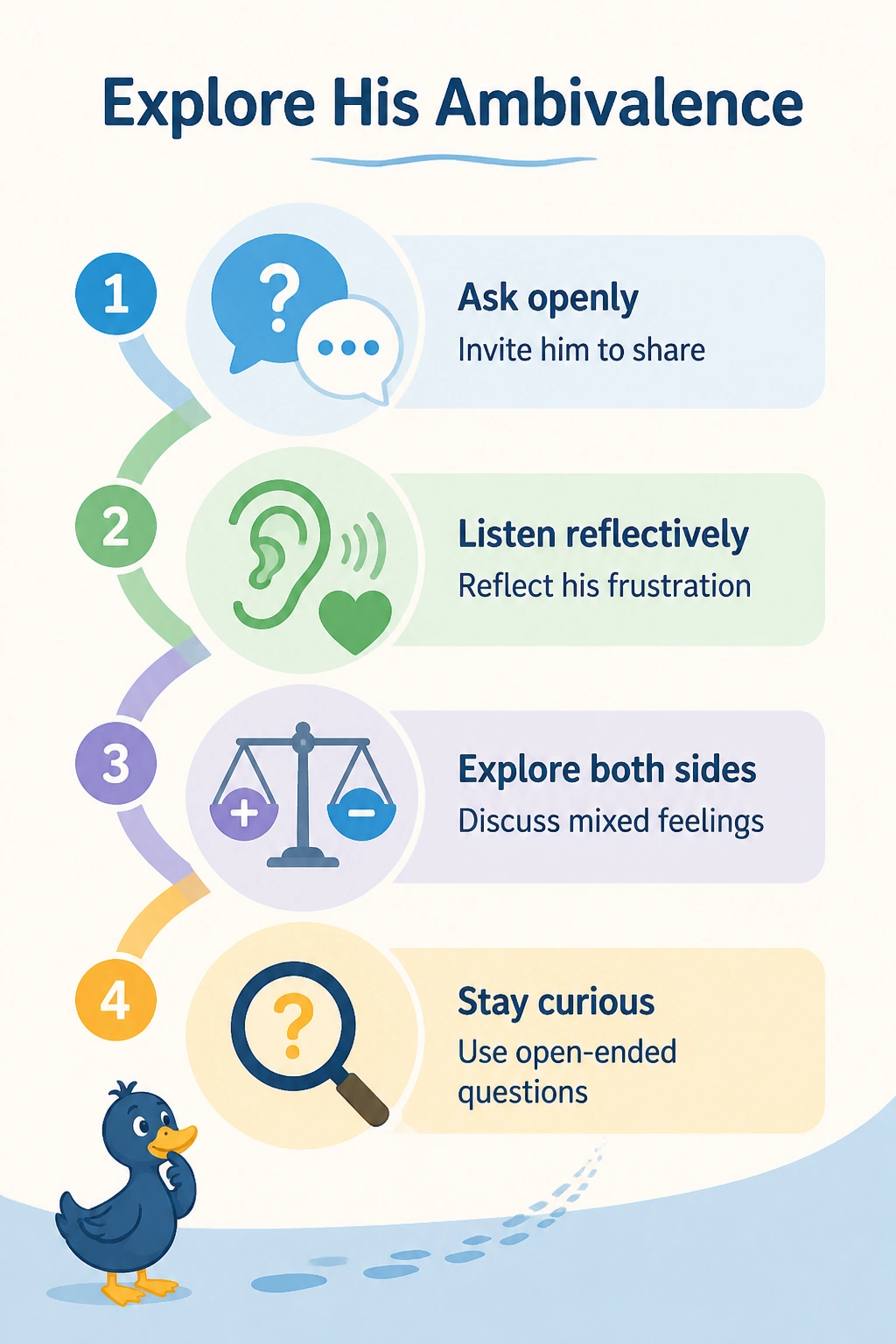
When someone already knows what to do but feels stuck, lecturing them is like pushing harder on a locked door. Motivational interviewing helps you step onto their side of the table, explore the frustration, and uncover what feels doable. The trap is reaching for scare tactics or rigid quotas that only deepen discouragement.
Full Explanation
Exploring his ambivalence with open-ended questions and reflective listening applies motivational interviewing to uncover why glucose numbers feel discouraging and what small, meaningful step fits his life. Person-centered care validates emotional barriers rather than treating resistance as a knowledge deficit. Providing a detailed handout on long-term vascular complications to increase urgency uses fear-based persuasion, which typically increases defensiveness and diabetes distress rather than sustaining self-care. Agreeing on a daily testing schedule before exploring what the numbers mean to him jumps to premature planning without resolving ambivalence, risking further disengagement when discouragement returns. Recommending symptom-triggered testing without reviewing medication-related hypoglycemia risk overlooks safety and individualized monitoring needs. Individualize BGM frequency to treatment, risk and usefulness; feeling well does not reliably exclude abnormal glucose. As an exam caveat, CDCES interventions consistently favor collaborative, autonomy-supportive communication over directive mandates. As an operational check, ask an open-ended question such as what information from a check would feel most useful to him this week.
Prefer to study offline? Printable PDF study book + test engine ($7.50, unofficial). These questions stay free here.