
A 41-year-old man with type 1 diabetes using an insulin pump and continuous glucose monitor is preparing for his first long-distance flight and asks how to pack his supplies safely. Which travel instruction should the diabetes care and education specialist give?
Select an answer to reveal the explanation.
Short Explanation
Your carry-on bag is your diabetes safety net in the sky. Checked luggage can freeze in the cargo hold or get lost on a layover, ruining insulin potency right when you need it most. The trap is thinking checked bags keep insulin safely chilled or packing pens directly against solid ice.
Full Explanation
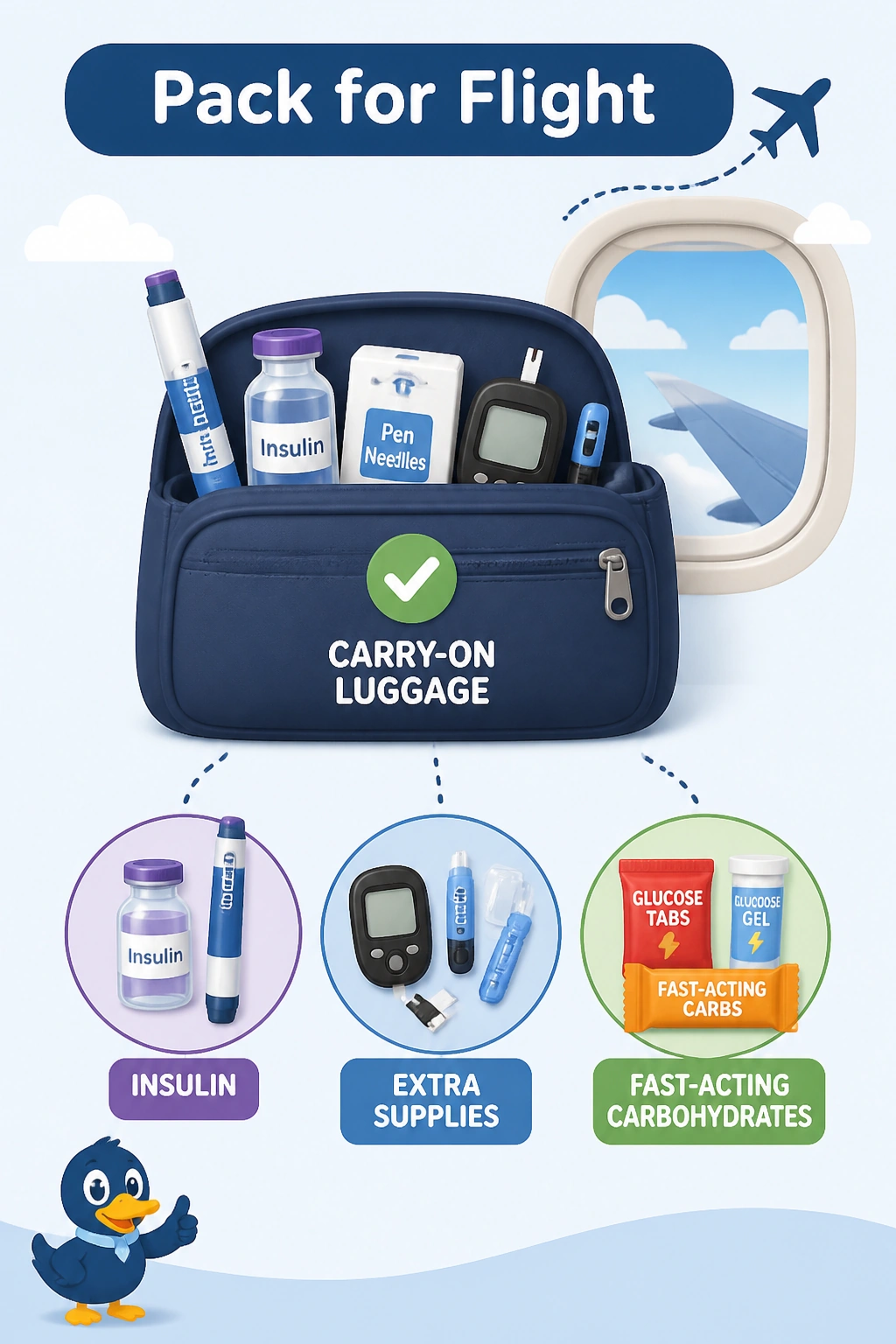
Pack insulin, extra supplies, and fast-acting carbohydrates in carry-on luggage is essential because cabin temperatures remain controlled, supplies stay accessible during delays, and carrying backups prevents an emergency if luggage is misrouted. Place backup insulin vials in checked baggage to keep them cooler during the flight risks freezing in cargo holds or losing essential medication if bags are delayed; frozen insulin loses effectiveness and must be discarded. Carry only enough pump supplies for the planned flight time rather than possible delays is unsafe because delays, misconnections, or device failure are common and leave no margin for treatment; travelers should pack extra infusion sets, batteries or chargers, and a backup syringe or pen regimen. Store unopened insulin pens directly on solid ice packs inside a hard-sided cooler also risks freezing the insulin on direct contact. Screen devices by their exact manufacturer instructions; any disconnection needs a safe alternative insulin-delivery plan. As an operational check, review a pre-trip packing checklist with the traveler including prescription labels and fast-acting glucose.
Prefer to study offline? Printable PDF study book + test engine ($7.50, unofficial). These questions stay free here.