
A 56-year-old woman with type 2 diabetes and no history of heart attack or stroke asks her diabetes care and education specialist why her clinician recommended a moderate-intensity statin even though her LDL cholesterol is 88 mg/dL. Which explanation is most accurate?
Select an answer to reveal the explanation.
Short Explanation
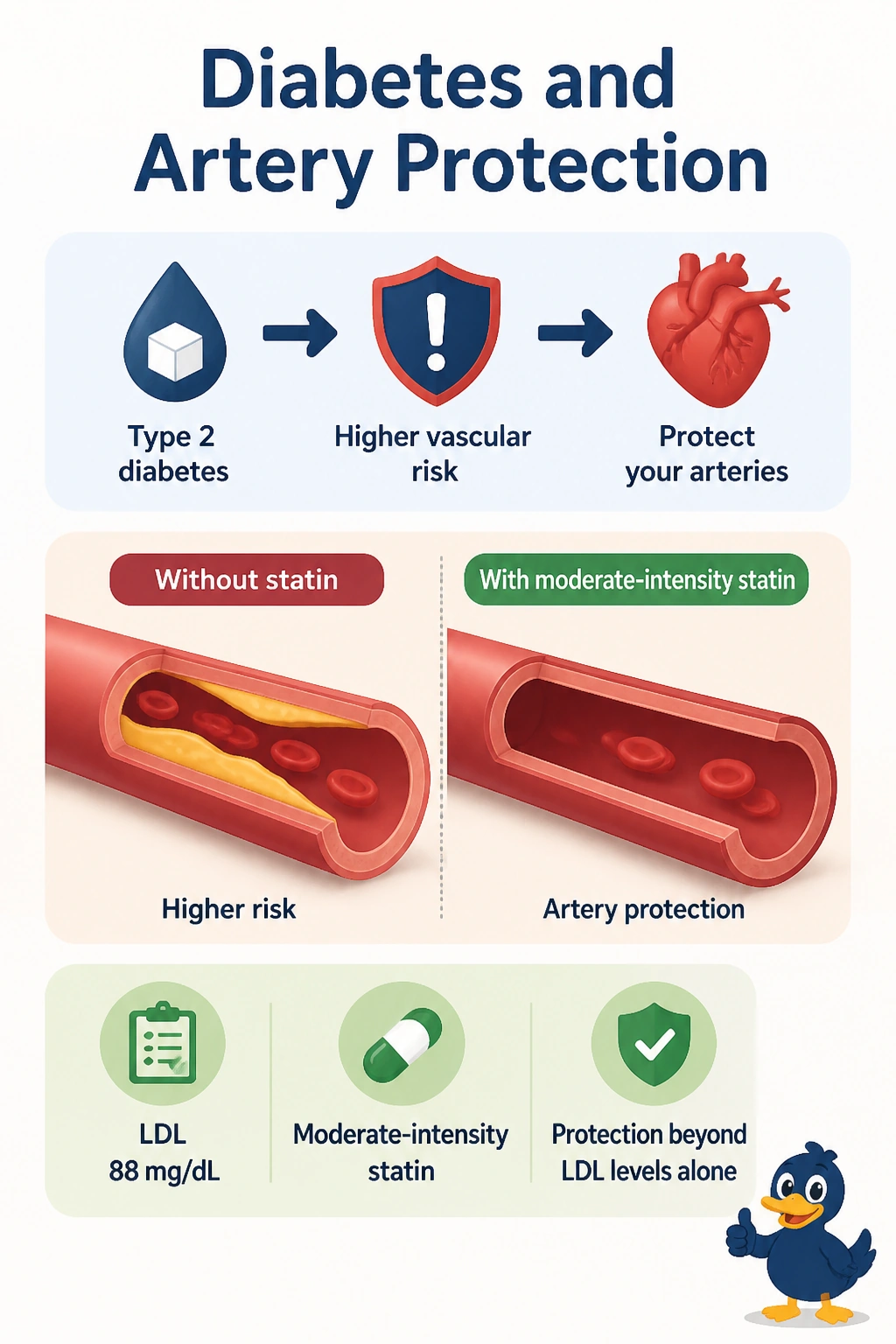
With diabetes, cholesterol numbers do not tell the whole story about heart and blood vessel risk. You can help patients avoid the trap of thinking a statin is unnecessary just because an LDL level looks reasonable on paper. Explaining that statins protect blood vessels broadly builds trust and adherence.
Full Explanation
Adults aged 40 to 75 with diabetes face elevated atherosclerotic cardiovascular disease risk even without prior cardiovascular events or markedly elevated LDL cholesterol. Explaining that Diabetes raises vascular risk, so statins protect arteries beyond LDL levels alone accurately reflects guideline-based primary prevention, as statins stabilize arterial plaque and reduce inflammation. Claiming that Statin treatment depends only on whether baseline LDL exceeds 100 mg/dL is false, because initiation is risk-based for diabetes in this age range rather than gated by a single LDL threshold. Stating that An LDL of 88 mg/dL rules out benefit from ongoing primary-prevention statin therapy is false, because a reasonable-looking LDL does not remove elevated vascular risk or the need for ongoing protection. Suggesting that Statin therapy prevents diabetic retinopathy progression in adults with normal lipids confuses microvascular eye care with macrovascular cardioprotection. As a clinical caveat, patients should be counseled to report new muscle aches rather than stopping therapy abruptly on their own. As an operational check, review the patient's current lipid panel, confirm understanding of daily timing, and document any barriers to adherence.
Prefer to study offline? Printable PDF study book + test engine ($7.50, unofficial). These questions stay free here.