
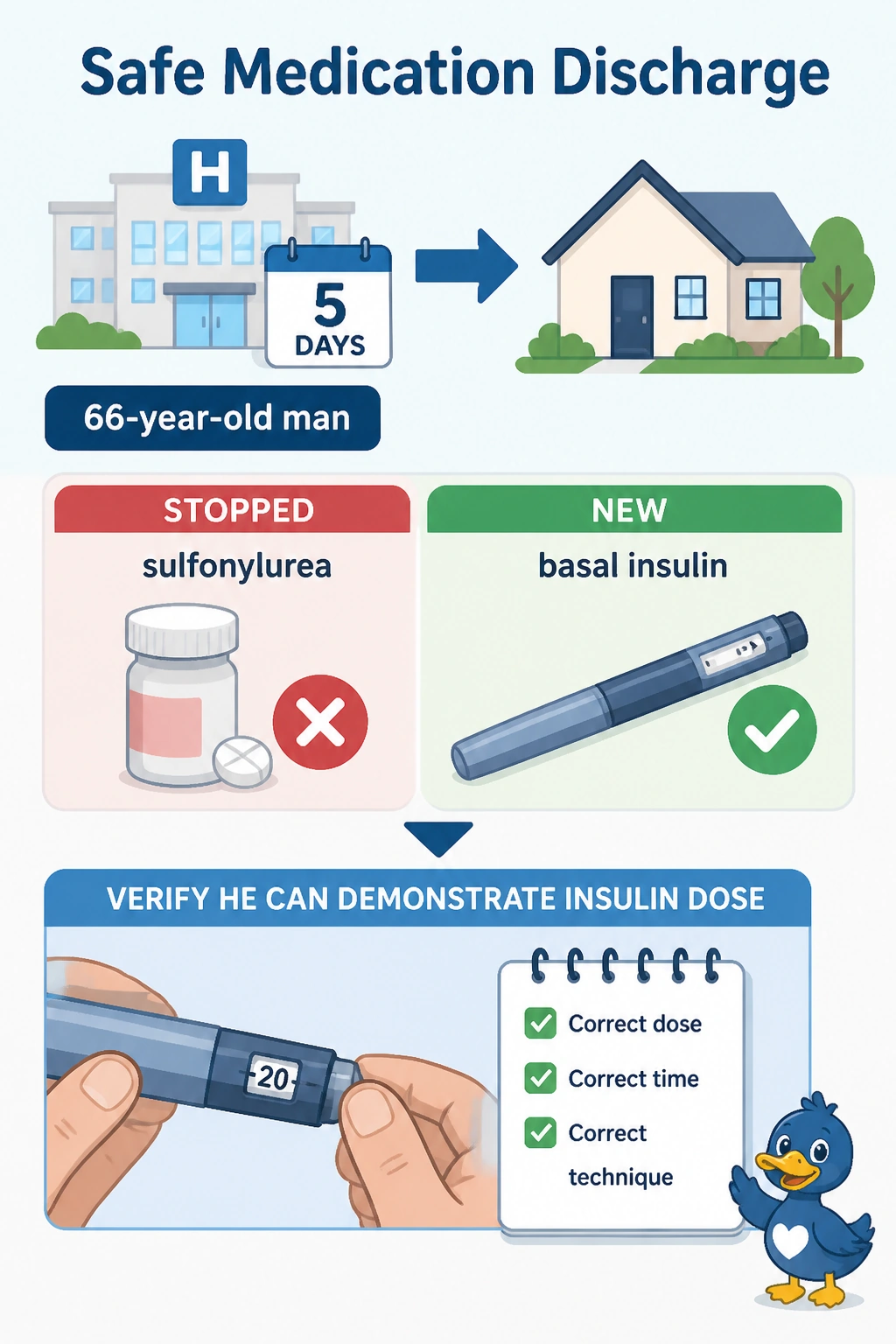
A 66-year-old man with type 2 diabetes is being discharged home after a five-day hospitalization for pneumonia during which his oral sulfonylurea was stopped and basal insulin was started. Which discharge education step is most critical to prevent medication errors at home?
Select an answer to reveal the explanation.
Short Explanation
Hospital stays can scramble your medication list, making double-dosing or missed therapy more likely when you get home. You can make the transition safer by reconciling stopped and new medications and demonstrating the insulin dose, rather than relying on the printed list alone.
Full Explanation
Transitions from inpatient to outpatient care carry a high risk of adverse drug events, especially when insulin is started or oral agents are stopped during acute illness. The safest discharge step is to reconcile stopped and new medications and verify that he can demonstrate the insulin dose, so he knows what to take and what to set aside at home. Telling him to resume all pre-hospital diabetes pills automatically risks severe hypoglycemia by combining a discontinued sulfonylurea with newly started basal insulin. Scheduling routine follow-up in three months without an early medication review delays needed post-discharge titration; follow-up within one to two weeks is appropriate after a therapy change or when control is uncertain. Reviewing the printed medication list without observing insulin administration leaves possible literacy, vision, and technique gaps unaddressed and does not confirm safe pen use. An exam caveat is that insulin requirements may shift rapidly after hospitalization as inflammation subsides and oral intake improves. As a practical check, have the patient or caregiver demonstrate pen priming and dose dialing, and confirm an outpatient follow-up visit within one to two weeks.
Prefer to study offline? Printable PDF study book + test engine ($7.50, unofficial). These questions stay free here.