
A 49-year-old woman with newly diagnosed type 2 diabetes feels overwhelmed by gram-by-gram carbohydrate counting tables and wants a simple visual approach for family dinners. Which nutrition education strategy should the diabetes care and education specialist introduce first?
Select an answer to reveal the explanation.
Short Explanation
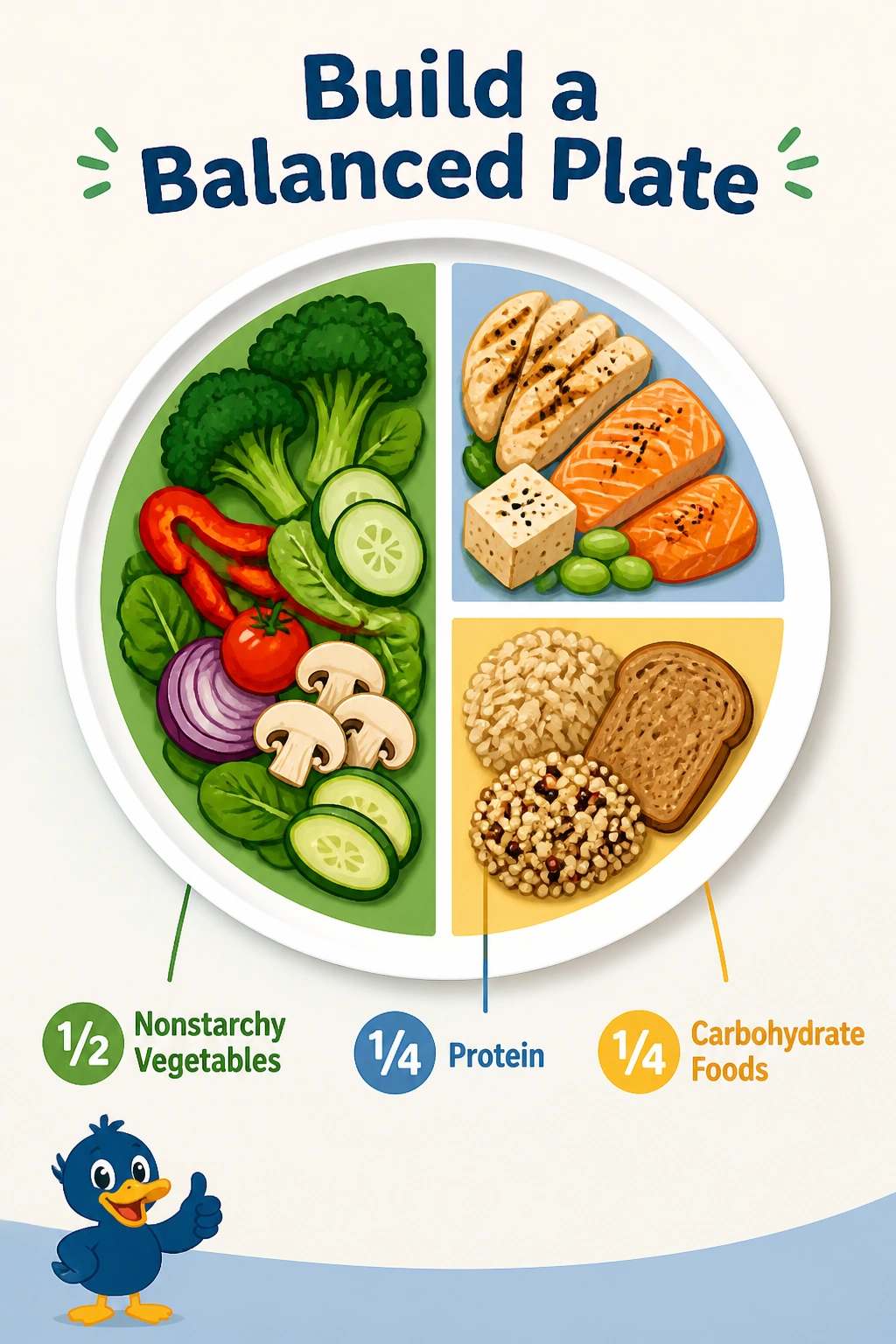
Nobody wants dinner to feel like a math exam, especially right after a new diagnosis. The plate method gives you an instant visual blueprint that works with everyday family meals. The trap is starting with detailed counting systems or fixed allowances when you asked for simplicity.
Full Explanation
Using the plate method with half nonstarchy vegetables, one-quarter protein, and one-quarter carbohydrate foods is ideal for someone seeking a low-burden, visual meal-planning tool. A standard nine-inch plate naturally guides portion balance, boosts fiber from nonstarchy vegetables, and moderates post-meal glucose excursions without requiring calculators. Teaching consistent carbohydrate portions before introducing a visual plate guide reverses appropriate sequencing by starting with numeracy demand when the learner explicitly requested simplicity and feels overwhelmed by tables. Beginning detailed exchange-list education using household measures at the initial visit imposes high cognitive load at diagnosis and delays a usable strategy for immediate family dinners. Setting one fixed dinner carbohydrate allowance before assessing usual meal patterns skips essential assessment of eating patterns, preferences, and readiness, undermining personalization and shared decision-making. Caveat: cultural dishes such as soups or mixed casseroles may not sit neatly in separate plate sections, so adapt the visual proportions to bowls. Operational check: use a sample nine-inch plate or food models to have the person build a typical family dinner and confirm comfort with the portions.
Prefer to study offline? Printable PDF study book + test engine ($7.50, unofficial). These questions stay free here.