
A 40-year-old man with type 1 diabetes for 18 years tells his specialist that he no longer feels shakiness or sweating when his blood glucose drops to 50 mg/dL and only notices symptoms when he becomes confused. Which education priority should the specialist emphasize?
Select an answer to reveal the explanation.
Short Explanation
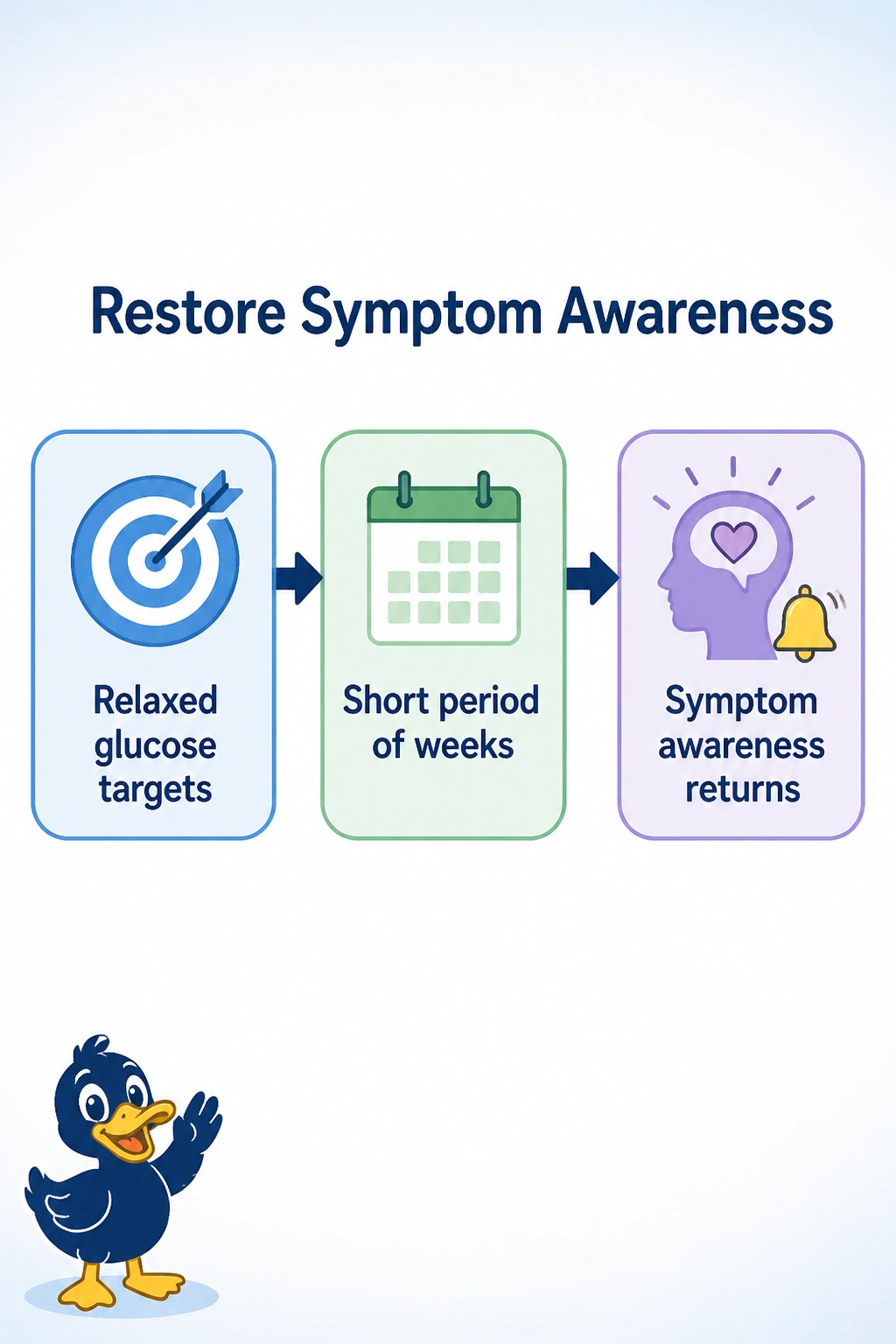
When repeated lows make your warning signs disappear, you need a chance to restore your body’s alarm system. A short-term period of relaxed glycemic targets can help you regain symptom awareness, while symptom-based testing alone is unsafe when you cannot reliably feel a low.
Full Explanation
Collaborating on a short-term period of relaxed glycemic targets is the priority because avoiding hypoglycemia for several weeks can improve symptom awareness and counterregulation. Individualized targets, education, and technology can support this approach, though recovery is not guaranteed. Lower overnight glucose targets to reduce variability before addressing recurrent lows would increase exposure to hypoglycemia and reinforce the unawareness cycle rather than allow recovery. Switching from rapid-acting mealtime insulin to regular human insulin before meals gives insulin a slower, broader action curve, which can worsen post-meal or delayed hypoglycemia. Relying mainly on symptom-based testing while waiting for warning symptoms to return is unsafe: this person already lacks reliable physical cues at 50 mg/dL and needs proactive monitoring. Caveat: continuous glucose monitoring with predictive low alerts is a valuable safety bridge while targets are temporarily raised, and driving safety rules should be reviewed. Practical check: review recent sensor or meter logs for every reading below 70 mg/dL, confirm access to rescue glucose, and coordinate target adjustments with the prescriber.
Prefer to study offline? Printable PDF study book + test engine ($7.50, unofficial). These questions stay free here.