
A 63-year-old retired bus driver with type 2 diabetes tells his diabetes care and education specialist that he wants to "exercise more and eat better" over the next month. Which collaborative goal best applies the SMART framework?
Select an answer to reveal the explanation.
Short Explanation
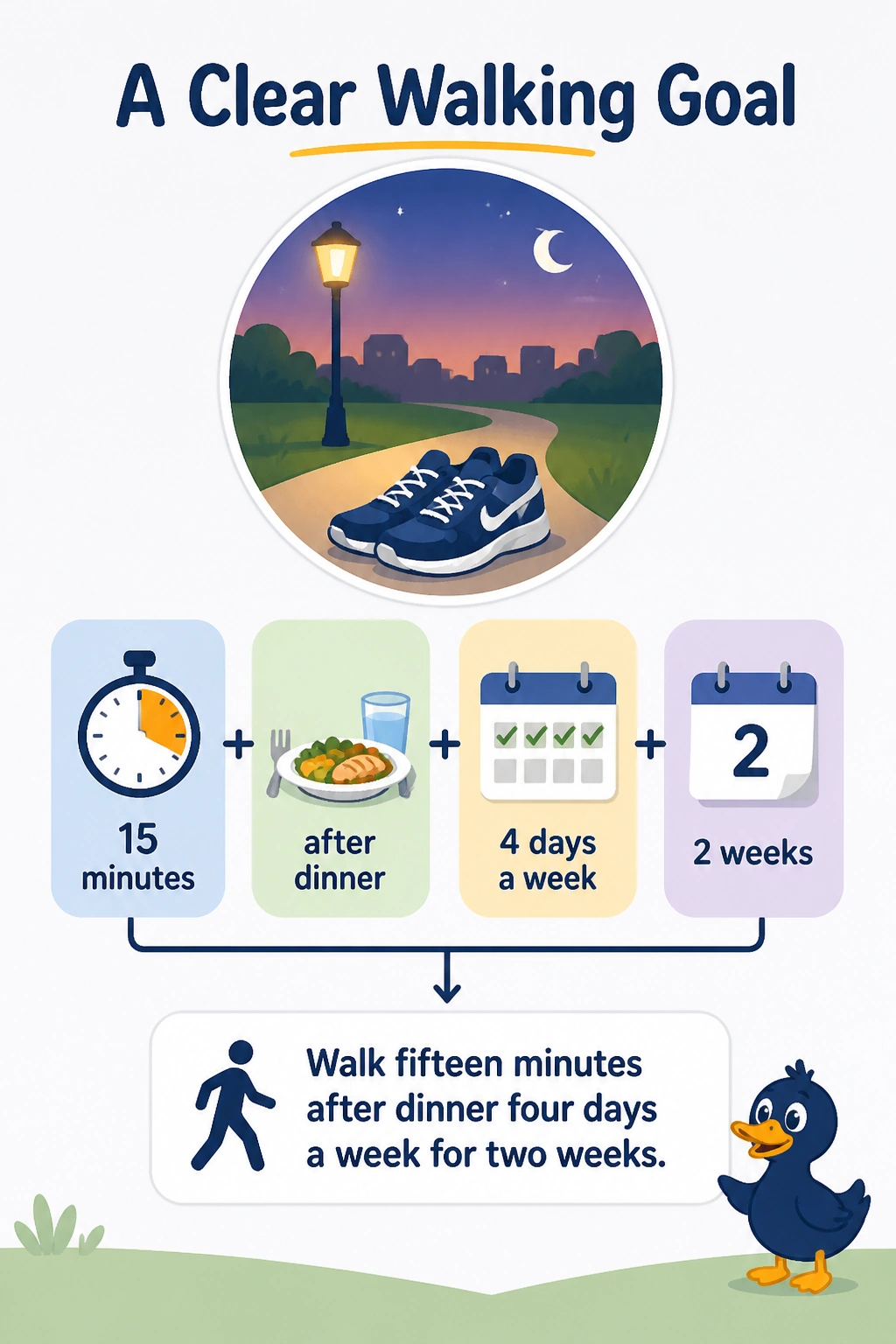
A goal like 'exercise more' is like setting sail without a compass or a destination. You can turn vague intentions into momentum by helping the person craft a specific, measurable, and time-bound plan like walking fifteen minutes after dinner. The trap is accepting broad wishes or vague phrases like more often that you cannot track.
Full Explanation
Selecting Walk fifteen minutes after dinner four days a week for two weeks best applies the SMART framework because it is specific, measurable, achievable, relevant, and time-bound. Defining the exact activity, duration, frequency, and review window lets the person track progress objectively and build confidence. Increase daily physical activity and improve overall dietary quality simply rephrases his vague wish without measurable benchmarks or a timeline. Walk after dinner more often over the next two weeks improves on vagueness by adding a two-week window but remains non-measurable because more often does not define how many days, how long, or how success will be tracked. Improve daily step counts to support a healthier lifestyle states a relevant direction but lacks specificity, a numeric target, and a deadline, so progress cannot be measured or reviewed. As a person-centered caveat, SMART goals must be co-created with the individual rather than dictated by the clinician so the plan fits their daily routine and physical capacity. An operational check is to record the agreed-upon goal in the individualized education plan and schedule a two-week check-in to review barriers and successes.
Prefer to study offline? Printable PDF study book + test engine ($7.50, unofficial). These questions stay free here.