
A 61-year-old woman with type 2 diabetes and established atherosclerotic cardiovascular disease has an A1C of 6.7% on metformin alone. When discussing her treatment plan before her primary care follow-up, what should the diabetes care and education specialist explain?
Select an answer to reveal the explanation.
Short Explanation
A great A1C number does not mean the heart is automatically out of the woods. Modern diabetes care looks beyond glucose alone when cardiovascular disease is already present, so you should prepare people for organ-protective therapy. The trap is treating A1C as the only scoreboard and assuming target numbers close the door on medication updates.
Full Explanation
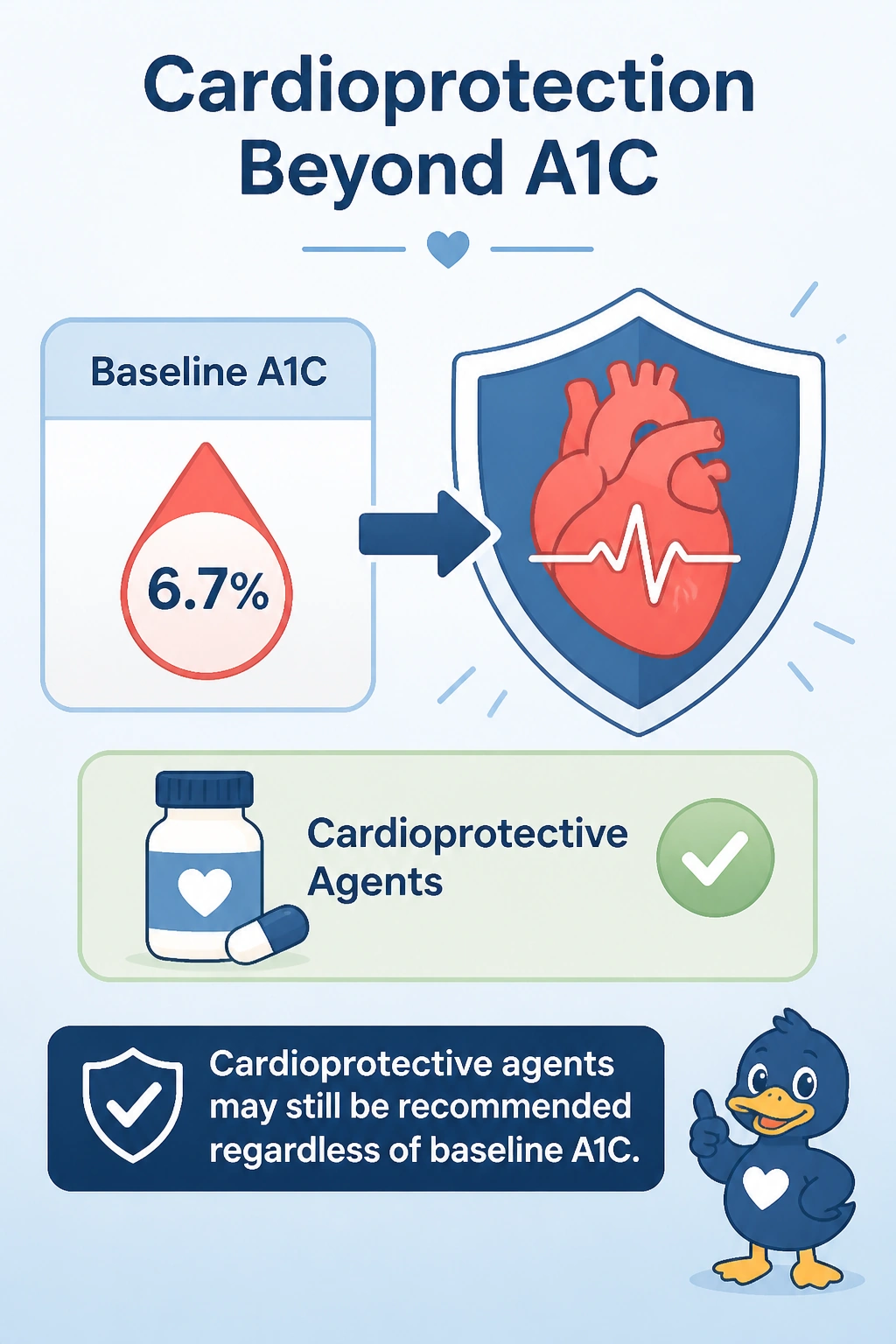
Cardioprotective agents may still be recommended regardless of baseline A1C reflects current standards of care for adults with type 2 diabetes and established atherosclerotic cardiovascular disease. Specific GLP-1 receptor agonists and SGLT2 inhibitors with proven cardiovascular benefit lower major adverse cardiac events and provide cardiovascular benefits that justify use independently of the current A1C target; not every drug in each class has identical outcome evidence. Additional glucose-lowering agents are unnecessary whenever A1C is below seven percent relies on an outdated glucose-only model that misses proven organ-protection opportunities. Aspirin monotherapy replaces the need for any diabetes medication adjustments is incorrect because antiplatelet therapy addresses thrombosis without delivering the metabolic and vascular benefits of cardioprotective diabetes classes. Basal insulin is the preferred next step to reduce cardiovascular mortality risk is unsupported because basal insulin does not carry the same cardiovascular event reduction profile and increases hypoglycemia risk at an A1C of 6.7%. Caveat: adding a cardioprotective agent when A1C is already near target requires reviewing concurrent therapies to avoid unnecessary lows. Operational check: review the active problem list for cardiovascular or kidney comorbidities and prepare questions for the upcoming primary care visit.
Prefer to study offline? Printable PDF study book + test engine ($7.50, unofficial). These questions stay free here.