
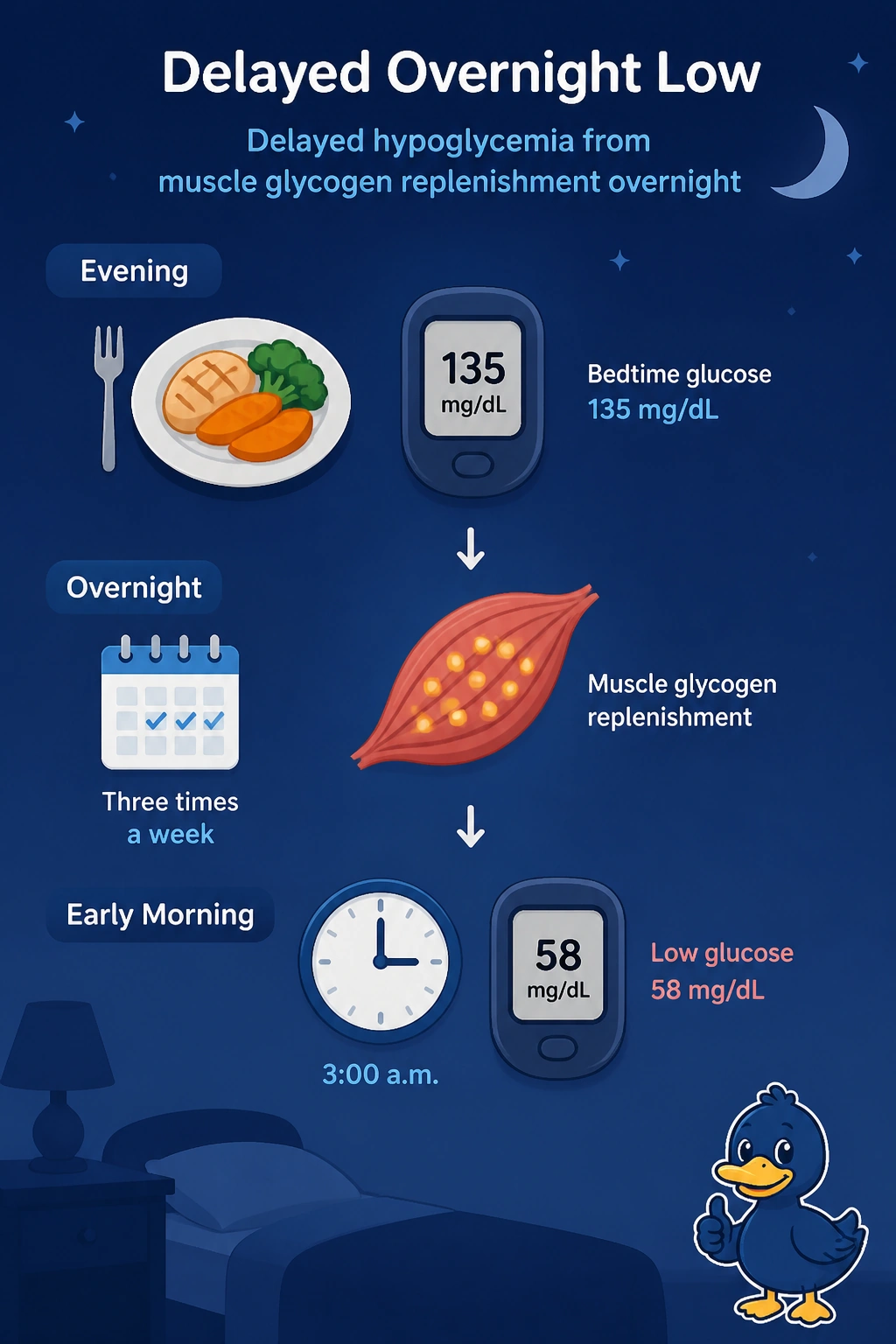
A 34-year-old teacher with type 1 diabetes takes up evening recreational basketball three times a week and notices her blood glucose is 135 mg/dL right after games, yet she repeatedly wakes up at 3:00 a.m. with readings around 58 mg/dL. Which educational concept explains this pattern?
Select an answer to reveal the explanation.
Short Explanation
Think of muscles after a basketball game like a drained battery that keeps pulling power from the outlet long after you unplug the car. You need to recognize delayed nocturnal hypoglycemia as muscles replenish glycogen stores hours after evening activity. The trap is blaming early morning hormone surges or shower warmth for a predictable post-exercise drop.
Full Explanation
Delayed hypoglycemia from muscle glycogen replenishment overnight explains why blood glucose can appear stable right after evening sports yet drop sharply hours later. Exercise can increase insulin sensitivity and glucose uptake for hours afterward; nocturnal hypoglycemia often occurs 6 to 15 hours after activity, and increased risk can persist longer. Acute exercise-induced insulin resistance from evening cortisol would push glucose levels higher rather than causing a 3:00 a.m. low. Dawn phenomenon triggered by early morning growth hormone surges produces rising fasting glucose toward morning, which is the opposite of nocturnal hypoglycemia. Accelerated basal insulin absorption from warm shower exposure only may briefly speed uptake of a recent injection, but it does not account for repeated lows several hours after exercise. As a practical caveat, consuming alcohol after evening games further impairs hepatic glucose release and magnifies the risk of severe overnight lows. An operational check is to review exercise-day overnight glucose logs or continuous glucose monitor trends with the person and coordinate with the prescriber on preventive bedtime snacks or basal adjustments.
Prefer to study offline? Printable PDF study book + test engine ($7.50, unofficial). These questions stay free here.