
A 26-year-old man with type 1 diabetes calls the outpatient clinic reporting blood glucose readings above 320 mg/dL since last night despite taking his usual morning basal insulin. Which assessment priority should the diabetes care and education specialist address first during the call?
Select an answer to reveal the explanation.
Short Explanation
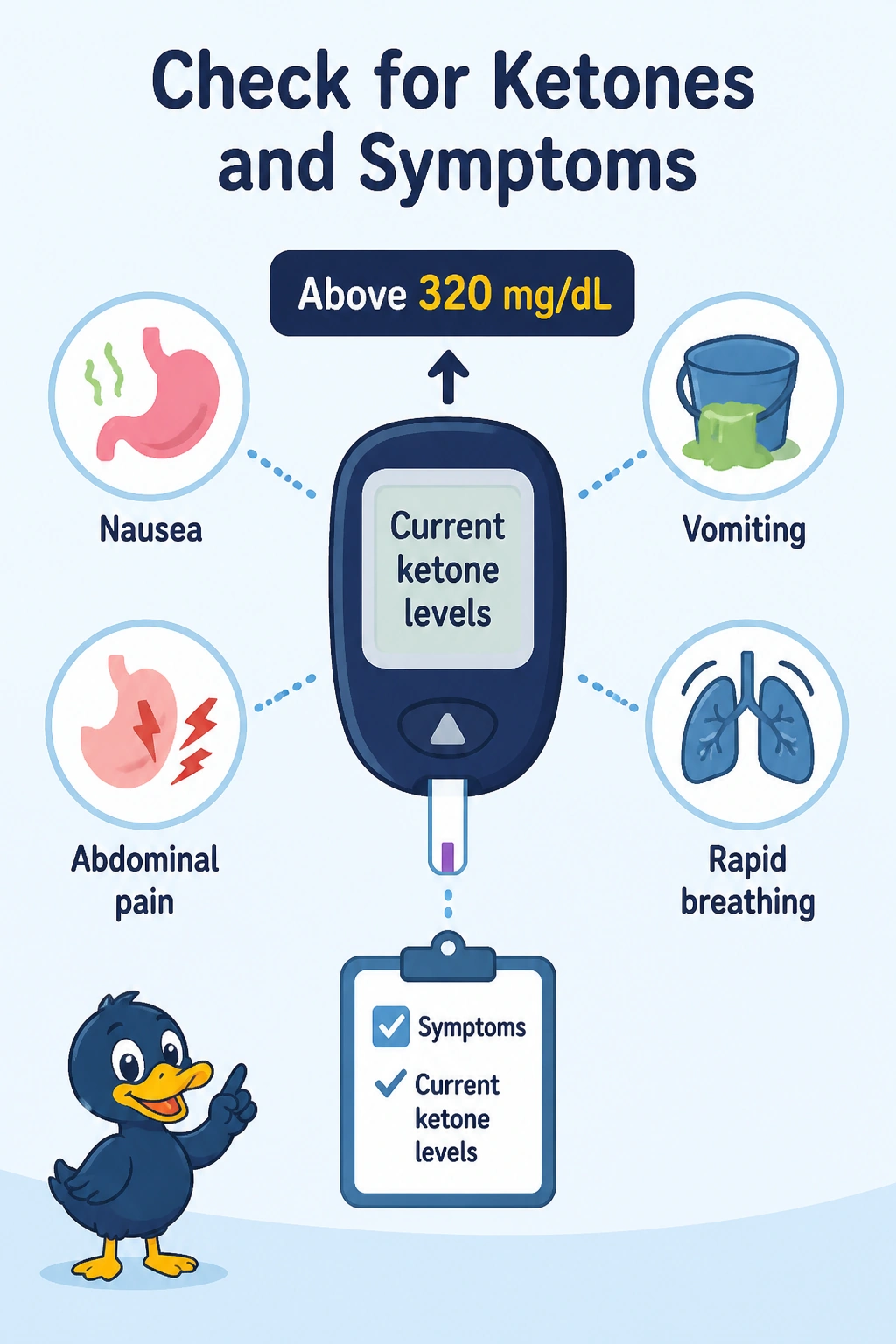
When someone with type 1 diabetes calls with glucose over 320 mg/dL, your first job is ruling out an immediate emergency before diving into routine coaching. The trap is reviewing past meal logs or scheduling preventive visits while diabetic ketoacidosis may already be developing. Screening right away for nausea, vomiting, rapid breathing, and ketones keeps the person safe.
Full Explanation
Persistent hyperglycemia above 320 mg/dL in a person with type 1 diabetes is an acute warning sign that requires immediate triage for diabetic ketoacidosis (DKA). The top priority is Screening for nausea, vomiting, abdominal pain, rapid breathing, and current ketone levels to determine whether metabolic decompensation is underway and urgent medical evaluation is needed. Calculating his 14-day Ambulatory Glucose Profile Time in Range percentage evaluates longer-term trends, which is useful during routine visits but delays urgent safety screening. Reviewing his baseline carbohydrate-counting accuracy for yesterday's meals may help explain a mild post-meal rise later, yet it does not rule out acute illness, missed insulin, or ketoacidosis right now. Checking when his next routine A1C laboratory blood draw is scheduled is an administrative follow-up task that has no place in acute hyperglycemia triage. As a caveat, even if the caller feels well initially, moderate-to-large ketones or an inability to keep fluids down requires prompt escalation to the prescribing team or emergency care. For an operational check, ask the caller to test blood or urine ketones immediately if not already done, confirm his hydration status, and review when to go to the emergency department.
Prefer to study offline? Printable PDF study book + test engine ($7.50, unofficial). These questions stay free here.