
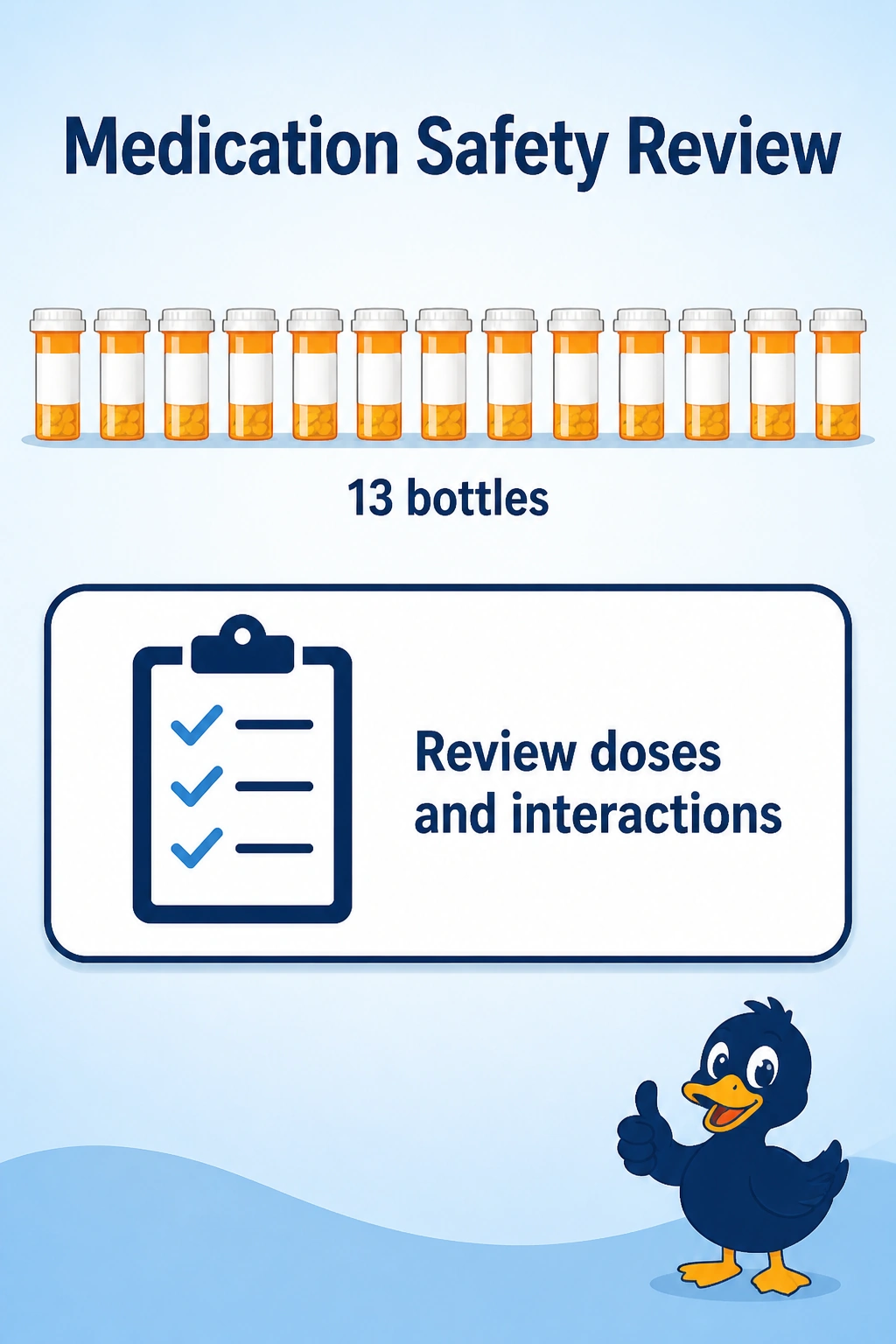
During an outpatient intake, an 81-year-old man with type 2 diabetes, hypertension, and osteoarthritis brings a bag containing 13 prescription and over-the-counter bottles and says he often mixes up his midday pills. Which assessment priority should the diabetes care and education specialist address?
Select an answer to reveal the explanation.
Short Explanation
With thirteen bottles and midday mix-ups, you deserve a careful review before adding new self-care steps. Start with medication safety: assess the full medication list, dosing complexity, and possible interactions before deciding how to simplify your routine.
Full Explanation
Older adults with diabetes often manage multiple chronic conditions, increasing the likelihood of polypharmacy, duplicate therapies, adverse drug events, and regimen nonadherence. Evaluating polypharmacy, dosing complexity, and potential drug interactions helps you identify high-risk combinations, such as overlapping agents that raise hypoglycemia or fall risk, and collaborate with the prescriber and pharmacist to simplify the plan. Recommending an immediate switch to twice-daily premixed insulin adds a complex, hypoglycemia-prone therapy without addressing the underlying pill burden. Assessing carbohydrate-counting knowledge before reviewing the actual medication bottles prioritizes new education when the immediate safety barrier is understanding what you take and how your doses interact. Teaching a new pillbox system before reconciling medications and identifying interactions introduces a tool before the list is accurate and safe. One caveat: a brown-bag medication review should also check for vision limitations, difficulty opening child-resistant caps, and cost barriers that lead to skipped doses. As a practical check, ask the patient to demonstrate how he organizes his pills and share an updated, reconciled medication list with his primary care team.
Prefer to study offline? Printable PDF study book + test engine ($7.50, unofficial). These questions stay free here.